ai influencer agency cost vs. human creators: the real roi
ai influencer agencies can be 30, 70% cheaper than human creators, but is that the full story? we break down the real cost per sale and the new hybrid strategy for 2026.

Everyone loves a simple stat. Virtual influencer engagement rates are nearly triple those of their human counterparts, hitting about 5.7% versus the typical 1.9%. On paper, that looks like a slam dunk.
But the conversation around the cost of an AI influencer agency versus a human creator program is getting a lot smarter. The initial sticker price, which is often 30-70% lower for AI programs at scale, is turning out to be a distraction. The real question isn't about saving money per post, but about where you find the best return on every dollar spent.
Brands are learning that AI influencers and human influencers serve fundamentally different roles. One offers unprecedented operational scale, while the other provides irreplaceable human trust. The winning strategy for 2026 isn't a choice between them, but a hybrid model that uses both.
Unpacking the Headline Numbers: Why AI Looks Cheaper on Paper
When finance departments first look at proposals, the case for AI influencers seems obvious. An AI-driven program can often feel like a media buy, with predictable costs and outputs. The initial savings are hard to ignore.
The most cited figure is a 30-70% reduction in cost per “creator” per month compared to a human influencer program of the same size. This comes from eliminating talent fees, travel, and the friction of human negotiations. You are essentially licensing a digital asset, not managing a person.
This cost advantage is magnified by engagement metrics. As analytics platform HypeAuditor consistently shows, virtual personas generate significantly more likes and comments on average. For brands focused on top-of-funnel awareness and grabbing eyeballs, the cost-per-engagement can be dramatically lower. This is no longer a fringe experiment; the virtual influencer market blasted past $11.7 billion in 2026, making it a material slice of the overall $33 billion creator economy.
Beyond the Invoice: The Hidden Costs That Shift the ROI Equation
A lower sticker price doesn't always mean a lower total cost or a better return. As the market matures, the hidden variables are coming into focus, and they completely change the calculation. Performance isn't just about engagement anymore. It's about compliance, risk, and actual sales.
Fraud, Fines, and the Compliance Tax
The influencer world has a massive fraud problem. An estimated $4.8 billion was lost to fake followers, botted engagement, and undisclosed AI content in 2026 alone. This risk exists for both human and AI campaigns, but the nature of the threat is different.
Regulators are catching up. With over 2,300 creators under investigation by the FTC and FCA for fake or AI-generated reviews, the stakes are high. Major social platforms now mandate explicit labeling for AI-generated paid content, with violations attracting four-figure fines per post. Working with a professional ai influencer marketing agency becomes a form of risk management. They handle the compliance, disclosures, and technical requirements, insulating your brand from costly penalties.
The Conversion Gap: When Authenticity Drives Sales
Here is where the argument pivots. While AI influencers win on broad engagement, case studies increasingly show that human influencers drive superior results on campaigns measured by conversions. For high-trust sectors like finance, healthcare, and B2B, a real person's endorsement still carries more weight.
This is why human creators can still command a higher Cost Per Mille (CPM) or Cost Per View (CPV). Brands are willing to pay a premium for the trust that leads to a click, a sign-up, or a sale. The smarter metric isn't cost per post; it's cost per acquisition. And on that front, humans often deliver a stronger return on performance-focused marketing spend.
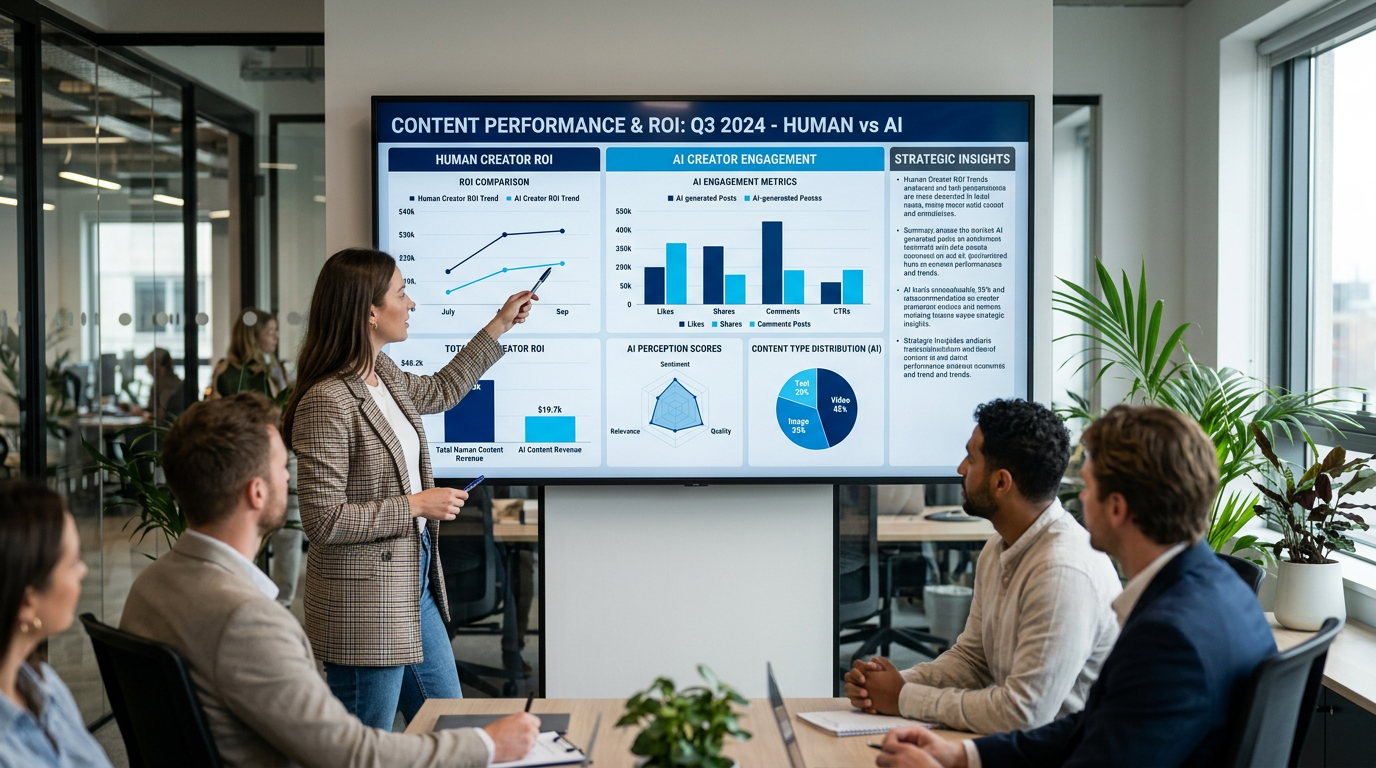
The Hybrid Playbook: AI for Operations, Humans for Trust
Instead of an “either/or” debate, the most effective brands now see a “both/and” reality. They’re building hybrid influencer stacks, assigning roles based on strategic goals, not just upfront cost. This separates the operational function of content creation from the strategic function of building trust.
AI as Your Media Operations Engine
Think of an AI influencer agency as a media operations layer. Once an AI persona is developed, it can generate content 24/7 at a near-zero marginal cost per asset. This unlocks capabilities that are impossible with human-only teams.
Imagine running hundreds of A/B tests on ad creative, localizing a single campaign message for a dozen different markets, or maintaining an always-on social presence without burning out a creator. This is a core principle of modern ai automation applied to marketing. Platforms like InfluenceFlow are now emerging to help manage these complex, automated campaigns at scale.
This operational efficiency stands in stark contrast to the high overhead of human influencer management. The costs of briefing, contracting, content approvals, reshoots, and talent relations add up quickly, making large-scale experimentation prohibitively expensive.
Humans as Your Essential Trust Layer
On the other side of the stack, human creators are your trust layer. They bring lived experience, genuine affinity for a product, and the unscripted authenticity that builds a real connection with an audience. No AI can replicate the credibility of a real person sharing a real story.
This is why humans remain essential for high-stakes moments. Use them for major product launches, for campaigns that require nuanced storytelling, and for any promotion where the audience’s trust is the most important factor for success. They are not content machines; they are relationship builders.
Building Your 2026 Budget: How to Allocate Spend Intelligently
So, how does this translate to your budget? It means you stop benchmarking AI and human influencers against each other on a per-post basis. Instead, you build a portfolio and allocate funds based on the job to be done.
The emerging trend, backed by insights from top-tier platform trend analysis like those from CreatorIQ, shows brands are not firing their human influencers. Instead, they are carving out 10-30% of their creator budgets to fund AI-driven programs. They use the AI layer for testing, learning, and generating a high volume of brand awareness content. The concepts that perform best are then often handed to human creators for authentic, high-impact execution.
Even the pricing lines are blurring. Top-tier virtual influencers now command premium rates that rival their human counterparts. Brazil's Lu do Magalu, for example, generated an estimated $2.5 million in 2024 from around 74 collaborations. That breaks down to an average of about $34,000 per post, proving that established AI talent is a serious investment, not a bargain-bin alternative.
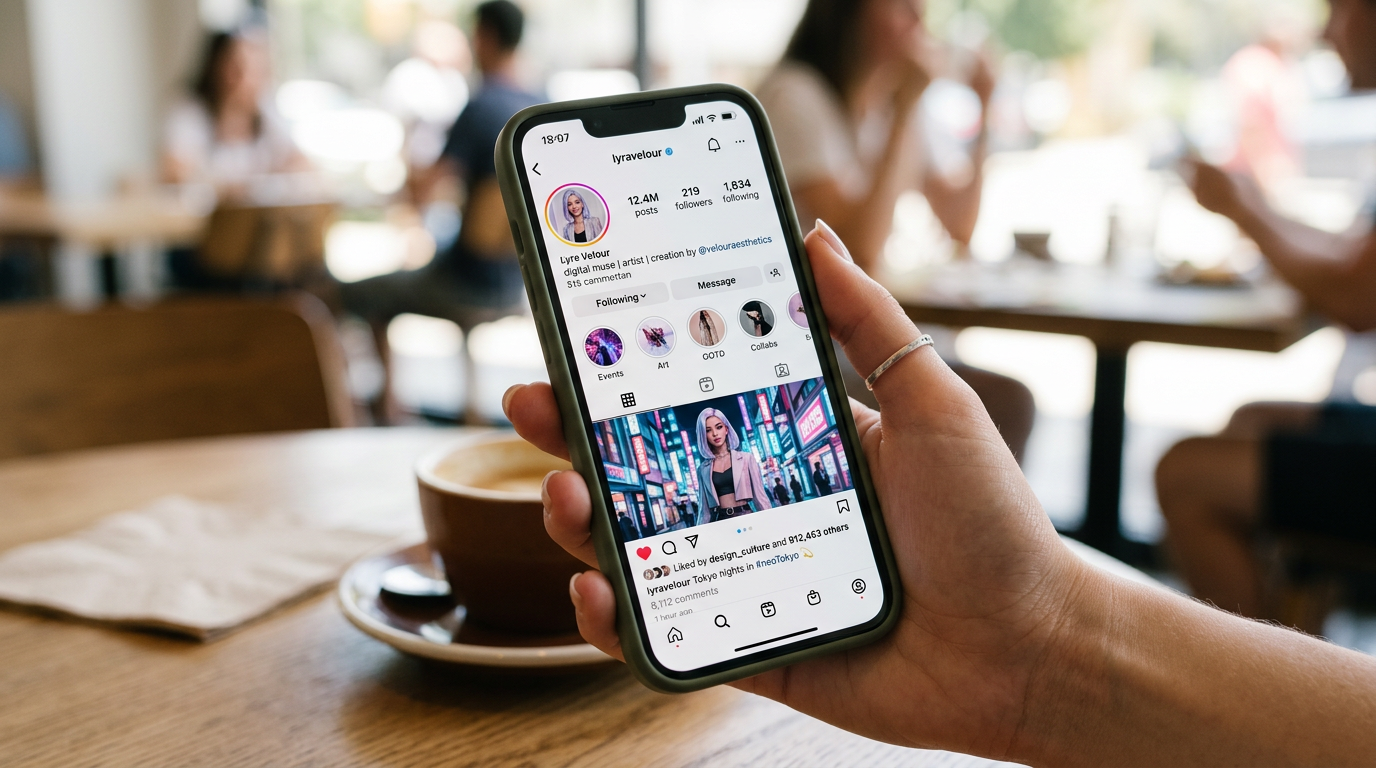
Ultimately, the cost-effectiveness of your influencer strategy will depend entirely on how you define your goals. Are you optimizing for reach, engagement, test iterations, or sales? Each KPI points toward a different side of the hybrid stack.
Stop asking “AI or human?” and start asking “AI for what, and humans for whom?” The savviest marketing leaders are building teams that leverage the machine-like scale of AI and the essential trust of real people. They are not choosing one over the other; they are making them work together.
Your first move is to audit your campaign goals against this new reality. Once you know what you need to achieve, you can build the right kind of influence. If you're ready to see how a hybrid model works, let's talk about how to launch your ai influencer and integrate it with your existing strategy.