ai influencer marketing: the os for ecommerce in 2026
in 2026, ai is the operating system for creator commerce. explore how top ecommerce brands use ai for discovery, virtual influencers, and performance-based partnerships.
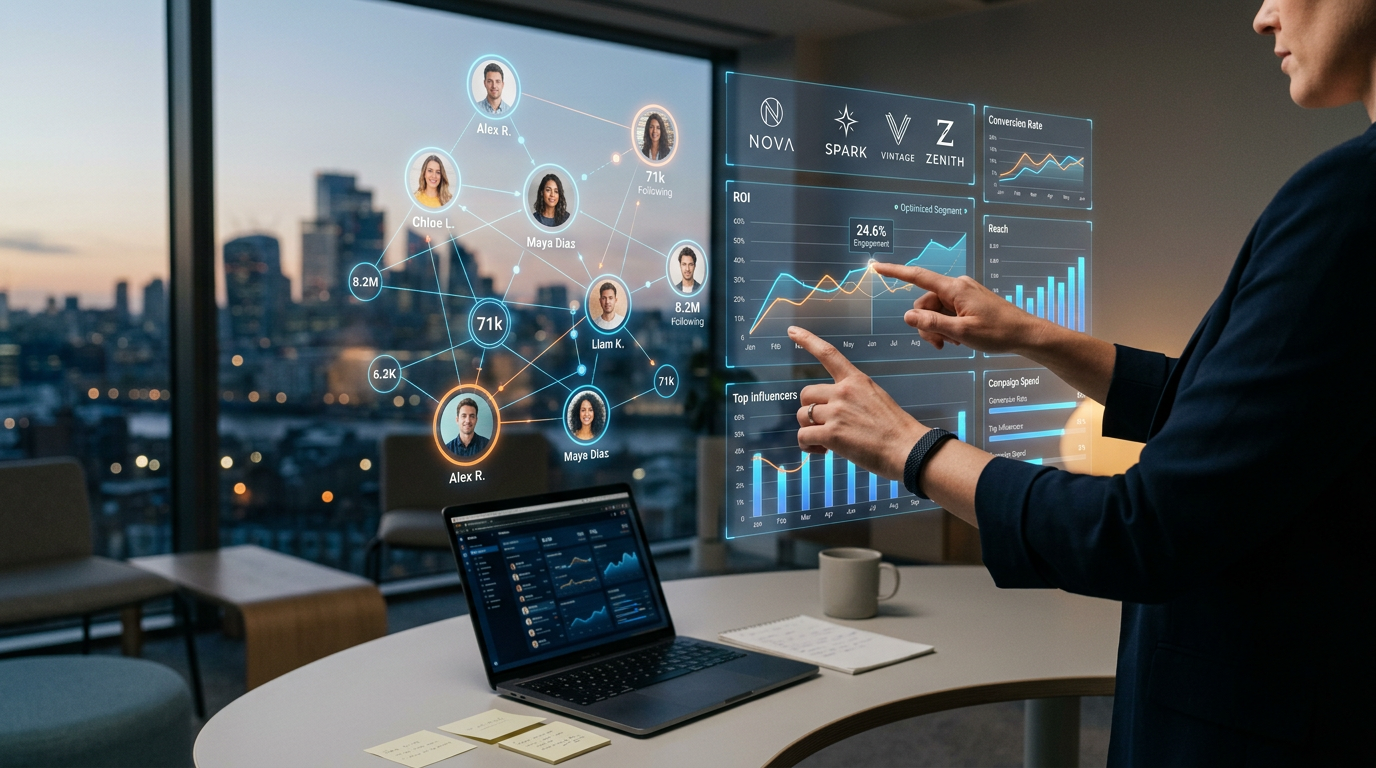
Let's skip the introductions. By 2026, a staggering 73% of major companies have adopted virtual influencers into their marketing mix. This isn't a fringe experiment or a curiosity anymore. It’s a core budget line item.
For years, influencer marketing felt like betting on vibes. You hoped a creator’s audience would care about your product, and you measured success in soft metrics. In 2026, that guesswork is over. AI has become the central operating system for creator commerce, transforming partnerships from a branding exercise into a predictable, revenue-driving performance channel.
The winning ecommerce brands aren't just dabbling in a few AI tools. They are building their entire creator programs on a foundation of intelligent automation, precise discovery, and direct sales attribution. This is the new playbook, and ignoring it means falling behind. Fast.
Beyond Discovery: How AI Became the Engine for Performance
Remember the old way? Endless scrolling through social feeds, messy spreadsheets tracking subjective notes, and gut-feel decisions about brand fit. Those days are more than just inefficient. Today, they are a competitive liability as the scale of the creator economy has completely outgrown manual management.
The market has responded decisively. An incredible 92% of brands are now using or open to using AI in their influencer workflows, with 59% already having intelligence integrated at some stage. The primary use case, accounting for 36.7% of this adoption, is still creator discovery. That’s because finding the right partner remains the most critical, and historically most difficult, first step.
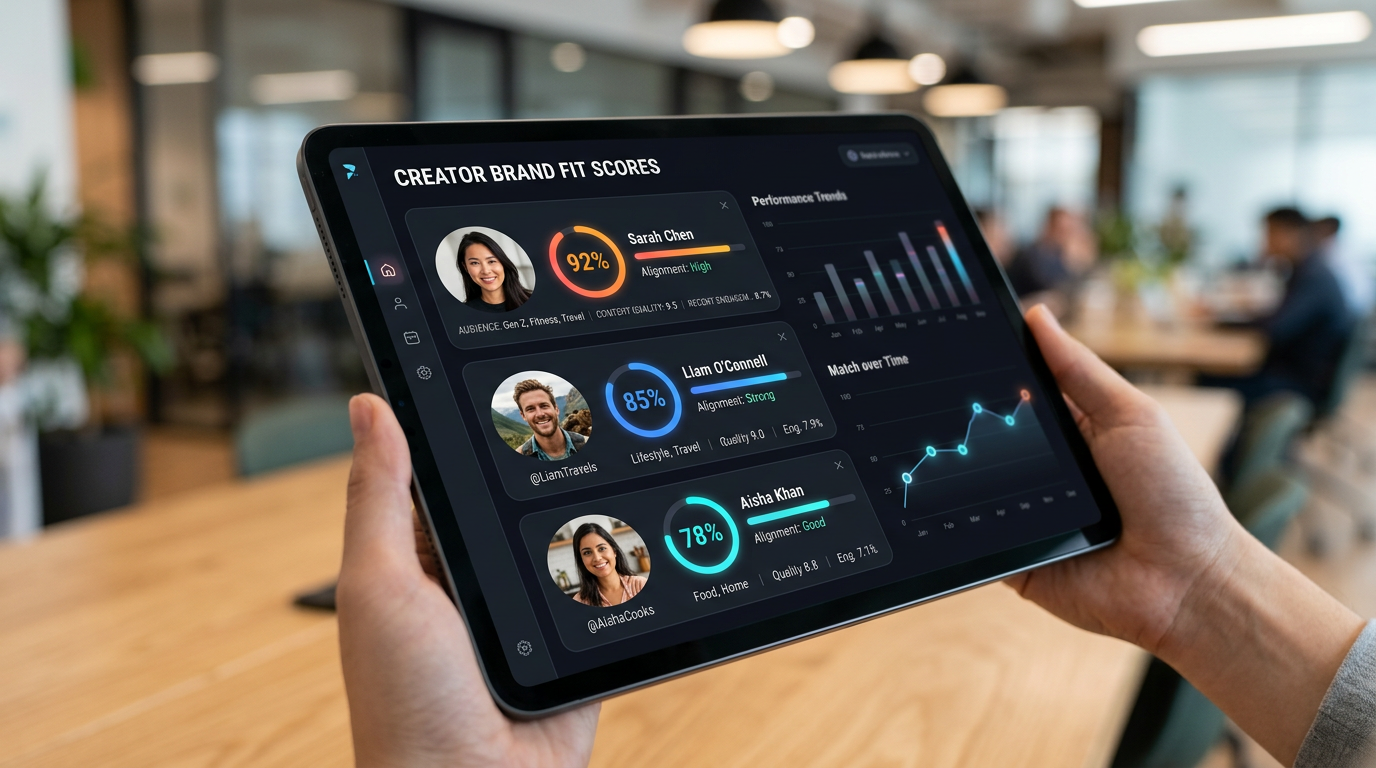
But modern AI platforms do so much more than keyword searches. Enterprise-grade systems like CreatorIQ use algorithms to analyze a creator’s entire content history, audience psychographics, and engagement quality. They look for signals of authentic influence, not just follower counts. The result? AI-assisted campaigns report an average 15 to 20% improvement in creator-brand fit scores. A higher fit score means your message resonates on a deeper level before you spend a single dollar on promotion.
This is where platforms show their unique strengths. While CreatorIQ excels at enterprise-level discovery and workflow management, a tool like Impact.com focuses on turning those relationships into performance partnerships. Its AI helps match brands with creators who are likely to drive conversions, treating the creator channel with the same analytical rigor as paid media. This is why a specialized ai influencer marketing agency can deliver such powerful, data-backed results.
From Content to Commerce: Tying Creators Directly to Sales
The most significant shift driven by AI is the collapse of the space between influencer content and the point of sale. Brand awareness is a fine goal, but ecommerce businesses live and die by profitable conversions. AI is the bridge connecting a creator’s authentic voice directly to your checkout page.
Look no further than TikTok Shop. It has evolved into a powerful ecosystem where creator videos are not just ads, but interactive, shoppable storefronts. The platform’s algorithms don't just optimize for views; they learn which creators, products, and video styles drive actual in-app purchases. This creates a powerful feedback loop where success is measured in revenue, not just vanity metrics.
This performance-first philosophy is the core of the 2026 strategy. It’s about building a portfolio of partners who demonstrably contribute to your bottom line. Authoritative reports confirm this, with 2026 influencer marketing performance insights highlighting a massive industry-wide trend toward attribution and conversion optimization. The focus has moved from reach to revenue.
This shift requires new infrastructure. It means using platforms that track creator-specific coupon codes, attribute sales from unique affiliate links, and measure customer lifetime value by acquisition channel. Implementing sophisticated ai automation allows you to manage hundreds of these performance-based partnerships efficiently, paying out commissions based on real sales, not flat fees for posts that might not perform.
The Rise of the Synthetic Star: Virtual Influencers Go Mainstream
The idea of a virtual influencer once felt like a gimmick pulled from science fiction. Now, it's a core strategic decision. The jump from 60% adoption in 2025 to 73% in 2026 shows that brands are moving past novelty and embracing the powerful business advantages.
For an ecommerce business, the benefits are immense. You get total control over messaging, aesthetics, and brand safety. There are no surprise scandals, no off-message posts, and no creative conflicts. A virtual influencer is available 24/7, can 'travel' to any digital location instantly, and never has a bad hair day. This level of control is a marketing director's dream.
These aren't just digital puppets. The most effective virtual influencers are sophisticated, AI-driven personas with developed backstories, unique personalities, and highly engaged communities. A beauty brand can create a virtual muse that demonstrates product application flawlessly. A tech company can build a synthetic personality who unboxes new gadgets with programmed enthusiasm, generating infinite content variations for different platforms.
This strategy directly addresses a key trend identified by experts for 2026: AI-powered personalization, which 35.2% see as a critical driver of success. Imagine an AI character sending personalized video messages to your top customers or creating content that references hyper-local events. The possibilities are vast. If you're ready to explore this frontier, you can launch your ai influencer with a team that blends creative storytelling with technical execution.

Building Your AI-Powered Strategy for 2026
So, where do you begin? Adopting an AI-first approach isn't about buying a single piece of software. It’s a mindset shift. It requires rewiring your entire influencer marketing workflow around data, performance, and measurable returns.
1. Integrate Intelligence into Your Workflow
An AI platform is not a strategy in itself. True transformation happens when you integrate intelligence at every stage. Use AI for initial discovery based on audience data, not just keywords. Then use predictive analytics to forecast engagement on content drafts. Finally, use advanced attribution to track sales back to a specific creator's post, measuring the genuine ROI.
2. Focus on Performance, Not Platitudes
Vanity metrics are dead. Stop reporting on likes and comments as your primary key performance indicators. Your dashboard should prioritize metrics that matter to the C-suite: creator-driven revenue, return on ad spend (ROAS), and cost per acquisition (CPA). This is where a skilled seo agency can add tremendous value, helping you connect creator activity to your broader conversion funnels and organic search goals.
3. Start Small, Then Scale Smart
Don't try to boil the ocean. Identify one specific pain point, like creator discovery or performance tracking, and run a pilot program with an AI tool. Measure the results against your manual process. Once you prove the value on a small scale, you'll have the business case you need to expand the AI-driven approach across your entire program.
4. Empower Your Human Strategists
AI does not make your marketing team obsolete. It makes them more powerful. Let the algorithms handle the tedious data-crunching, sift through thousands of potential partners, and flag performance anomalies. This frees up your human talent to do what they do best: build authentic relationships, brainstorm brilliant creative, and interpret the story the data is telling them.
The creator economy is no longer the wild west. In 2026, AI is the operating system that brings order, predictability, and above all, performance. The brands that thrive will be those that master this new reality.
Your competitors are already running this playbook. The only question is when you will decide to build your own.