ai influencer os: how top ecommerce brands win in 2026
ai isn't just for creator discovery anymore. in 2026, it's the operating system for ecommerce, turning influencer marketing into a programmable, performance-driven engine.
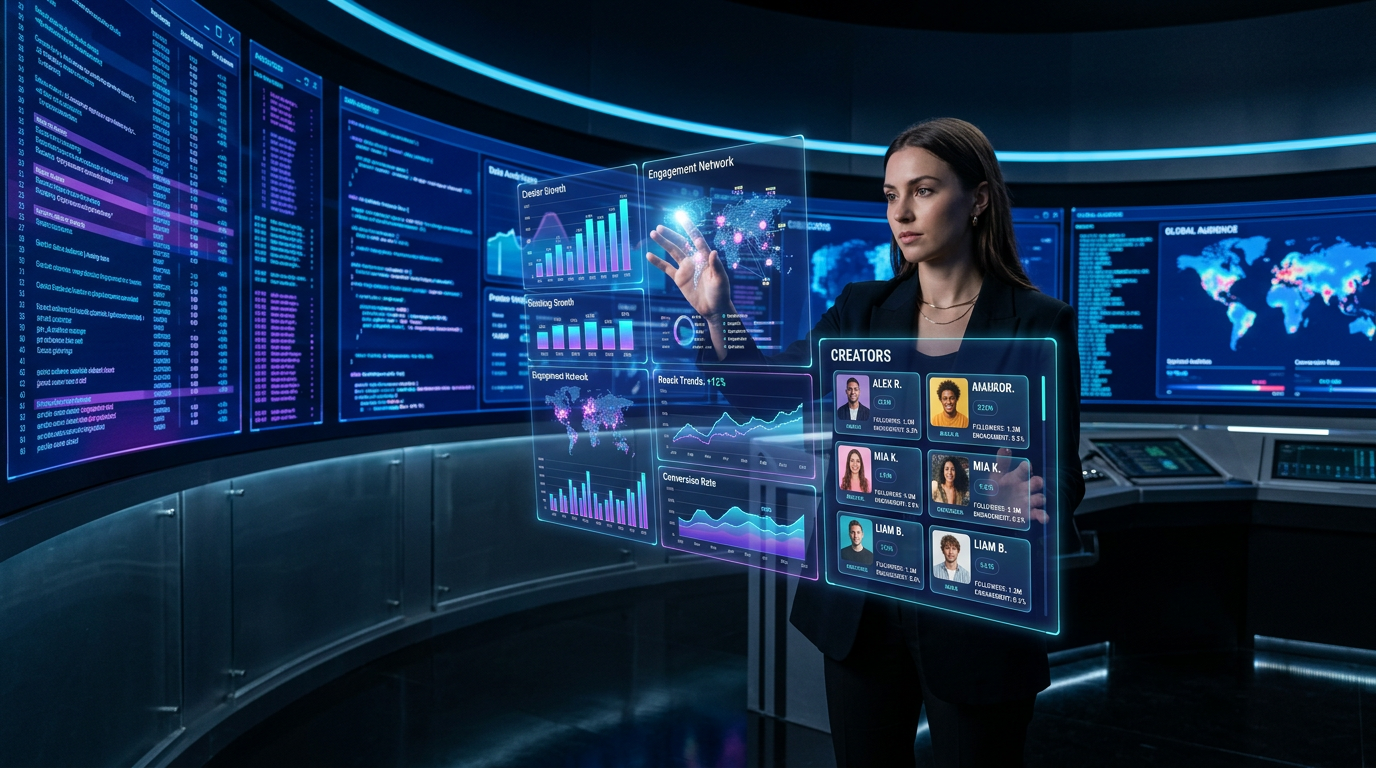
Let's get one thing straight. The idea that AI’s primary role in influencer marketing is to find creators is already outdated. That was the 2024 conversation. As we move squarely into 2026, thinking about AI as a simple discovery tool is like using a supercomputer to check your email.
The real shift is far more fundamental. For leading ecommerce brands, AI is turning the entire discipline of influencer marketing into a programmable operating system for growth. It’s no longer a series of disconnected campaigns. It’s a full-funnel, performance-driven commerce engine.
The Big Shift: From Retrospective Reports to a Predictive Engine
For years, influencer marketing measurement was a backward-looking exercise. You ran a campaign, waited weeks, and then sifted through a dashboard to see what happened. That model is officially broken.
AI adoption is now the price of entry. Recent data shows about 60% of marketing teams already use AI in their influencer workflows. Digging deeper, you see the divide: 22.4% are using it extensively, while 37.8% are just dipping their toes in. The remaining brands, with under 10% having no plans to adopt, are effectively choosing to compete with one hand tied behind their backs.
The new model is predictive, not retrospective. Instead of asking “What was our ROAS?”, teams are now asking “What is the forecasted ROAS for creator X with product Y over the next 90 days?” As impact.com's deep dive into 2026 trends brilliantly outlines, AI transforms measurement from a historical report into a live, predictive engine for optimizing spend and outcomes in real time.
This is the central nervous system of your new OS. It’s about making decisions based on where the market is going, not just where it’s been. This is a crucial pivot for any team serious about scalable digital marketing and leaving reactive strategies behind.
Pillar 1: Architecting Predictive Creator Economics
The first pillar of this operating system is treating creator partnerships with the same financial rigor as media buying. Gut feelings about “brand fit” are being replaced by sophisticated data models that forecast economic returns before you spend a single dollar.
Scoring Creators Like Media Inventory
Think of your creator roster not as a collection of personalities, but as a diverse portfolio of media assets. Each one comes with a predictable performance profile. AI models now ingest historical data to score potential partners on metrics that actually matter to your CFO.
Platforms like CreatorIQ and impact.com are moving way beyond follower counts. Imagine you want to launch a new line of sustainable activewear. The old way involved emailing dozens of 'fitness influencers'. The 2026 OS finds creators whose audiences have a high purchase affinity for eco-friendly products, a low forecasted CAC on items over $100, and who are currently crushing it on YouTube Shopping.
This allows you to build a balanced portfolio with extreme precision. You might allocate a small budget to a high-reach creator for top-of-funnel awareness, but the bulk of your performance spend will flow to a group of mid-tier creators whose audiences are forecasted to deliver a 3.5x ROAS on your new collection within 60 days. That’s not a guess; it's a calculated investment.
From Flat Fees to Dynamic Payouts
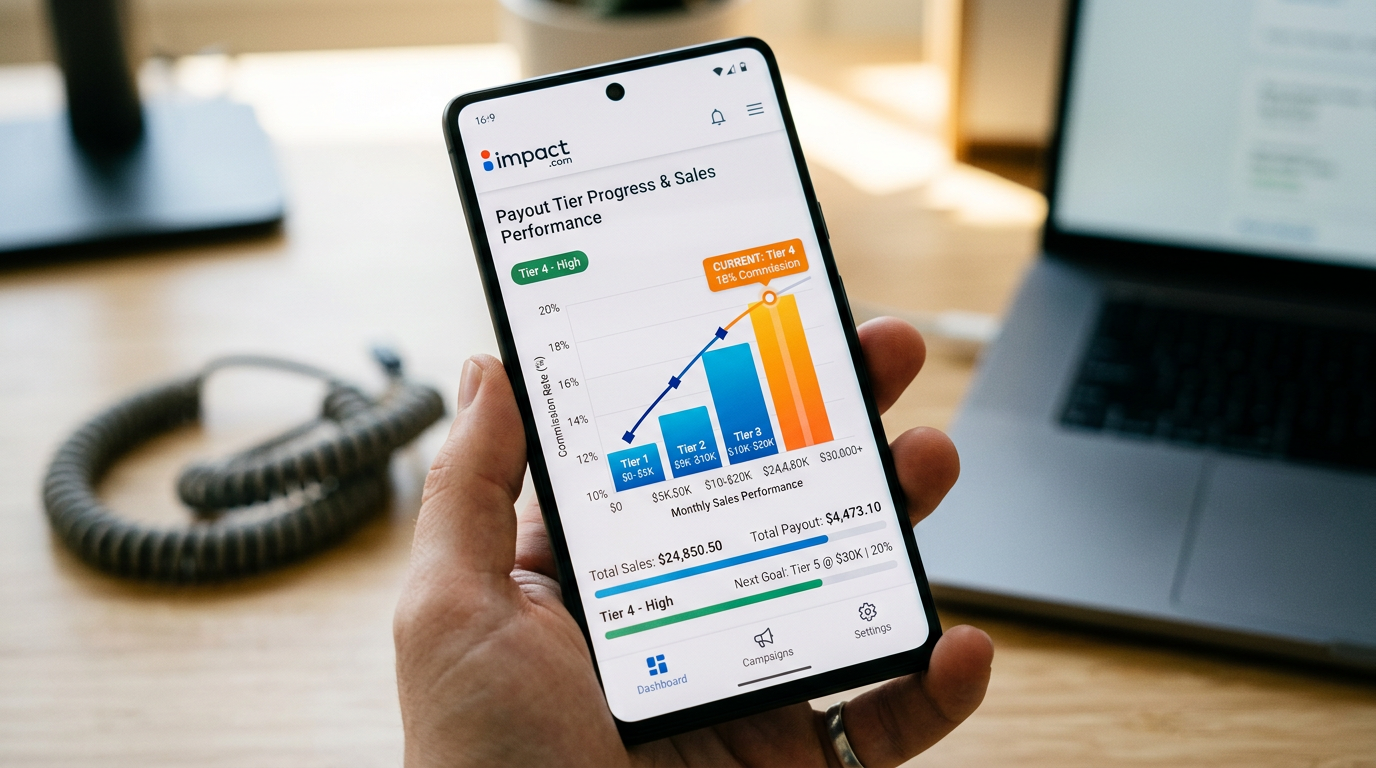
Once you’re forecasting performance, the next logical step is to tie compensation directly to it. The flat-fee model is fading, replaced by dynamic, performance-based structures. Your AI operating system automates this entire process.
Imagine a system that automatically adjusts commission rates based on real-time conversion data from TikTok Shop. If a creator’s live shopping session is driving exceptional AOV, the system can instantly offer them a higher bonus tier. This isn't just about paying for results; it's about incentivizing top performance in the moment and making your brand the most lucrative partner to work with.
The smartest brands are using hybrid models: a base fee to secure the creator's time, plus escalating commission tiers for hitting unit sales, AOV targets, or even new customer acquisition goals. This aligns everyone’s incentives around profitable growth, not just exposure.
Pillar 2: AI-Accelerated Content for Commerce
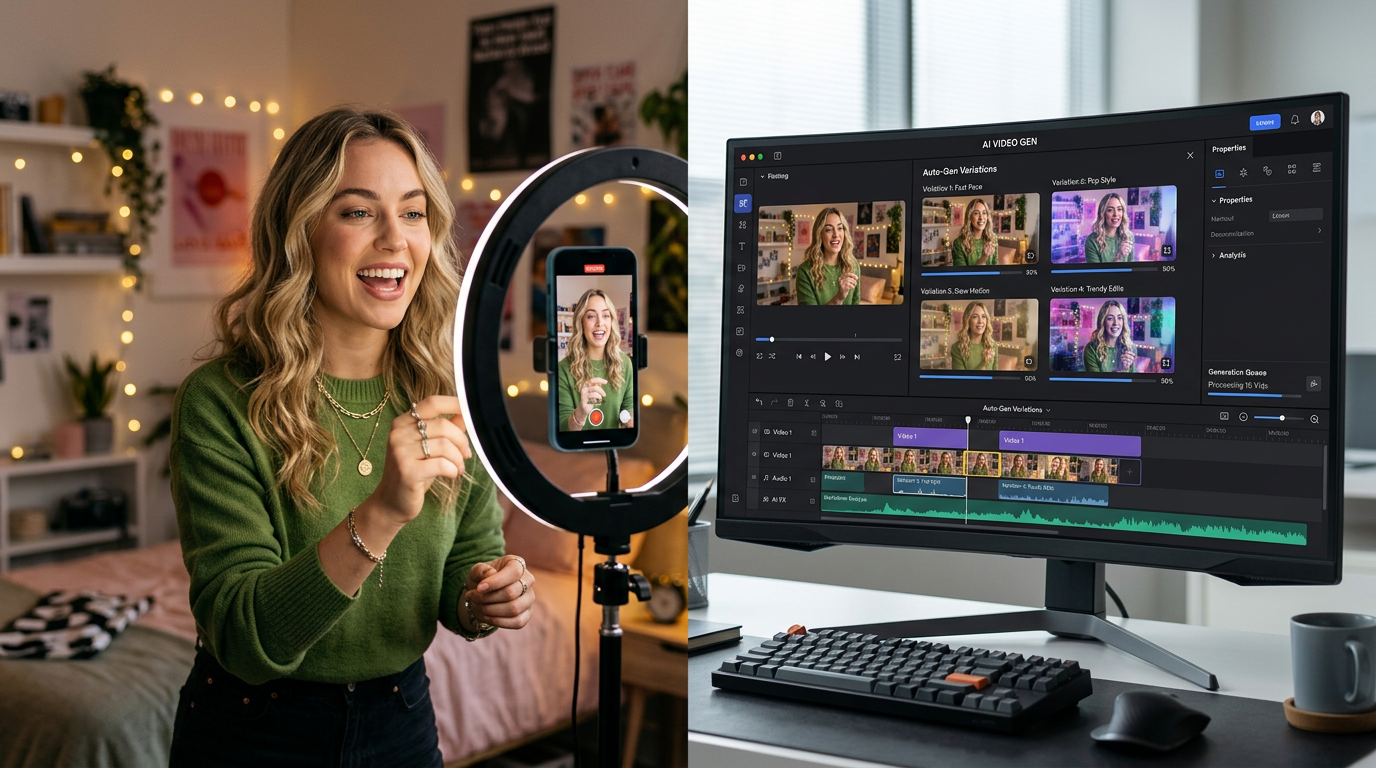
With the financial framework in place, the OS needs content to fuel it. Here, AI isn't replacing creativity; it's industrializing it. The goal is to produce, test, and iterate on commerce-focused content at a speed and scale that was previously impossible.
NLP is the New Content Workhorse
The stats are crystal clear. Nearly half of marketers, 49% to be exact, are using AI for natural language processing. This is a much larger focus than pure machine learning models (28.7%), showing where the practical value is today. This isn't about writing soulless captions. It’s about strategically removing bottlenecks from the entire creative workflow.
An advanced NLP workflow does more than just generate a caption. It drafts ten different hooks for a TikTok video script. It analyzes comment sentiment on a creator's post to provide real-time feedback on a new product offer. It can even generate dozens of briefing variations, tailored to different creator niches, ensuring your core message is adapted perfectly for every audience. A skilled ai influencer marketing agency architects these workflows to save hundreds of hours.
Closing the Loop with Creator-Led AI
This isn't a one-way street. The most potent part of this ecosystem is that creators themselves are massive AI adopters. A staggering 86% of creators already use generative AI for everything from brainstorming ideas to editing their videos, according to CreatorIQ.
Your influencer OS doesn’t just push directives out; it taps into this creator-led production engine. You can request five variations of a call-to-action and let the creator use their own AI tools to produce them authentically. The OS then programmatically tests these variants across different ad placements, creating a powerful feedback loop between human creativity and machine-driven optimization. It’s a true partnership between brand AI and creator AI.
Pillar 3: Always-On Attribution Across Social Shops
The final pillar connects everything back to the point of sale. Your AI operating system is only as good as its ability to track revenue. Vague metrics like “engagement rate” are no longer sufficient. The focus for 2026 is on ironclad, direct attribution within the native social commerce environment.
The Closed Loop of Social Commerce
Platforms like TikTok Shop and YouTube Shopping have fundamentally changed the game. They are not just places to discover products; they are integrated storefronts where the entire customer journey happens in one place. From seeing a creator’s video to checkout, the user never has to leave the app.
Modern attribution tools from platforms like impact.com plug directly into these ecosystems. The OS can track every sale back to the specific creator and the specific piece of content that drove it. This provides irrefutable, creator-level data on CAC, AOV, and total revenue. It’s the kind of granular measurement that performance marketers have always dreamed of, and it makes influencer marketing as accountable as search or social ads.
Building Your Programmable Growth Channel
When you combine these three pillars, you have a truly programmable growth channel. It's a system where you define the business outcomes, and the AI works to achieve them. You feed the system your inputs: product margins, target CAC, and inventory levels. The OS gets to work.
It identifies and vets creators based on their predicted economic value. It automates the briefing and content iteration process with NLP. And it continuously reallocates budget toward the partnerships and social shops delivering the highest return on ad spend. This is a world away from tactical influencer outreach, demanding a far more integrated strategy than a typical seo agency might deliver.
This paradigm shift also changes your team structure. The 2026 influencer manager is part portfolio manager, part data scientist, and part creative strategist. They don't just manage relationships; they manage a system.
Stop thinking about your influencer program as a list of names in a spreadsheet. In 2026, it is a sophisticated, AI-powered system that you design, program, and optimize for one thing: measurable ecommerce growth. The only question is whether you’re ready to build your OS. If you are, we can help you launch your ai influencer program from day one.