ai influencers: the ecommerce revenue loop for 2026
by 2026, ai influencer marketing isn't about finding creators. it's about building predictable ecommerce revenue loops that forecast conversions before you even launch.

Forget everything you think you know about influencer marketing. By 2026, the game isn't about finding the creator with the most followers. It’s about building a predictable, AI-powered revenue engine that directly fuels your eCommerce growth.
A staggering 59% of marketers are already using AI to streamline their influencer operations, but most are just scratching the surface. They're focused on discovery and workflow. The real revolution is happening one step deeper, in the connection between content and cash register.
This isn't just about making things faster. It’s about making them smarter. It’s about moving from hopeful campaigns to bankable financial models, where influencer content becomes a scalable sales channel with predictable returns.
Beyond Discovery: How AI Redefined Influencer Operations
For years, influencer marketing was a painfully manual process. It involved endless scrolling, messy spreadsheets, and gut-feel decisions. That era is definitively over. The operational shift is profound, thanks to a new class of AI platforms.
Platforms like Aspire and CreatorIQ have transformed the landscape. They use AI for much more than just finding people. We're talking about plain-language creator searches, predictive analytics on content performance before it even goes live, and intense workflow automation. This allows brands to scale their efforts without ballooning their headcount.
The results speak for themselves. Organizations that have adopted AI marketing analytics are reporting a 23% boost in productivity. Even more compelling is the 19% improvement in marketing ROI, often within the first year. This is the hard data that gets a CFO’s attention.
This efficiency frees up strategists to focus on what matters: the message, the creative, and the customer journey. Instead of getting bogged down in administrative tasks, teams can build more sophisticated programs. Hiring a top ai influencer marketing agency today means you're investing in this technological advantage, not just a rolodex of creators.
From Manual Vetting to AI-Powered Validation
Finding authentic partners is another area where AI excels. The old way involved manually checking follower lists and engagement, a process ripe for fraud and inefficiency. Today's tools offer a much sharper solution.
Platforms such as Impact.com have built-in creator marketplaces that use AI for contextual search and advanced fraud detection. This tech can spot fake followers, analyze audience demographics for authenticity, and ensure you're partnering with genuine advocates, not just accounts with inflated numbers. It de-risks the entire investment.
The Real Disruptor: AI-Fueled Social Commerce
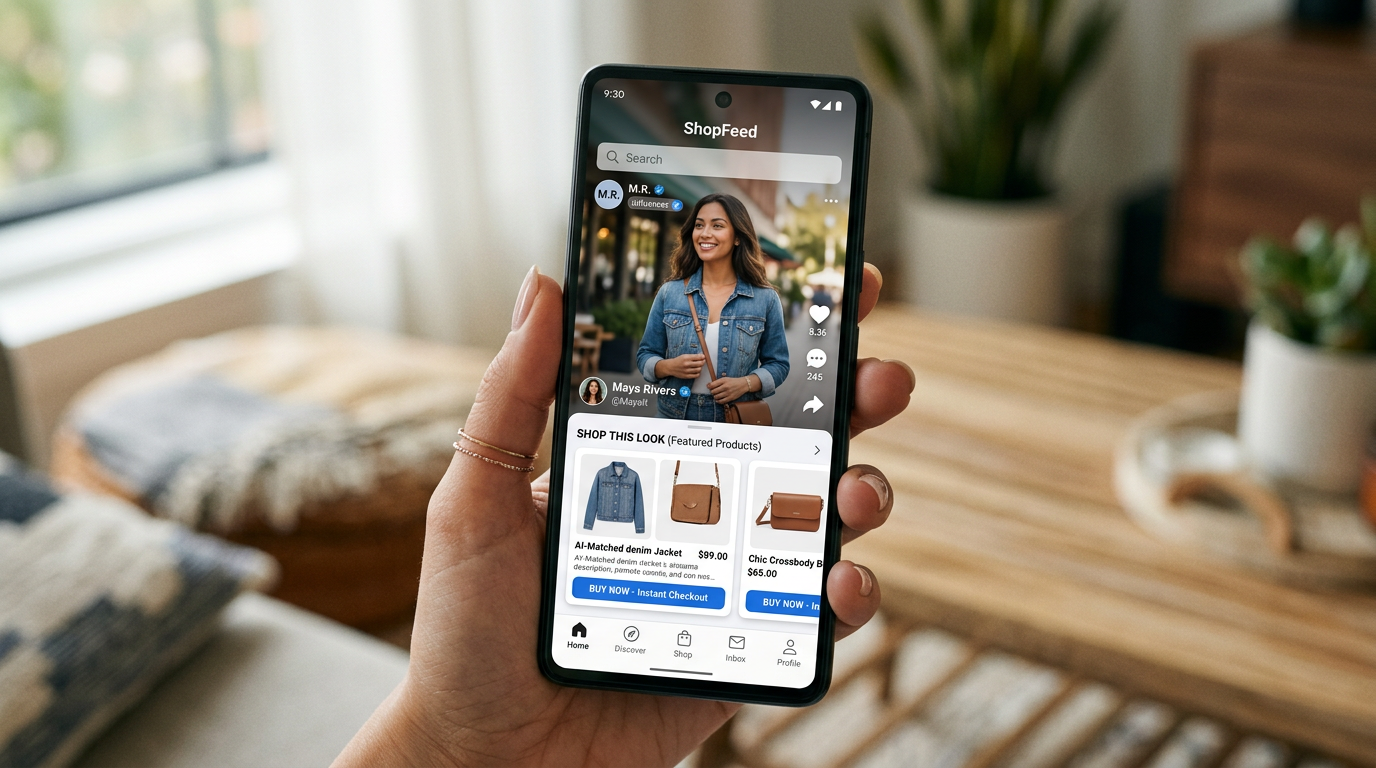
The biggest shift isn't just in how we find influencers, but in how their content generates revenue. Social commerce, supercharged by AI, is the primary disruptor on the horizon for 2026. More than a third of marketing agencies already see it this way.
Why is it so powerful? Because it closes the gap between inspiration and purchase. AI algorithms create a fluid path from a piece of content directly to a checkout page, often within the same app. This turns a passive viewing experience into an active shopping moment.
Companies mastering AI personalization in their eCommerce experience are already reaping massive rewards, earning up to 40% more revenue than their competitors. It's no surprise that 91% of retail leaders are pouring investment into these technologies. They see the writing on the wall.
When you apply this personalization to influencer marketing, the effect is multiplied. AI can match specific influencer content to the individual user most likely to respond, tailoring the feed and product recommendations in real time. This level of ai automation creates a deeply relevant and effective sales funnel that feels completely organic to the user.
The Attribution Loop: Turning Impressions into Predictable Revenue
This is the core concept that separates winning eCommerce brands from the rest in 2026. For too long, influencer ROI has been a fuzzy mess of vanity metrics and loose correlations. The AI-powered attribution loop finally brings clarity and predictability.
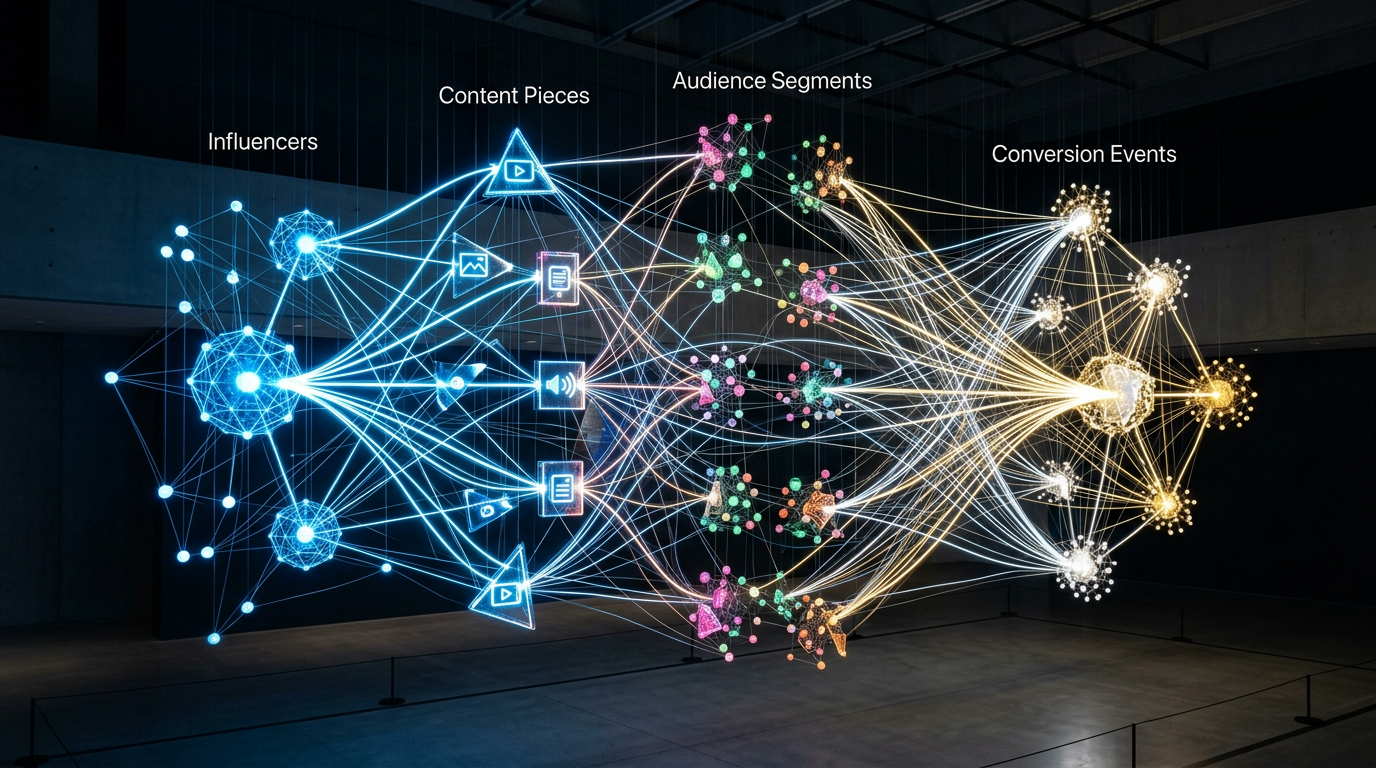
So what is it? It’s a closed-feedback system where AI integrates real-time signals from influencer content, like engagement patterns and viewer sentiment, directly with your store's live order data. It’s a dynamic, learning system that connects every impression to an actual conversion event.
This goes far beyond last-click attribution. The system learns which combination of creator, content style, call to action, and audience segment drives sales most effectively. The most powerful part is its predictive capability. The AI can analyze these vast datasets to forecast a campaign's conversion potential *before* you spend a single dollar.
Imagine a dashboard that doesn't just show you how many likes a post got, but forecasts that Creator A's video series will likely generate a 3.5x ROAS with a specific demographic over the next 30 days. This allows you to allocate budget with a level of confidence that was previously impossible. Understanding how to automate these influencer marketing workflows is the first step toward building such a sophisticated system.
Building a Commerce-Native Engine
Fragmented, one-off campaigns are dead. The goal now is to build a commerce-native engine that is always on, always learning, and always optimizing for sales. This requires a clean data foundation and the right technology stack.
It means every piece of content is a data point. Every click is a signal. Every purchase trains the model. This is how influencer marketing evolves from a simple marketing tactic into a core pillar of your business growth strategy, sitting right alongside channels like paid search and email.
Navigating the New Creator Economy: Human vs. Virtual
The rise of AI has understandably sent ripples through the creator community. Recent data shows that 62% of creators are worried about competition from AI influencers and digital twins. Their concern is valid, but the reality is more nuanced.
Virtual influencers offer brands total control over messaging, aesthetics, and availability. They can be anywhere, say anything, and never get embroiled in personal controversy. For certain campaigns focused on pure branding and high-concept creative, they are an incredibly effective tool.
However, they lack the one thing that gives human influencers their power: genuine, lived-in humanity. Audiences still crave authentic connection and trust, which is difficult for a digital construct to replicate. The future isn't a replacement of one with the other; it’s a strategic choice between the two based on campaign goals.
For human creators, AI is not the enemy. It's the ultimate tool for proving their value. The same attribution loops that give brands predictability also give creators undeniable proof of their impact on the bottom line. The best creators will lean into this data, using it to command higher fees and build stronger, long-term partnerships with brands that value results over reach. This holistic view of a creator's digital footprint is something a sophisticated seo agency would recognize as a powerful source of authority and traffic.
The smartest brands won't pick a side. They will build a hybrid strategy, leveraging virtual influencers for scalable awareness and using AI-vetted human creators for high-trust, conversion-focused campaigns.
The era of guessing is over. The technology is here to connect influencer marketing directly to your bottom line, creating a predictable and scalable engine for growth. The only question is whether you’ll build that engine before your competition does. If you're ready to stop guessing and start forecasting, it's time to explore how you can launch your ai influencer strategy.