ai-ready seo for real estate: the 2026 agent's playbook
stop chasing old seo tactics. the future of real estate marketing is about optimizing for ai. here’s how to become the agent google's ai recommends.

Most real estate SEO advice is already five years out of date. While your competitors are stuck chasing broad keywords and outdated tactics, Google has fundamentally changed the game. The new arena isn't just about ranking number one. It's about being the definitive answer AI provides to a homebuyer.
This critical evolution is a pivot from traditional search to what we now call ai search optimization. You are no longer just trying to show up on a static list of results. You are competing to become the trusted source that AI systems, like Google's AI Overviews, recommend when a future client asks, “Who is the best agent for mid-century modern homes in Palm Springs?”
Why Your Current SEO Strategy Is Failing You
For years, the formula was simple enough. Get a few backlinks, sprinkle your city name across your page titles, and you were ahead of 90% of other agents. That era is definitively over. Today’s search environment is infinitely more sophisticated. It prioritizes demonstrated expertise and structured data above all else.
Think of Google’s algorithm less like a phone book and more like a diligent research assistant. It actively hunts for signals of authority to construct its AI-generated summaries and answer boxes. If your digital presence fails to provide those signals in a clear, consistent manner, you are essentially invisible on what is now the primary discovery surface for real estate.
This is where niche and geographic search wins. Specific queries like “coastal properties near Del Mar” or “homes with views in Malibu” are explicit opportunities for agents to stand out. Generic content simply gets ignored when buyers have such specific desires. You must prove you are the local expert, not just another agent in town.
Your Google Business Profile Is AI Training Data
Let's be very clear. Your single most critical asset in this new landscape is your Google Business Profile (GBP). It stopped being a simple business listing a long time ago. Now, it's a primary feed of training data for Google's local AI. When fully optimized, a GBP drives over 30% of an agent's visibility in local map pack results, making it the strongest local ranking factor.
Therefore, treat your GBP not as a static profile, but as a living resume you are constantly updating for Google’s benefit. Every new review, every service you add, every geo-tagged photo you upload, and every question you answer is a signal. These signals reinforce your relevance and prominence in a specific market, feeding the very AI that will recommend you.

Optimize for Prominence and Trust Signals
Google has been very transparent about its local algorithm, which is built on three pillars: relevance, distance, and prominence. You can't change your distance to a searcher, but you have absolute control over your prominence. This is where active reputation management becomes a core SEO activity, not an afterthought.
A steady stream of new, authentic client reviews is non-negotiable. It signals to Google that you are an active, trusted, and relevant business. Just as important is your response to every single review, both glowing and critical. It shows you're engaged and provides even more contextual, keyword-rich content for the algorithm.
To execute this effectively, successful brokerages often use platforms like Birdeye. These tools help automate the review generation process while also managing your Name, Address, and Phone number (NAP) consistency across the web. This clean data footprint is a foundational trust signal that many agents unfortunately overlook.
Go Beyond the Basics: Posts, Services, and Q&A
A complete GBP profile goes further than just reviews and contact info. Use the “Services” section to list out every single niche you serve. Don't just list “Buyer's Agent.” Add specifics like “First-Time Homebuyer Consultation,” “Luxury Property Marketing,” and “Condo Specialist - Downtown.”
Use Google Posts weekly to share new listings, market updates, or client success stories. Each post is a fresh signal of activity. Most importantly, proactively populate the Q&A section yourself. Think of the top 10 questions you always get from new clients and post them with clear, concise answers. This directly feeds the AI looking for quick solutions.
Build a Website That AI Wants to Quote
Your website must evolve beyond a digital business card with a generic IDX feed. To win in 2026, it must be a deep resource of local expertise, structured in a way that makes it effortless for AI to parse, understand, and feature as an authoritative answer. This requires a fundamental shift in how you plan content and site architecture.
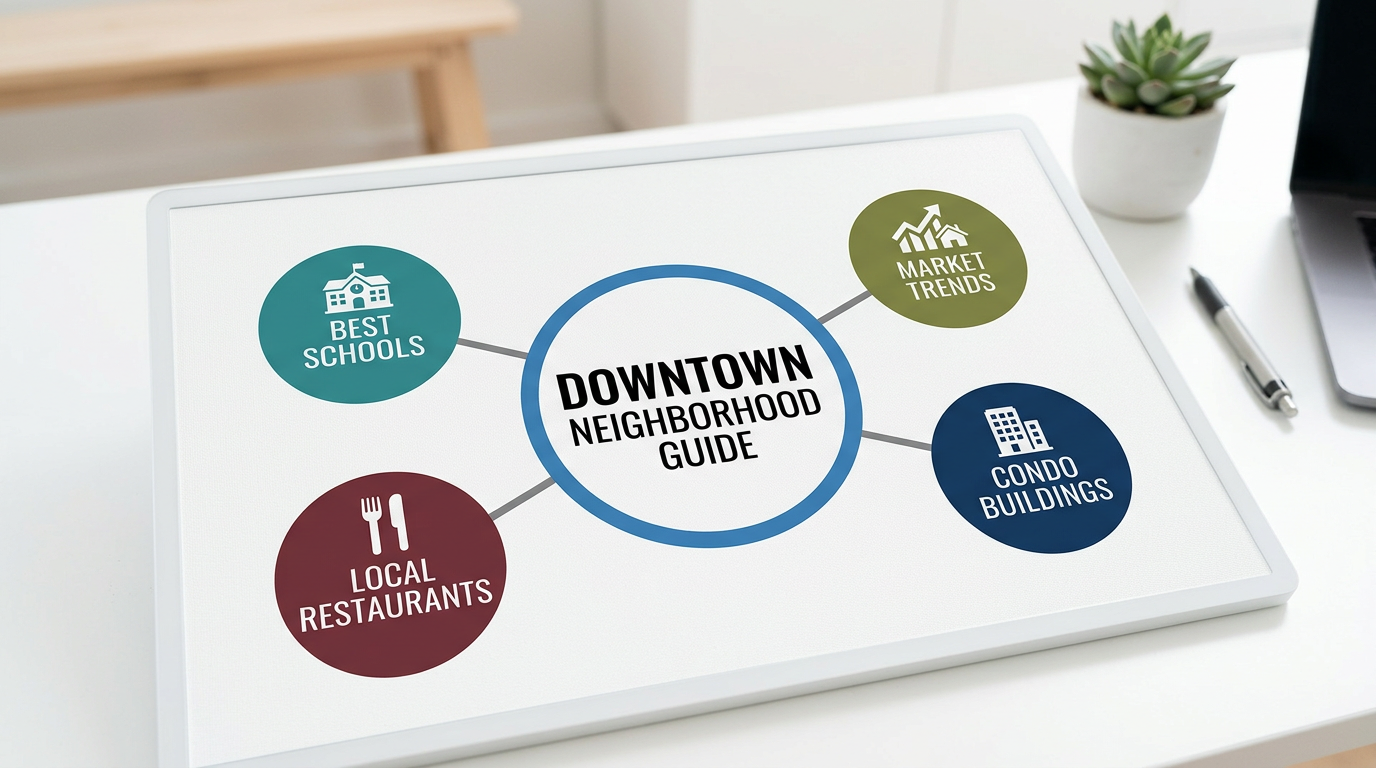
Instead of thinking in one-off blog posts, think in comprehensive content hubs. Create detailed neighborhood guides that cover schools, parks, market trends, and local businesses. Develop pillar pages for specific property types, like historic homes or new construction developments in your area. Build out a library of content that answers the real questions your clients ask every day.
Every piece of content must be structured to be quotable. This means using clear headings, answering questions directly, and showcasing unique, first-hand knowledge. This is how you move beyond just ranking on a results page and start *being the result* in an AI Overview. A top-tier web development agency can structure your site with the right templates to facilitate this strategy.
Embrace Schema Markup: The Language of SEO
The secret to making your content “quotable” for AI lies in structured data, also known as schema markup. This is a vocabulary of code you add to your website that explicitly tells search engines what your content is about. It’s like labeling your content for the AI librarian.
For real estate, a few schema types are critical. `RealEstateAgent` schema clearly defines who you are and your credentials. `RealEstateListing` schema structures your property pages for better visibility. `FAQPage` schema on your question-and-answer pages makes you eligible for rich snippets. And `LocalBusiness` schema reinforces all your location and contact information.
This may sound technical, but it's an enormous advantage. Using a real estate-specific website framework can help. For example, the popular WordPress ecosystem Houzez publishes its own SEO guidance for agents, focusing on pre-built schema, fast page speeds, and clean IDX integration. When your tech stack is designed for real estate, you're not fighting against it to implement best practices.
Tying It All Together: From Local SEO to AEO
Ultimately, your success hinges on mastering the core principles of local search. According to Google's own documentation on local ranking, the algorithm matches businesses to searchers based on relevance, distance, and prominence. Your content strategy proves your relevance, and your review strategy builds your prominence.
This holistic process is what a modern professional seo company focuses on. It’s a synthesis of technical site optimization, deep content strategy, and aggressive reputation management. It is about building a digital footprint so authoritative that Google's AI has no choice but to see you as the subject matter expert for your market.
Thinking this way transforms SEO from a nagging marketing task into a core business asset. Your goal is to become the undeniable answer to any real estate question in your service area. When you achieve that, you don’t just get more leads. You build a moat around your business that generates predictable growth for years to come.
If your current digital marketing isn't built for this new, AI-driven reality, it's time for a new plan. Don't wait until your competitors have already established themselves as the AI's favorite. A good first step is to audit your Google Business Profile. If it's incomplete or hasn't been updated in months, it’s a red flag. To see how your online presence stacks up and where the biggest opportunities lie, contact our team for a discussion.