answer engine optimization services for leading brands
aeo turns brand expertise into machine-usable answers for ai assistants and chatbots. learn why optimizing for citations, not just clicks, is the future of search.

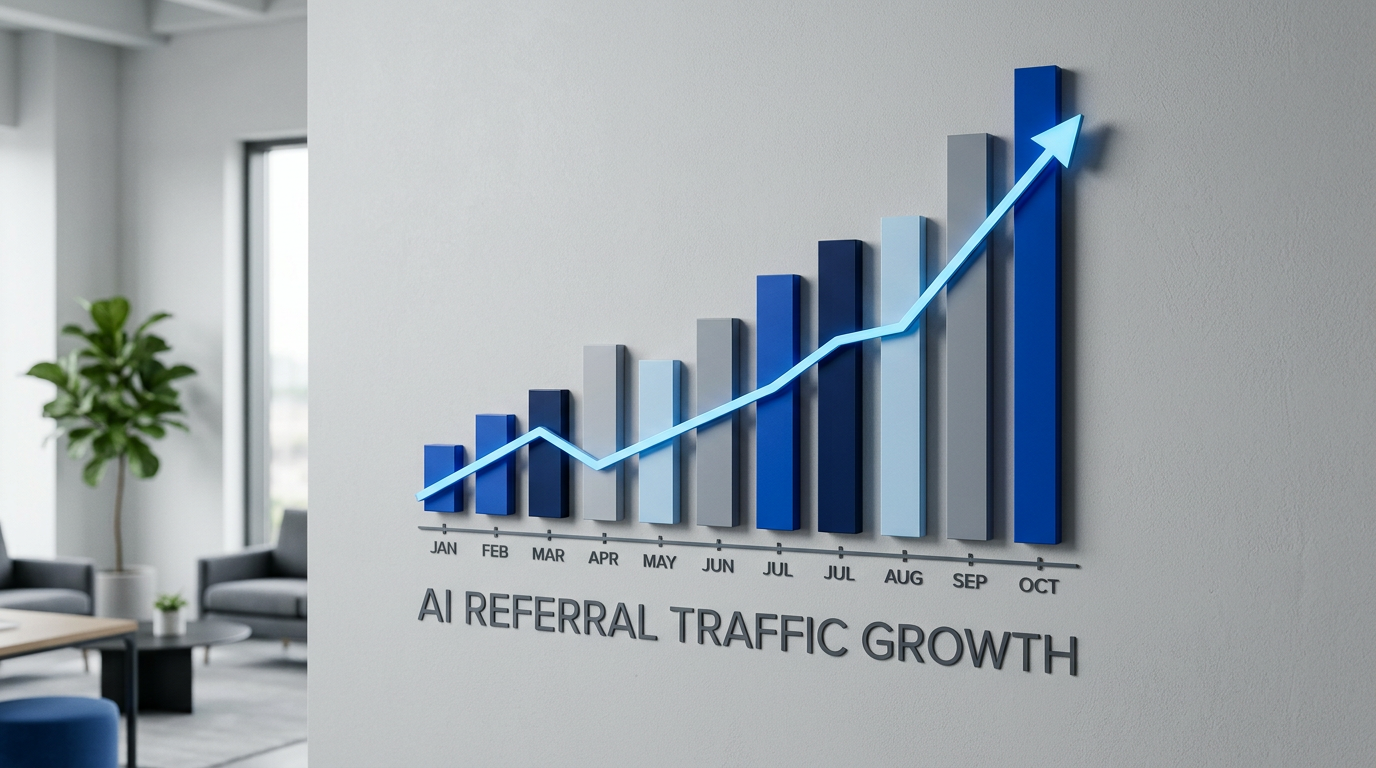
About one in every 100 visits to your website already comes from an AI. Right now, AI referral traffic averages 1.08% of all site traffic across major industries. It’s not a tsunami, but it's a distinct, measurable, and growing acquisition channel. This isn't a side effect of good SEO. This is the new front line of digital strategy, and it demands an entirely new playbook.
Answer Engine Optimization (AEO) is that playbook. It’s the discipline of making your brand’s knowledge answer-ready for AI assistants like ChatGPT, Google's AI Overviews, and enterprise chatbots. It is the process of turning your internal expertise into structured, citable, machine-usable answers that show up everywhere your customers are asking questions.
The Search Landscape Has Fundamentally Changed
The decades-long battle for the top blue link is losing its relevance. Gartner projects a stunning 25% drop in traditional search engine volume by 2026 as users turn to AI for direct, synthesized answers. The data already proves the shift is well underway. Nearly 60% of all Google searches end without a single click because the answer appears directly on the results page.
This isn't a threat to your visibility. It's a total realignment of the goal. The objective is no longer just to rank, but to be the answer. When a user asks an AI assistant about a problem your product solves, your brand needs to be the source it trusts and cites. We're moving from a world of optimizing for clicks to a new reality of optimizing for citations.
Consider the intent difference. A user typing "CRM software" into a search bar is browsing. A user asking Gemini, "What are the best CRMs for a small real estate agency that needs to track leads from Zillow?" is making a decision. Your digital marketing strategy must be engineered to win that specific, high-intent moment.
AEO as Brand Strategy: Build a Machine-Readable Corpus
Effective Answer Engine Optimization isn't about finding loopholes in an algorithm. It's a strategic initiative to build an organized, authoritative body of knowledge that an AI can trust. You're not just creating content pages. You're building a "brand corpus" that serves as the training data for the next generation of answer engines.
Turn Internal Conversations into AI Training Data
Your company’s best, most compelling answers probably aren't in your polished marketing copy. They live inside your sales team’s call scripts, your customer support logs, site search data, and your internal product wikis. These are the real-world questions and nuanced solutions that generic web content simply cannot match.
Mining this internal data is the foundation of a powerful AEO program. The questions customers ask a sales rep, like "How does your tool integrate with Salesforce versus a direct API?" are pure gold. By operationalizing these conversations, you create content that is novel, specific, and incredibly valuable to Large Language Models hungry for reliable, non-obvious information. Using ai automation services can help streamline the extraction and structuring of this vital internal knowledge.
Mastering the Answer-First Format
Once you've identified these core truths, you must format them for machines. The current best practice is the “answer-first” model. Every key page on your site should begin with a concise, neutral answer block, typically 40 to 60 words long, that directly addresses the page's primary query.
From there, you structure the rest of the page with clear, question-based headings like “How to Fix…”, “What Are the Best…”, or “Compare X vs Y.” These act as perfect signposts for an AI scraper. Elements like data tables, short bulleted lists, and tightly written paragraphs are more easily extracted and repurposed into AI-generated answers and chatbot responses. This technical execution fundamentally enhances your existing seo services portfolio.
Measuring What Matters: From Rankings to AI Citations
The old metrics are becoming insufficient. Chasing keyword rankings is like trying to measure the ocean with a thimble when the real action is happening inside conversational AI platforms. The new goal is AI visibility, measured in citations and brand mentions within answer engines.
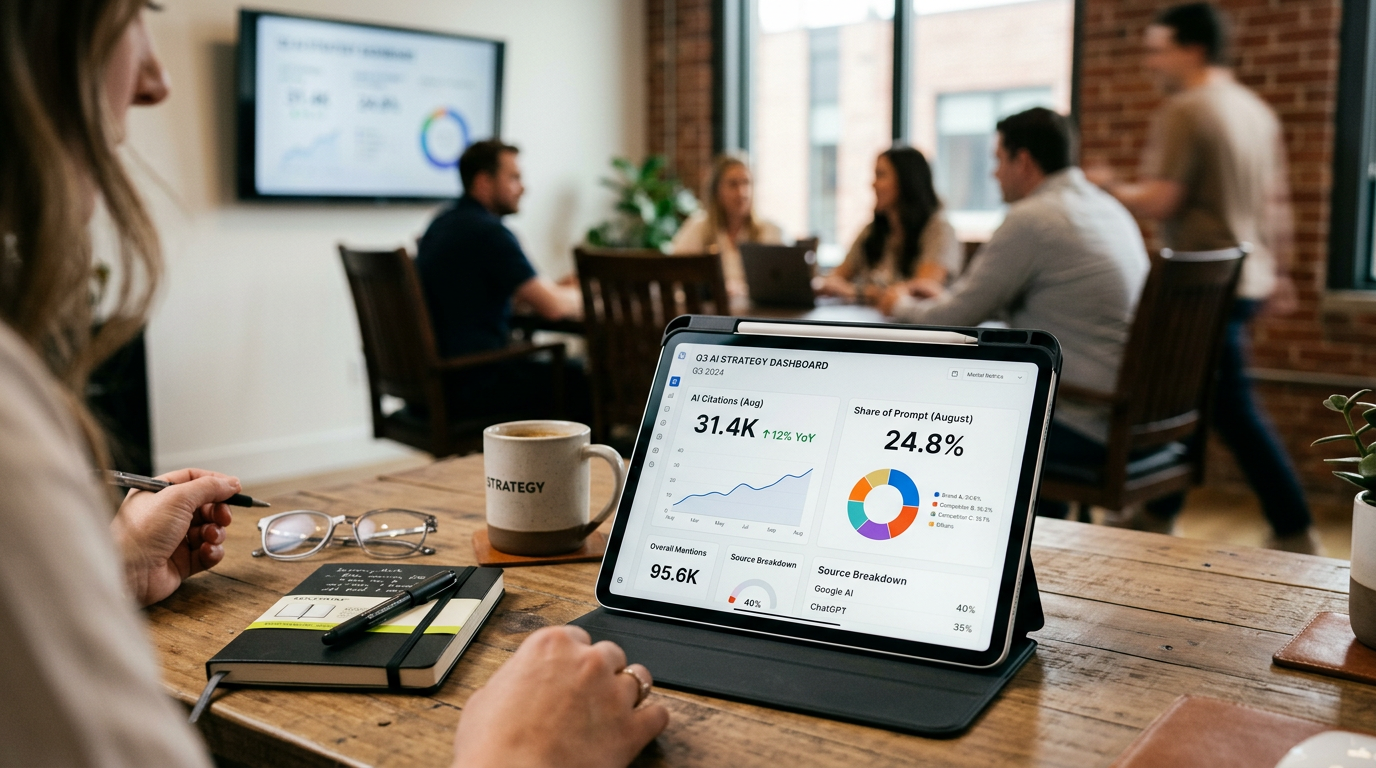
Specialized tools are emerging to provide this new layer of intelligence. Platforms like Peec AI and Profound are built specifically to monitor where and how your brand appears in AI answers across ChatGPT, Gemini, and Google’s AI Overviews. Even Google Search Console remains essential, but we now use it to track snippet performance, AI-driven summaries, and zero-click impressions with new focus.
Top practitioners now audit their AI visibility every quarter, iterating on content that gets cited and reinforcing what doesn't. As many recent insights on emerging AEO trends and strategies reveal, the entire measurement framework is being rebuilt around visibility within AI platforms, not just on a SERP.
A Practical Blueprint: Anatomy of an Answer-Ready Page
So what does an AEO-optimized page actually look like? It's a piece of content engineered for extraction. It balances human readability with machine parsability, following a clear blueprint to maximize its chances of being selected as a definitive source.
The 40-60 Word Answer Block: Your Golden Ticket
At the very top of your page, directly below the H1, sits your answer block. This is your primary target for citation. It must be factual, neutral in tone, and directly answer the core question of the page. No marketing fluff, no brand self-promotion. Just the facts, presented cleanly, as if you were writing for an encyclopedia entry.
Structuring for Extraction, Not Just Scannability
The rest of the page needs clear structure. Use simple lists with `
- ` tags for features or steps. Employ `