forget traffic: your content strategy needs qualified leads
is your content generating traffic but no real business? it's time for an intent-first content marketing strategy focused on attracting and converting qualified leads.
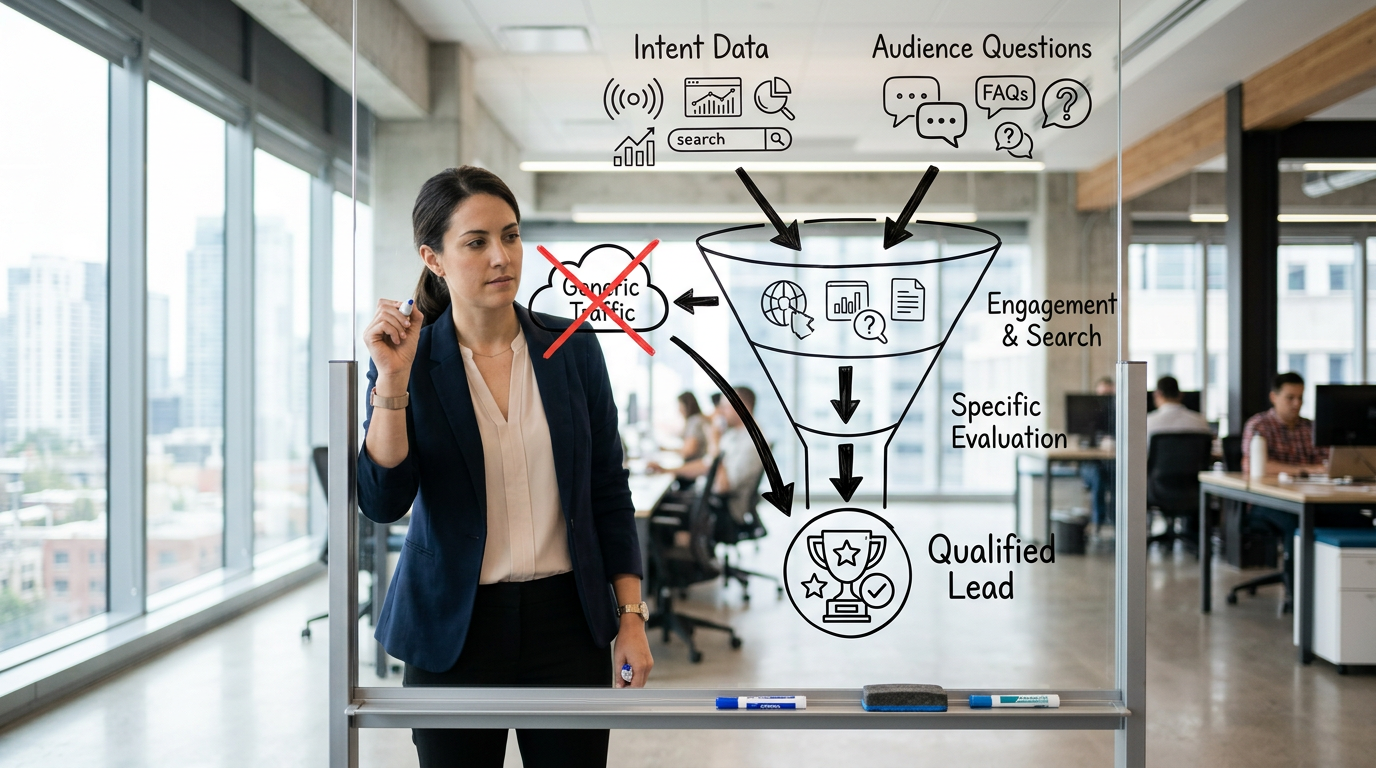
Does this feel familiar? Your analytics show a steady climb in website traffic. Your articles are ranking for their target keywords. But the sales team keeps asking the same question: where are the good leads?
This is the great disconnect in modern content marketing. We got so good at chasing search volume that we forgot the actual goal. It's not about getting seen. It's about getting seen by the right people, at the right time, with the right message.
Businesses that prioritize a high-intent content strategy see six times higher conversion rates. That is not a small number. It's the difference between a content program that's a cost center and one that's a revenue engine.
The Traffic Trap: Why Your Content Fails to Convert
For years, the formula seemed simple. Find a high-volume keyword, write a comprehensive article, build some links, and watch the traffic roll in. This traffic-first approach is now a liability. Why? Because the internet is drowning in generic content designed to rank, not to help.
The rise of AI content tools has supercharged this problem. It's never been easier to produce thousands of words that say absolutely nothing of value. This content might tick Google's boxes for a little while, but it completely fails the human test. It doesn’t build trust, answer nuanced questions, or guide a prospect toward a solution.
Your potential customers are smarter than ever. Research shows 42% of B2B buyers look at four to six pieces of content before making a move. If your content is just a shallow overview designed to capture a keyword, you've already lost their trust. They click away, and you're left with a bounce, not a lead.
The result is a sales pipeline full of unqualified names, freebie seekers, and students writing research papers. Your sales team wastes time sifting through digital noise, and your content marketing ROI looks dismal, even though your traffic charts are up and to the right.
The Intent-First Framework: From Keywords to Questions
The solution is a fundamental shift in perspective. You need to move from a traffic-first mindset to an intent-first framework. Stop asking, “What keywords can we rank for?” and start asking, “What questions does our ideal customer have at each stage of their buying journey?”
This isn't just theory. Forrester Research found that organizations mapping content to specific buyer journey stages see 73% higher conversion rates. Think about that. You're not just getting more leads, you're getting leads that are exponentially more likely to close because you’ve guided them.
An intent-first strategy recognizes that not all searches are created equal. Someone searching for “what is SEO” is in a completely different headspace than someone searching for “best B2B SEO agency for SaaS.” The first is informational intent. The second is commercial, high-intent. Your content needs to serve both, but with different goals and different calls to action.
Mapping Content to the Buyer's Journey
A practical way to implement this is by bucketing your content strategy into the classic funnel stages. You need to be the best answer at every point.
Top of Funnel (Awareness): Here, you answer the “what is” and “how does” questions. This is where blog posts, guides, and ebooks shine. The goal is not a hard sale, it's to be the trusted teacher. You become the go-to resource they remember when their problem becomes more acute.
Middle of Funnel (Consideration): The prospect now understands their problem and is exploring solutions. Content here is more specific. Think case studies, comparison guides, webinars, and white papers. Your goal is to show them *how* your approach or product solves their specific problem better than anyone else. This is where an effective digital marketing agency proves its worth, building assets that bridge awareness and decision.
Bottom of Funnel (Decision): They are ready to buy. They just need to pick a vendor. Content at this stage is all about validation and removing friction. This includes pricing pages, live demos, free trial pages, and detailed FAQ sections. A clear path to purchase, supported by solid website development, is critical here. It has to be seamless.
The Role of Intent Data Platforms
How do you know what your buyers are actually thinking about? You stop guessing. Intent data platforms are the new secret weapon. These tools analyze billions of online signals to identify which companies and contacts are actively researching topics related to your business.
Instead of hoping your ICP stumbles upon your blog post, intent data tells you that three people from Acme Corp just read three articles about “logistics software integration.” This allows your sales and marketing teams to prioritize outreach and serve them hyper-relevant content, turning a cold process into a warm, timely conversation.
Tools and Tactics for a High-Converting Content Engine
Strategy is nothing without the right tools and execution. Building a true lead-generating content machine requires a modern tech stack. No, you don't need dozens of subscriptions, but you do need a few key platforms to connect your efforts.
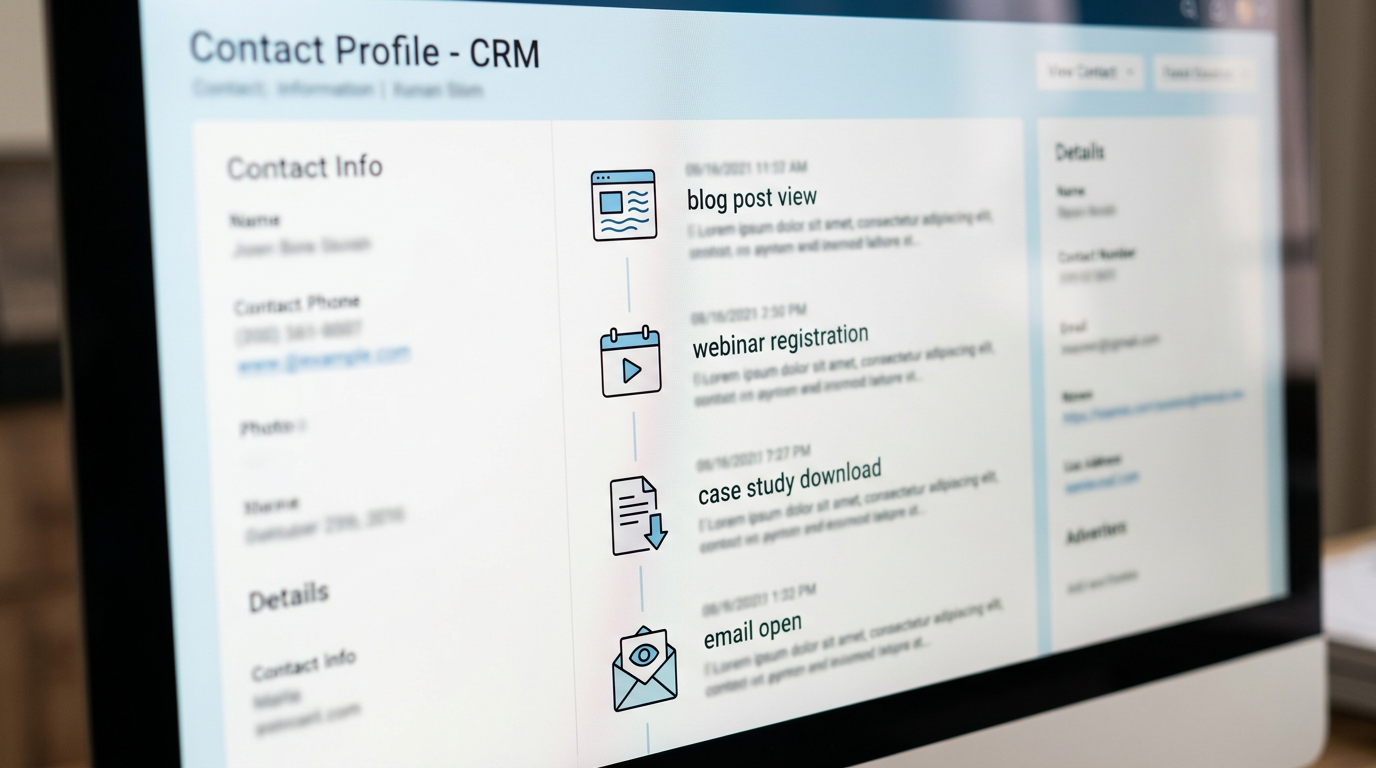
Your CRM is the heart of the operation. A platform like HubSpot is the undisputed leader for a reason. It allows you to host content, track lead behavior across every touchpoint, score leads based on their engagement, and nurture them with automated email sequences. You can finally answer the question, “Did that blog post from six months ago contribute to this million-dollar deal?”
For finding those perfect, hyper-relevant content opportunities, tools like LeadsGorilla provide a unique advantage. By analyzing your target audience's digital weaknesses, like a low SEO score or a missing website, you can create content that speaks directly to their most urgent pain points. There are a number of proven strategies for using content to convert leads, and this type of targeted approach is at the top of the list.
This targeted approach is also where newer tactics fit in. For example, once you identify high-intent prospects, you can layer on a paid strategy like ai influencer marketing to surround them with trusted voices in your industry, reinforcing your message.
Beyond 'Publish': The Art of the Content Refresh
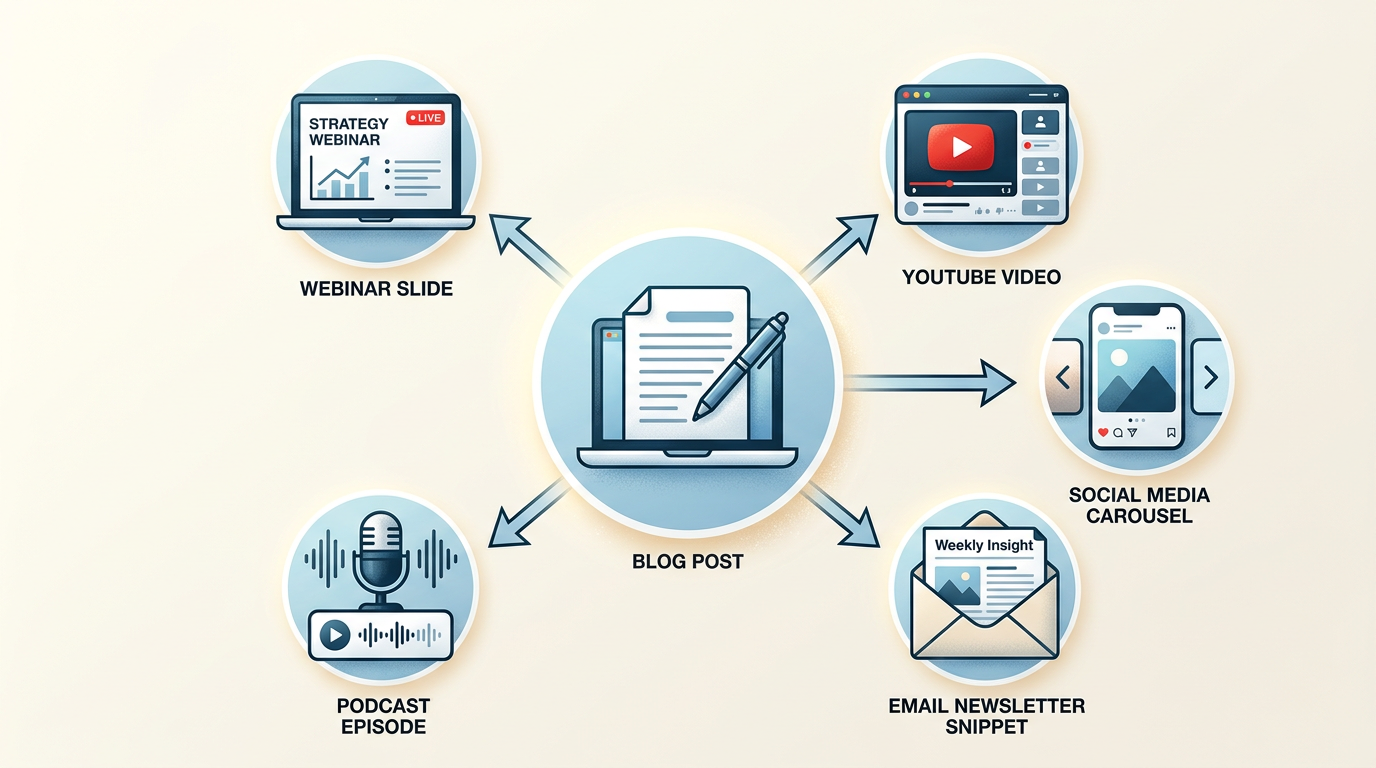
The content marketing graveyard is filled with “one and done” articles. The most successful content marketers know that publishing is just the start. The real leverage comes from systematically updating, upgrading, and repurposing your existing content.
Why is this so powerful? First, Google rewards freshness. An article updated for 2026 with new data and insights will almost always outperform a static one from 2023. Second, it's efficient. It’s far easier to improve a piece of content that's already ranking on page two than to create something from scratch and have it rank on page one.
Set a quarterly reminder to audit your top-performing content. Can you add a new case study? Update the statistics? Embed a video summary? Turn a long-form guide into an email mini-course? This continuous improvement loop creates evergreen assets that generate qualified leads year after year.
Think of your content not as a series of individual posts, but as a living library of resources for your customers. Your job is to be the best librarian, constantly curating and improving the collection. That is how you build a content engine that drives real, measurable growth for your business.
If you're tired of vanity metrics and want to build a content strategy that packs a financial punch, it’s time to shift your focus. Let's start a conversation about turning your content into your best salesperson. Feel free to book a strategy call with our team.