geo pricing: your zero-click p&l for small business
stop thinking about traffic. generative engine optimization (geo) pricing is finally clear, with smb stacks from $100. here's your guide to geo's roi and zero-click p&l.

Did you know that 60% of Google searches now end without a single click? For years, we obsessed over traffic as the ultimate sign of marketing health. But that era is officially over.
The game has moved from ranking on a list to being the answer itself. This requires a new playbook, a new budget, and a new way of thinking. Welcome to generative engine optimization, or GEO as we call it. It’s not about clicks; it's about building a P&L for your brand’s visibility where customers now live: inside AI conversations.
Why Your Old SEO Budget Is Not Enough for GEO
For too long, companies have tried to squeeze GEO into their existing search engine optimization budget. This is a fundamental mistake. SEO is about climbing a ladder of search results. GEO is about becoming an authoritative source that AI models trust and cite.
They are two different disciplines requiring different tactics and investments. The most forward-thinking agencies are already separating them. Evergreen Media’s latest guidance recommends that businesses with solid SEO should allocate an additional 20% to 25% of that budget specifically to GEO. This isn't a small add-on; it's a dedicated optimization layer.
This is quickly becoming a distinct line item on marketing P&Ls for a reason. The momentum is undeniable, with current projections for the global GEO market showing growth from about $1.1 billion in 2026 to over $17.1 billion by 2034. This is a recognized, budgetable channel, not a fuzzy experiment.
Ignoring this shift means you're planning to become invisible to a huge, and growing, segment of your audience. The nearly 800 million weekly users on ChatGPT alone prove the scale. These users aren't clicking; they're asking, and someone else is providing the answer.
Building a Lean SMB GEO Stack: What Does It Actually Cost?
So, what does a real-world investment look like for a small business? The good news is that securing your brand’s presence in AI is more accessible than you might think. A powerful, entry-level GEO stack can be built for a few hundred dollars a month, not thousands.
It boils down to three core components: monitoring, content production, and technical tuning.
Monitoring Your AI Visibility
You can't improve what you don't measure. The first step is getting a clear picture of where you stand. Are AI models mentioning you for your key products or services? Yes or no?
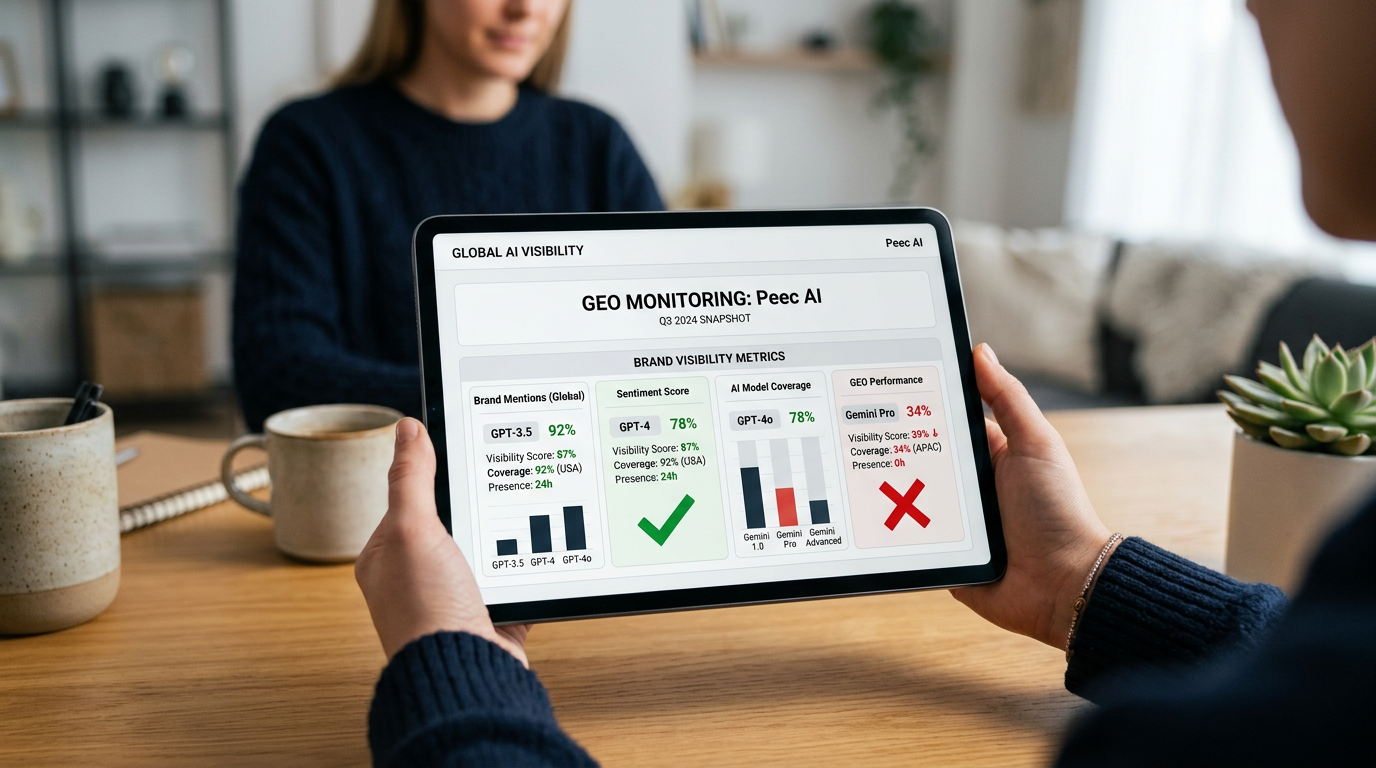
Tools like Peec AI have emerged as a favorite for small businesses, offering simple, multi-model monitoring for a very manageable price of around $89 per month. It gives you a clear dashboard showing your citation status across the major large language models. Other tools like Monitoro operate in a similar, sub-$100 monthly tier, making visibility tracking a no-brainer.
Fueling the Engine: Content & Execution
Once you know where you stand, you need the fuel to improve your position. GEO-focused content is structured differently. It prioritizes entities, direct answers, and data formats that AI can easily parse and trust. This is where execution tools come into play.
Platforms like Surfer and Writesonic have become critical parts of the modern GEO workflow. They help you structure your pages with the comparison tables, structured data, and FAQ schemas that generative engines love. Industry benchmarks suggest dedicating about 20% of your execution budget to these content production tools.
The All-In SMB Budget
When you combine monitoring, content creation, and basic schema tools, a practical and effective small business GEO stack lands in the $100 to $500 per month range. This is a concrete, manageable investment for claiming your territory in the new landscape of AI-powered search. For many, this is a tiny fraction of what a single lost customer is worth.
Measuring What Matters: Early ROI in a Zero-Click World
Forget vanity metrics. In the zero-click economy, the only metric that matters is coverage. Your ROI is measured in how often you are the cited authority when a potential customer asks a question.
The most exciting part about GEO is the speed at which you can see tangible results. This isn't a 12-month SEO slog. A 2026 study from Erlin AI provides some incredible benchmarks for what's possible.
Quick Wins and Coverage Lifts
The study, which analyzed over 500 brands, found that implementing specific GEO tactics delivered dramatic and immediate impact. Adding comparison tables, creating an llm.txt file to guide AI crawlers, and deploying robust FAQ schema resulted in a 28% to 34% lift in AI coverage. Even better? This lift occurred within just 14 to 21 days.
For any small business owner who needs to justify marketing spend, that is a game-changing turnaround time. You can test, measure, and prove the impact of your investment in less than a month.
The High Cost of Doing Nothing
The same study also quantified the cost of inaction. It’s not just a missed opportunity; it’s an active erosion of your brand’s relevance. The data shows that AI visibility decays by approximately 1.8% for every month of content inactivity.
Conversely, brands that committed to simple monthly updates of their key content saw a 23% higher AI coverage rate than their stagnant competitors. Your visibility is a living asset. Neglect it, and it withers. Nurture it, and it compounds.
Your Blueprint for High-ROI GEO Activities
Simply having the tools isn’t enough. True ROI comes from a focused strategy. The data shows us exactly where small businesses should concentrate their efforts for the biggest returns on their GEO investment.
Your entire digital marketing strategy needs to be re-evaluated through the lens of AI citation. It requires a shift in thinking from just creating content to building a distributed web of authority.
Go Beyond Your Blog: The Power of Source Diversification
Here’s a stat that should stop every content marketer in their tracks: 68% of all AI citations come from off-site, third-party sources. If your whole GEO strategy lives on your company blog, you're fighting for less than a third of the pie.
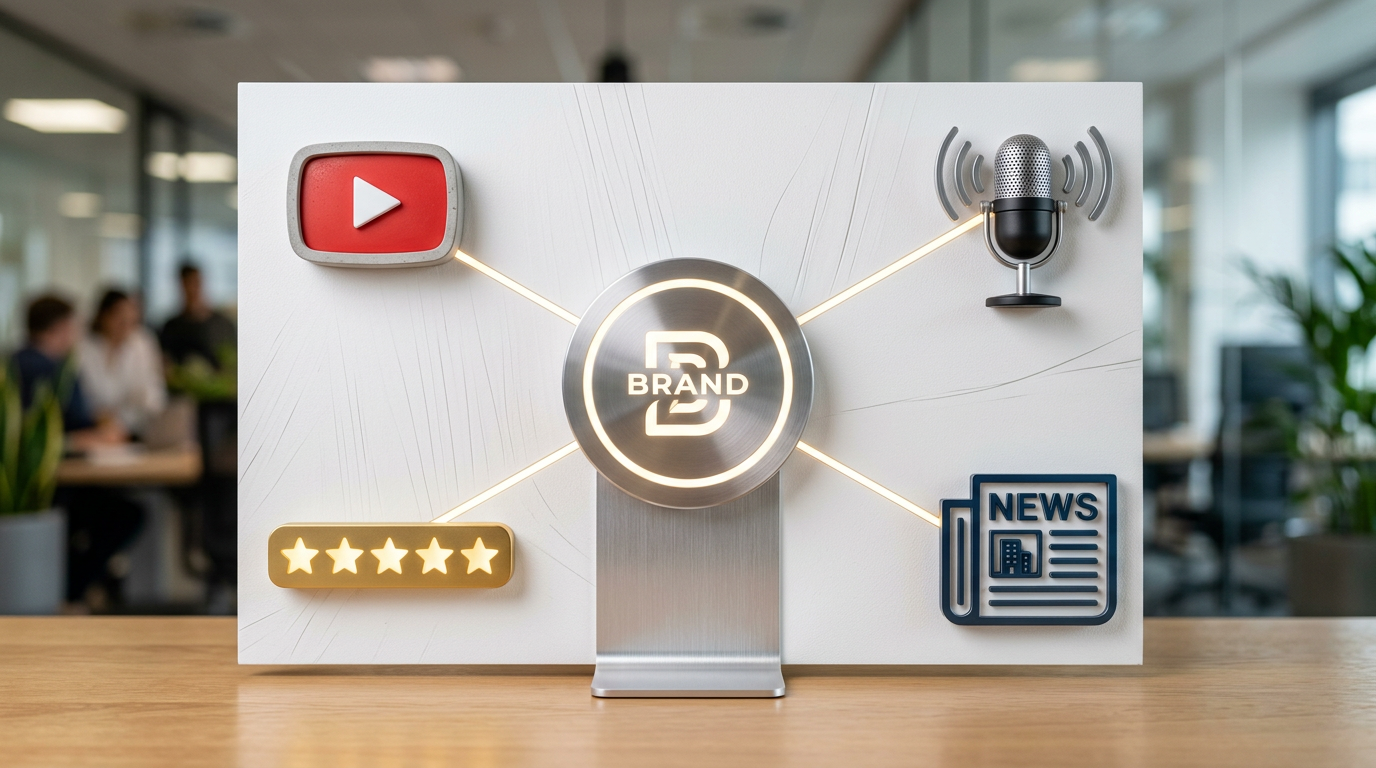
The Erlin AI data is crystal clear on this. Brands relying on a single source type (like their own website) topped out at a paltry 18% AI coverage. But those that strategically built their presence across three or more distinct source types saw their coverage skyrocket to between 58% and 78%.
For a small business, this means a strategic focus on getting mentioned on trusted review platforms, in niche industry publications, and even on YouTube can yield a far greater ROI than simply publishing one more blog post.
Become the Source: Your Original Data Superpower
How does a small brand compete with massive enterprises? By creating unique, citable data. According to DojoAI, brands that publish original research, such as “State of the Industry” reports or proprietary benchmarks, are cited in AI answers about 10 times more often than those publishing generic content.
You don't need a massive research department. A small, focused study on a niche topic you know better than anyone can have an outsized impact relative to its cost. It positions you as the source, making you an indispensable asset for AI models aiming to provide authoritative answers.
The age of traffic is over. The age of influence is here. With pricing now clear and ROI measurable in weeks, the only remaining question is how much market share you're willing to concede. If you're ready to build your zero-click P&L and ensure your business is the answer, not an afterthought, talk to our geo specialists.