how long to build an app? you're asking the wrong question.
forget the simple question of 'how long does it take to build an app?'. in 2026, the real question is 'how fast can we validate our core idea?'. here’s the new model for app timelines.
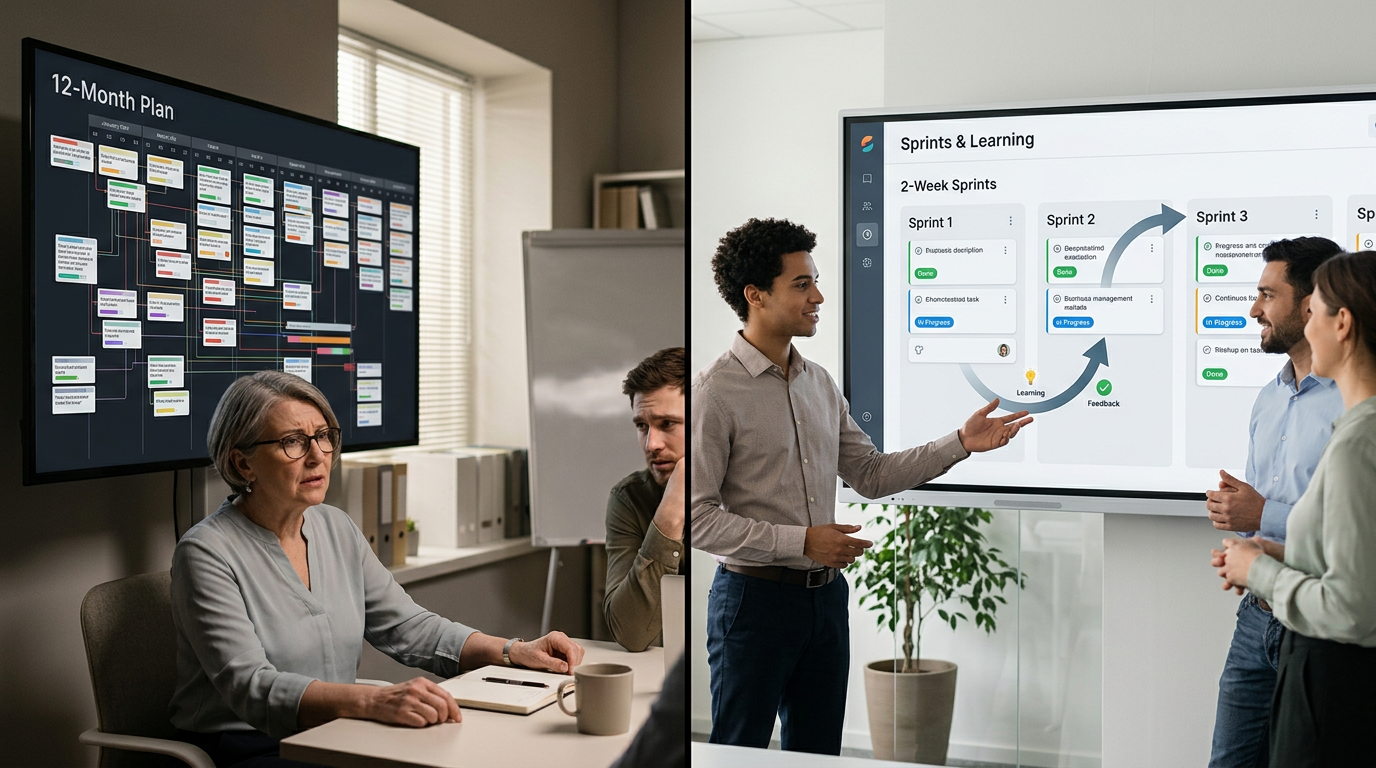
Every founder wants to know the number. How many months? How many weeks until my idea is live on the App Store? The standard answer puts a complete custom app build in the 4 to 12-month range. But that fact, while useful for a budget meeting, completely misses the point of building a successful product today.
Focusing purely on calendar time is a trap. It frames development as a predictable, linear march where the prize is a finished piece of software. That’s old thinking. For successful apps in 2026, the goal isn't just to ship. The goal is to learn faster than your competition and build what the market actually wants.
So the right question isn't, “how long will my app take?” It's, “how fast can we validate our most critical assumption?” The answer to that question changes everything about how you plan, budget, and build.
What Standard App Timelines Actually Look Like in 2026
Before we can reframe the question, we need a baseline. If you're building a business case, these calendar-based estimates from across the industry are your starting point. The data shows a clear divergence based on project complexity.
A Minimum Viable Product (MVP) with a tightly controlled scope can realistically go from concept to launch in just 6 to 10 weeks. This isn't a theory. It's the current reality for focused teams who ruthlessly prioritize the single most important workflow to prove market demand.
As you add features and complexity, the timeline stretches. A 2026 industry breakdown shows a standard business app taking 10 to 16 weeks. A multi-sided marketplace app, with its dual user roles, payment systems, and review functionality, typically lands between 16 and 28 weeks. The added time comes from managing more complex logic and integrations.
At the highest end, enterprise and AI-native apps command much longer timelines. Enterprise-grade apps often stretch from 9 to 18 months or more, a duration dictated by deep integrations, stringent security audits, and complex compliance requirements. True AI-powered apps, which might involve custom large language models or real-time inference, can easily take 10 to 20+ months to get right. These timelines reflect immense architectural complexity, not team inefficiency.
These figures are consistent with industry-wide data. You can explore a broader analysis of project durations in these authoritative app development timeline benchmarks from Clutch, which aggregate data from hundreds of real-world projects.
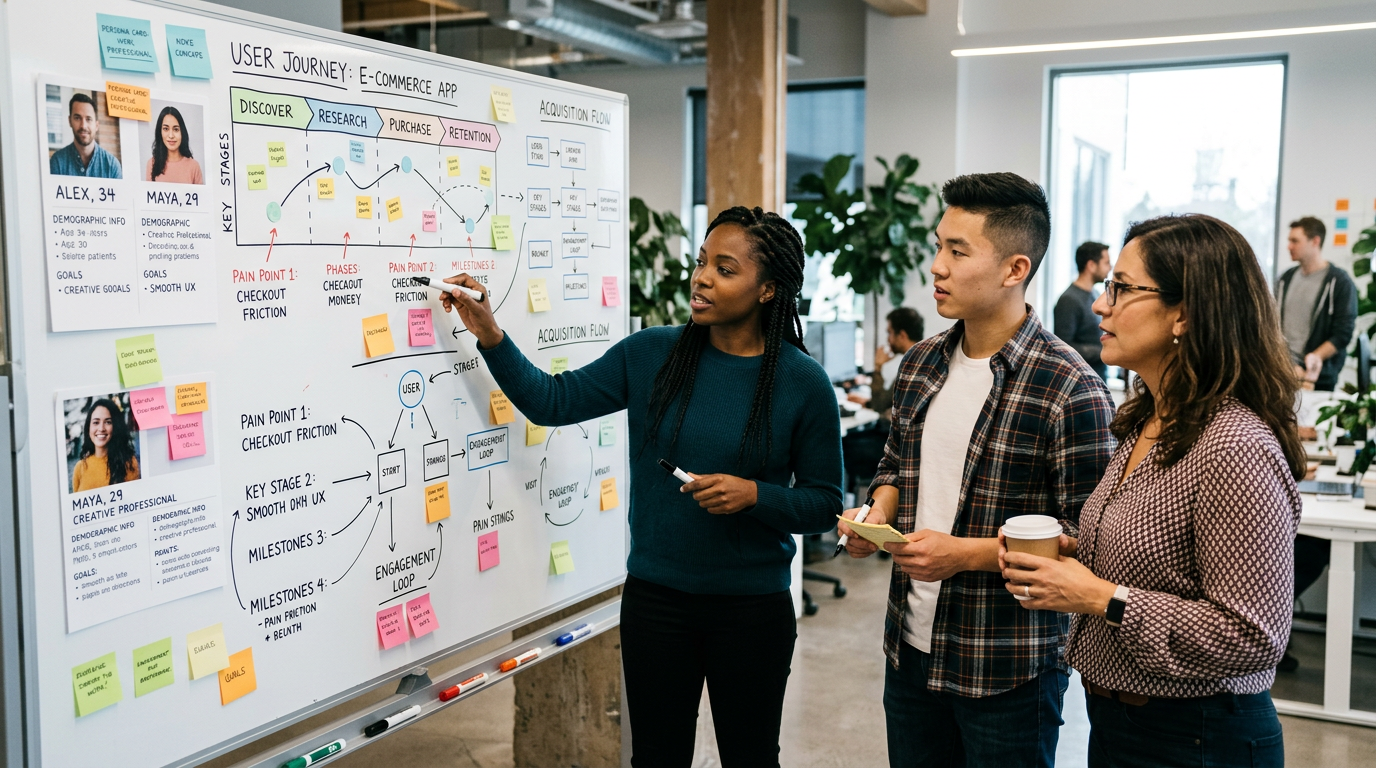
The Real Metric: Time to First Validated Learning
Now, let's forget those numbers for a second. The true value of shipping an MVP in 8 weeks isn't just its speed. It's a strategic tool designed to answer a single, terrifyingly expensive question: will people actually use this?
This is why you should measure progress with a different yardstick: Time to First Validated Learning. Instead of tracking progress by features shipped, you track it by risky assumptions confirmed or debunked by real user behavior. Your first development cycle isn't about building a small version of your grand vision. It's about building the smallest possible thing to prove your core hypothesis.
Is your pricing model viable? Is your core user experience truly better than the alternatives? Launching a focused MVP in 6 to 10 weeks delivers your first real answers from the market. That feedback, good or bad, is infinitely more valuable than another month spent building features in a vacuum.
This approach reframes the entire development journey. That 4 to 12-month build for a full app is no longer one monolithic project. It becomes a series of shorter, faster learning cycles. Each iteration builds upon the validated learnings of the last, systematically reducing market, usability, and technical risk with every sprint.
How AI and Cross-Platform Tools Reshape the Calendar
This strategic shift toward rapid learning is being supercharged by two powerful forces: AI-assisted coding and modern cross-platform frameworks. They don't just make development faster in a linear sense. They make it smarter and more efficient, allowing for more cycles of learning within the same budget.
First, look at Flutter. By 2026, Google's framework is used in over 40% of all cross-platform projects, making it the default choice for many new builds. Its power comes from a single codebase that targets iOS, Android, web, and even desktop. This nearly halves the duplicated effort of building and maintaining separate native apps, which was the standard just a few years ago. You use one team, maintain one set of code, and achieve a consistent user experience everywhere.
Then you have the rise of AI pair programmers. Tools like GitHub Copilot are now fixtures in professional development workflows, reducing the time spent on boilerplate and repetitive code by an estimated 25-35%. This doesn't mean developers are redundant. It means their brainpower is reallocated from tedious scaffolding to higher-value activities: system architecture, user experience refinement, and creative problem-solving. This practical ai automation is a huge lever.
Combined, these forces are directly responsible for an estimated 15-20% reduction in end-to-end project timelines compared to just a couple of years ago. That saved time is a strategic asset. You can either use it to lower your budget or, more powerfully, reinvest it into more iterations to perfect your product-market fit.

Building Your Timeline Around Risk Reduction Phases
A smart development plan maps each phase to the specific risk it’s designed to eliminate. This transforms your timeline from a simple schedule into a strategic risk-reduction roadmap. Here’s how to structure it.
Phase 1: Discovery & Strategy (2-4 Weeks)
Goal: Mitigate Market Risk. This is your defense against building something nobody wants. This phase is pure research and strategy. It involves deep competitor analysis, user persona workshops, and interviews with potential customers. The output is a clear problem definition and a validated business case, preventing you from wasting a fortune on a bad idea.
Phase 2: UI/UX Design & Prototyping (3-6 Weeks)
Goal: Mitigate Usability Risk. Here, you ensure the app is not just functional but intuitive and engaging. This involves creating wireframes and, crucially, building a clickable prototype in a tool like Figma. Testing this prototype with real users can expose fatal flaws in your proposed user flow before a single line of code is written, de-risking the entire user experience.
Phase 3: The MVP Development Sprint (6-10 Weeks)
Goal: Mitigate Investment Risk. This is the focused coding phase to build the core learning tool. Whether you're building native or cross-platform custom mobile apps, the objective is singular: get the most essential user journey into the hands of real users to get real data. Often, this requires a backend, connecting the app to the same infrastructure that supports your web development efforts.
Phase 4: Launch, Learn, and Iterate (Ongoing)
Goal: Mitigate Complacency Risk. The work isn't over at launch. First, factor in the final hurdle: app store approvals. Google Play typically takes 1-7 days, while Apple's more rigorous process can take 2-10 days. Once live, the real work begins. You'll analyze user behavior, gather feedback, and plan subsequent sprints to scale what works and cut what doesn't. This iterative loop is what turns a good MVP into a great, sustainable business.
Thinking this way changes your entire approach. You move from running a feature factory to operating a learning engine, building momentum with each validated step. You’re not just building an app. You’re building a business, one proven assumption at a time.
If you're ready to plan your next project around strategic learning cycles instead of just a calendar, we should talk. We can help you define that first critical experiment and build a roadmap that puts market validation first. To see what that looks like for your idea, request a quote and let's start the conversation.