how to choose an seo agency that delivers in 2026
your old seo playbook is obsolete. in a world of ai overviews and zero-click searches, here's how to vet and choose an seo agency that actually gets results.

Let's get one thing straight. About 60% of Google searches now end without a single click to a website. The game has fundamentally changed. If an SEO agency's pitch still revolves around just rankings and link building, you're not talking to a partner for the future. You're talking to a fossil.
The rise of Google's AI Overviews (AIO) is causing organic click decreases anywhere from 18% to 64% for some queries. Meanwhile, the global SEO services market is exploding, projected to hit $108.28 billion by 2026. This creates a dangerous gap between what businesses need and what many outdated agencies provide. Choosing the right partner isn't a luxury. It's a survival tactic.
Why Your Old SEO Playbook Is Broken
For years, the formula was simple: create content, build links, and watch your rankings climb. That playbook is now dangerously obsolete. The search results page is no longer a list of ten blue links. It's a dynamic answer engine, and agencies that haven't adapted are selling you a ghost.
Google’s AI Overviews are the primary culprit. They appear in a huge number of searches, with some data showing they trigger for over 63% of queries that are three to five words long. When Google answers the user's question directly at the top of the page, the incentive to click through to your website plummets. A first-page ranking means very little if no one clicks on it.
This isn't just theory. We're seeing traffic from AI-driven search features surge by over 527%. If your agency isn't talking about how to optimize for visibility inside these AI summaries, they're ignoring the biggest shift in search behavior in a decade. This requires a much more sophisticated approach than simply targeting keywords. It demands an understanding of entity-based SEO, structured data, and creating content that is explicitly designed to be featured.
The goal is no longer just to rank. The goal is to become the source of truth for the AI.
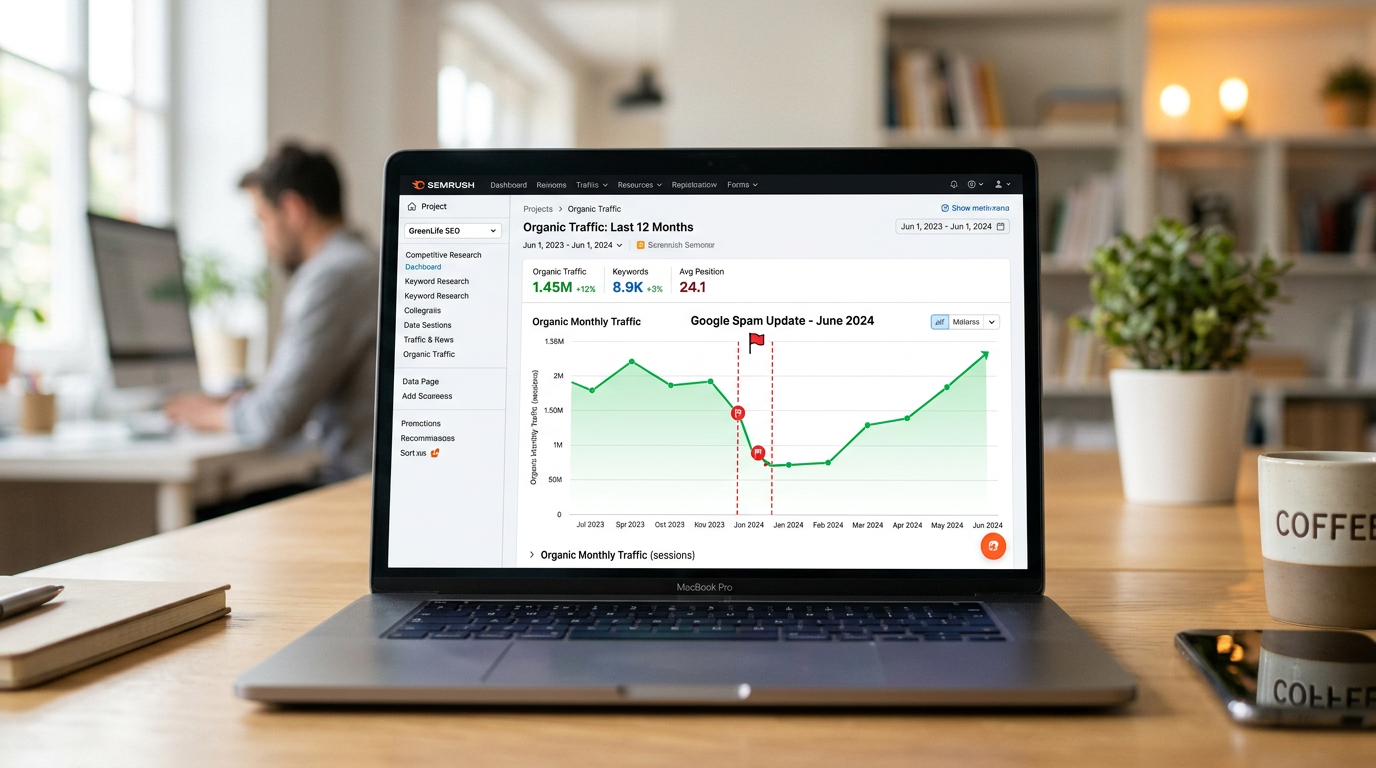
What Real SEO Results Look Like Now
With all this disruption, how do you even measure success? The metrics have to evolve beyond vanity numbers. Real results are tied directly to business outcomes, not just search engine performance. A top-tier professional seo company understands this difference and builds their entire strategy around it.
True SEO delivers a powerful return on investment, often achieving a staggering 700% to 800% ROI over the long term. That’s double the typical return from PPC campaigns. Leads generated from a well-executed SEO strategy also close at a 14.6% rate, with a cost per lead that is, on average, 61% lower than outbound marketing efforts. These are the numbers your CFO wants to see.
However, this level of performance doesn't happen overnight. Any agency promising instant results is a major red flag. Successful campaigns typically start showing a positive ROI within six to twelve months. This is a long-term investment, and the right partner will set those expectations from day one, providing a clear roadmap for growth that aligns with your business goals, not just their service packages.
The Non-Negotiable Questions to Ask Any Agency
You can cut through the noise and disqualify 90% of underwhelming agencies by asking the right questions. Forget the softball questions about their process. You need to pressure-test their expertise for the modern search landscape. This is where you separate the strategists from the salespeople.
1. How, specifically, do you adapt to AI Overviews?
This is the kill shot question. Don't accept a vague answer like "we write great content." Demand specifics. A competent agency will discuss their strategy for getting clients featured in AIO. They'll mention using tools like Semrush to track which keywords are triggering AI summaries and analyzing the patterns, like the fact that many AIO triggers are short, specific phrases.
Ask for a case study from a client after the main AIO rollout in 2024. Ask them to prove traffic stability for AI-affected queries. Can they demonstrate that their clients experienced less than a 20% traffic drop in those areas? Can they show how they pivoted strategy to account for changes in geo optimization or long-tail query performance? Their answer here reveals if they are reactive or proactive.
2. Show me your reporting dashboards and explain your KPIs.
Transparency is everything. Ask to see an anonymized example of a client report. Is it just a list of keyword rankings? Or does it show business-critical metrics like organic lead conversion rates, cost per acquisition, and share of voice? Ahrefs data shows the #1 result gets about 27.6% of clicks, but that number is becoming less reliable. A great agency tracks clicks, impressions, and click-through rates, not just a position number.
Their reporting should tell a story about business growth. It should connect their SEO activities directly to your bottom line. If they can't clearly articulate how their work impacts revenue, they are not the right partner. Their broader marketing services should all feed into this central goal.
3. What is your approach to technical SEO versus content?
Many agencies lean heavily on one or the other. You need a partner who excels at both. A technically sound website is the foundation for everything. Ask them about their process for technical audits, site speed optimization, schema markup, and international SEO if applicable. An agency that can't talk fluently about these topics is likely just outsourcing to a content farm.
On the content side, ask about their approach to thought leadership. Strategies focused on establishing topical authority and expertise are yielding massive returns, with some studies showing a 748% ROI. This isn't just blogging. It's about creating a comprehensive library of content that definitively answers your audience's questions, making you the obvious source for Google's AI to cite.

Beyond the Pitch: Red Flags to Watch For
The SEO industry is unfortunately full of providers who overpromise and underdeliver. This is partly because in-house teams often lack deep expertise; one study found that 57% of marketers cite a lack of SEO skills as a major barrier. This knowledge gap can make it easy to fall for a slick pitch.
Be on high alert for these common red flags:
- Guarantees of #1 rankings: No one can guarantee specific rankings on Google. It's a huge tell that the agency either doesn't know what they're talking about or is willing to mislead you.
- A secret "proprietary" process: Real SEO isn't magic. It's a transparent, data-driven process. Secrecy is usually a cover for outdated or even harmful tactics.
- A heavy focus on link volume: The quality and relevance of links matter far more than the quantity. An agency bragging about getting hundreds of links per month is likely using low-quality tactics that could get your site penalized.
- One-size-fits-all packages: Every business is different. A credible agency will propose a custom strategy based on a deep dive into your specific goals, industry, and competitive landscape.
Remember, you're not just buying a service. You're hiring a strategic partner whose work will have a massive impact on your business's visibility and profitability. According to industry reports projecting massive market growth, the stakes are only getting higher. You can't afford to get this decision wrong.
Choosing the right partner comes down to vetting for modern expertise. Find the agency that isn't just playing today's game but is already preparing you for tomorrow's. Look for the team that obsesses over your business outcomes as much as you do. If you're ready to see what a forward-thinking strategy looks like, get a free consultation with our team to discuss your goals.