ios app development for services: a service design approach
don't just build an app, redesign your entire service journey. our guide to ios app development for service businesses shows you how to boost revenue and efficiency.

Here’s a fact that still shapes multi-million dollar decisions: iOS users consistently generate 1.7 to 2 times more revenue than their Android counterparts. For service-based businesses in fields like fintech, health, and on-demand logistics, that isn't just a random statistic. It's the entire business case.
But building a successful service app for iOS isn't about simply porting your website into a mobile container. The most profitable service apps don't just exist on an iPhone; they are woven into the very fabric of the iOS experience. They rethink the entire service journey, from discovery to payment to repeat business, using native Apple tools.
This is a service design approach to development. It’s less about features and more about moments. Critical moments in your customer relationship that a well-designed native app can transform.
Why Native iOS Still Owns the Premium Service Space
Cross-platform tools have their place, but for premium, revenue-focused services, native iOS development remains the default choice into 2026. The reason is simple economics. When your app directly drives bookings, subscriptions, or high-value transactions, the superior performance and security of native code built with Swift and SwiftUI pay for themselves.
Sectors like telemedicine, finance, and specialized mobility services prioritize native builds because they need direct, reliable access to the core of the operating system. We're talking about frameworks like HealthKit for wellness data, Apple Pay for frictionless transactions, CoreLocation for precise logistics, and Sign in with Apple for secure onboarding. These aren't afterthoughts; they are foundational to a trusted user experience.
The result is an app that feels faster, more responsive, and fundamentally more secure to the end-user. This is crucial when they are trusting you with their payment details, health information, or home address. This focus on platform-specific quality is a core tenet of building custom mobile apps that deliver real ROI.
The Core of Service Design: Three Make-or-Break iOS Moments
Instead of starting with a list of features, let's reframe the development process around your business goals. A service design approach identifies the key stages of your customer journey and maps them directly to native iOS capabilities. It all boils down to optimizing three critical moments.
Moment 1: Discovery and Trust
Before a user ever books your service, they have to find and trust you. On mobile, your App Store page is your new storefront. High-quality screenshots, compelling copy, and positive reviews are non-negotiable for success. This is your first impression.
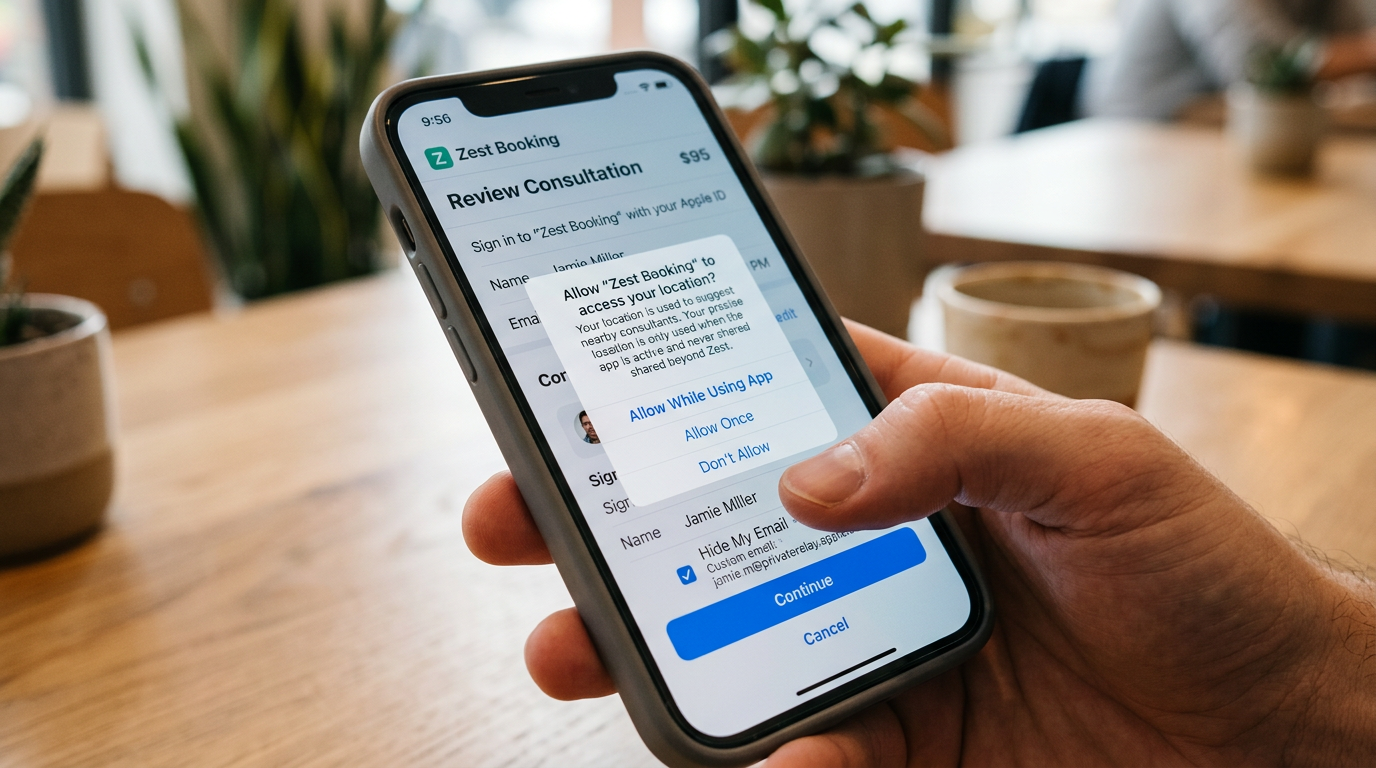
Once downloaded, the goal is to reduce friction to zero. This is where a native feature like 'Sign in with Apple' becomes so powerful. It allows for one-tap account creation, side-stepping tedious forms and password anxiety. It also signals a commitment to privacy, a major factor in user trust.
From day one, your app must communicate its privacy policies clearly. App Store guidelines for 2026 put enormous stress on data minimization and subscription transparency. Building this ethos into your software development process isn't just about compliance; it's about building a brand that customers feel safe with.
Moment 2: Fulfillment and Operations
This is where the magic happens. The app is no longer just a marketing tool but the operational hub for delivering your service. Think of a home cleaning service. Push notifications can confirm a booking, remind the client the day before, and send a real-time update when the cleaner is en route, complete with an ETA powered by CoreLocation.
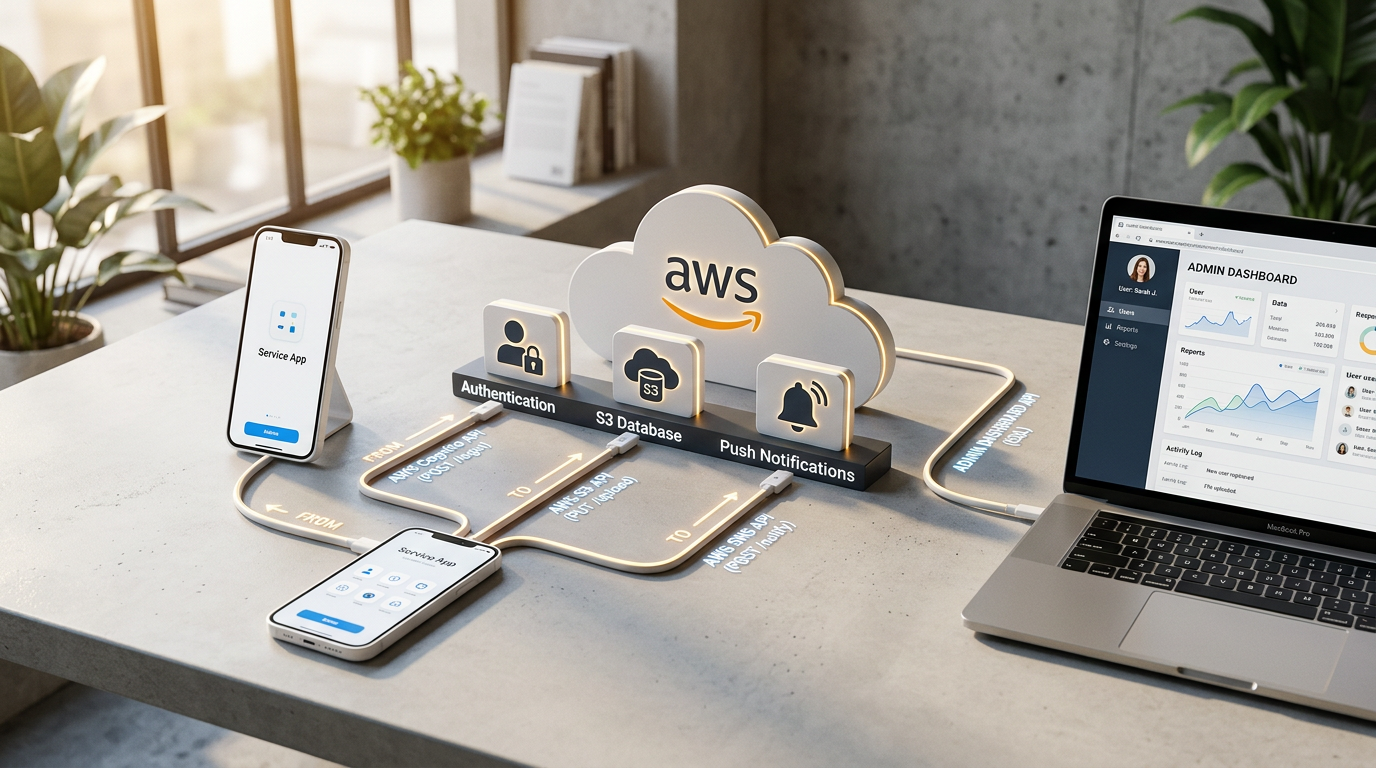
Behind the scenes, this seamless experience is powered by a robust cloud architecture. Modern iOS service apps don't run on clunky, custom servers. They rely on scalable platforms like AWS, Google Cloud, or Azure to handle authentication, databases, and real-time data synchronization between the customer app, the staff app, and a central admin dashboard.
This allows for complex logic, such as assigning jobs to the nearest available technician or providing different interfaces for customers and employees. This backend system often includes a powerful administrative interface, which leverages modern web development practices to give you a complete overview of your business operations.
Moment 3: Retention and Revenue
Acquiring a customer is expensive. Retaining them is where you build a profitable business. A native iOS app provides powerful tools for increasing lifetime value (LTV). Integrating Apple's native subscription management makes it effortless for users to sign up for recurring services with the security of their Face ID or Touch ID.
When it comes to one-off payments or add-on services, Apple Pay removes the biggest point of friction in e-commerce: typing in credit card details. A single tap is all it takes. This can dramatically increase conversion rates for in-app purchases.
Beyond payments, the app becomes a channel for building loyalty. You can implement simple, NPS-style feedback prompts after a service is completed to gather insights and quickly address any issues. Over time, you can even use on-device machine learning to offer personalized promotions or suggest relevant service upgrades, creating a virtuous cycle of repeat business.
Budgeting for Success: Mapping Costs to Complexity
Understanding the investment is critical. App development costs are not arbitrary; they map directly to complexity. Based on 2025-2026 industry data, the pricing for professional iOS service apps has consolidated into clear bands.
- Simple / MVP Apps: ~$30k, $60k. These apps typically have a core feature set, standard UI, and basic backend integration. They are perfect for testing a concept or serving a small, well-defined user base.
- Mid-Complexity Apps: $60k, $120k. This range includes apps with custom UI/UX, real-time features like chat or GPS tracking, multiple user roles (customer vs. provider), and integrations with third-party APIs.
- Complex / Enterprise Platforms: $120k, $400k+. These are sophisticated systems involving complex backend logic, payment processing, heavy compliance requirements (like HIPAA in healthcare), and extensive administrative controls.
Features like real-time data sync, secure payment gateways, and third-party API integrations are what typically move a project from one band to the next. Being clear about your 'must-have' operational needs versus 'nice-to-have' features is the key to defining a realistic scope and budget.
Finding the Right Partner for Your Service App
Choosing a development partner is the most important decision you'll make. You're not just hiring coders; you're looking for a strategic partner who understands service design and the specific demands of the iOS ecosystem.
Look for a team with a portfolio of successful service-based apps. Ask them how they approach backend architecture, and they should be able to speak fluently about using AWS or similar cloud services for scalability. They must also have a deep understanding of Apple's Human Interface Guidelines and the App Store review process to avoid costly delays and rejections.
A great partner will challenge your assumptions and help you focus on the user moments that truly drive business value. When vetting potential agencies, consulting directories that list top iOS app development companies in the USA can be a valuable starting point for validating their capabilities and market reputation.
Ultimately, the goal is to find a team that can translate your business operations into an intuitive, reliable, and profitable mobile experience. When you're ready to explore what that could look like for your business, you can request a quote to start the conversation.
The smartest businesses aren't asking, "Should we have an iOS app?" They are asking, "How can an iOS app redesign our service delivery for growth?" By focusing on the critical moments of discovery, fulfillment, and retention, you move beyond building a simple app and start building a better business.