llm optimization vs. seo: your guide for what's next
traditional seo isn't dead, but it's no longer enough. here's a marketer's guide to llm optimization, the new layer for getting cited by ai.
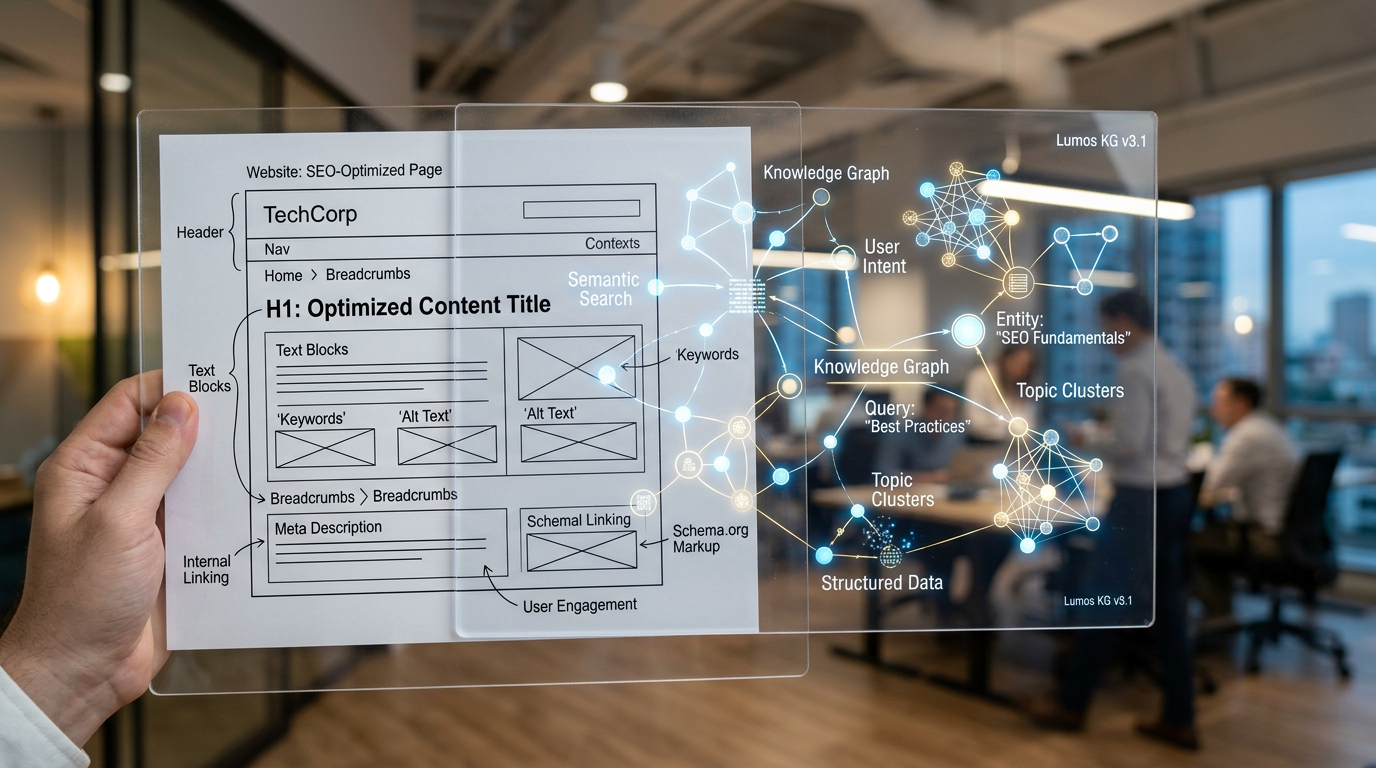
Here’s a number that should get every marketer’s attention. Gartner forecasts that traditional search engine volume is set to plummet by 25% by 2026. Let that sink in. A quarter of the traffic, the behavior, the entire model we’ve built our careers on is about to change dramatically.
This isn't another 'SEO is dead' eulogy. Far from it. It's the announcement of a new imperative, a second layer of optimization that smart marketers are already building into their budgets and workflows. Welcome to the era of LLM optimization, where being cited is the new ranking.
The Writing on the Wall: Why AI Demands a New Strategy
For years, the game was simple. You ranked, you got the click, you won. But AI-driven search, like Google's SGE, isn't just a new algorithm. It’s a fundamentally different way of delivering information. It synthesizes, summarizes, and presents answers directly, often without a click.
The data from major industry analysts paints a clear picture. One IDC report projects that companies will spend up to five times more on LLM optimization than traditional SEO by 2029. This isn't a small pivot. It's a massive reallocation of resources toward a new goal: ensuring your brand’s information is what the AI chooses to use in its answers.
This shift requires a new mental model. I call it the Two-Layer approach. You need SEO for acquisition and LLM optimization for citation. One gets you found in lists of links. The other gets your ideas woven into the fabric of AI-generated knowledge, a strategy we've come to call generative engine optimization.
Adobe's guidance for 2026 echoes this sentiment perfectly. They state that discovery will become less about your page rank and more about whether your brand is cited in AI responses. Your content must be built to be absorbed, understood, and repeated by a machine. Otherwise, you risk becoming invisible to a growing portion of your audience.

SEO is the Acquisition Layer: What Stays the Same
Let's be clear, abandoning traditional SEO would be a colossal mistake. The foundation remains as critical as ever. Think of it as the acquisition layer. Its job is to ensure your digital properties are discoverable, crawlable, and compelling enough to earn a click from a human searching for solutions.
Core technical SEO is non-negotiable. Page speed, mobile-friendliness, a logical site structure, and clean code are the price of entry. Without a solid technical base, both search engine crawlers and AI models will struggle to access and process your content. It’s the groundwork that makes everything else possible.
Keyword research also isn't going away, it's just evolving. You still need to understand user intent, search volume, and the competitive landscape. Theseclassic seo services provide the map for your content, guiding you toward topics your audience actively seeks. The difference is that now we are mapping intent for both human clicks and machine extraction.
And yes, E-E-A-T (Experience, Expertise, Authoritativeness, and Trustworthiness) is more important than ever. AI systems are being trained to identify and preference content from trusted sources. Strong author bios, unique case studies, transparent sourcing, and a history of reliable content build the trust signals that both Google and its AI counterparts reward.
LLM Optimization is the Citation Layer: What Changes
If SEO is the acquisition layer, LLM optimization is the citation layer. Its goal is different. You aren't just trying to get a person to click a blue link. You're trying to get an AI to read your content, understand it, trust it, and synthesize it into an answer for someone else, citing you as the source.
This requires a conscious shift in how we create and structure information. It’s about making your content as digestible for a machine as it is engaging for a human.
Creating Extractable, Structured Content
AI models favor precision. Vague, flowery prose gets ignored. Direct, factual statements get synthesized. This means your content needs to contain clear answers to specific questions. FAQ sections, definitional paragraphs, and data-driven statements are gold for LLM optimization.
This is where structured data, or Schema markup, becomes a superpower. By marking up your content with code that explicitly tells search engines what a piece of information is, like a person, an event, or a recipe, you remove all ambiguity. You're essentially pre-formatting your content for easy extraction.
As leading strategists point out, AI systems favor structured and unique information. Your job is to make your content the most clear, credible, and easily citable source on a given topic. This means breaking down complex ideas into simple, declarative sentences that an AI can confidently use.
Finding and Owning New Niches with Velocity
The speed of information has accelerated. Yotpo's research highlights a fascinating tactical advantage: Google Trends' “Trending Now” feature updates every 10 minutes. This near real-time data shows how quickly topics can spike in public interest, often driven by events or social media conversations that LLMs are monitoring.
For marketers, this means velocity is key. The ability to quickly identify a breakout topic, create a definitive piece of content about it, and publish it while demand is peaking gives you a massive first-mover advantage. You are not just chasing long-tail keywords anymore; you are capturing ephemeral demand. Well-structured, fast-to-publish content can become the primary source for an AI answering questions about a new, trending topic before competitors even know it exists.

Putting It into Practice: A Two-Track Approach
So how does this look in a practical, day-to-day workflow? It’s not about choosing one or the other. It's about running two optimization tracks simultaneously for every significant piece of content you produce.
Imagine you're publishing a major guide on a new industry trend. Your content process should now have two distinct checklists:
Track 1: The SEO Acquisition Checklist
- Is the primary keyword in the H1, title tag, and URL?
- Does the meta description entice a human click?
- Is the content linked to from other relevant pages on our site?
- Is the page fast, mobile-friendly, and technically sound?
- Does it satisfy the user's intent for the target query?
Track 2: The LLM Citation Checklist
- Does the article contain specific, citable data points or statistics?
- Are key definitions and concepts stated in clear, declarative sentences?
- Is there an FAQ section that directly answers common questions?
- Is key information marked up with appropriate Schema?
- Does the content offer a unique perspective or proprietary data not found elsewhere?
This dual-track thinking requires a broader skill set and a more sophisticated approach to content creation. It's not just writing, it's information architecture. It also opens up new efficiencies through technology, which is where many teams look into ai automation services to help scale content production and markup.
By consciously building for both human acqusition and machine citation, you create content that is resilient, versatile, and positioned to perform no matter how a user finds their answer. You future-proof your marketing efforts against the inevitable shifts in search behavior.
This isn't a future problem. The change is happening right now, in the background of every search query. The Gartner and IDC numbers are not abstract forecasts; they are a clear directive. The brands that adapt their strategies to serve both humans and the AIs they use will be the ones that own the next decade of discovery. If you want to understand how your content stacks up for citability, you should talk to our geo specialists.