local seo for restaurants: your 2026 playbook
tired of an empty dining room? our guide to local seo for restaurants breaks down the 2026 strategies for google business profile, keyword targeting, and ai voice search.
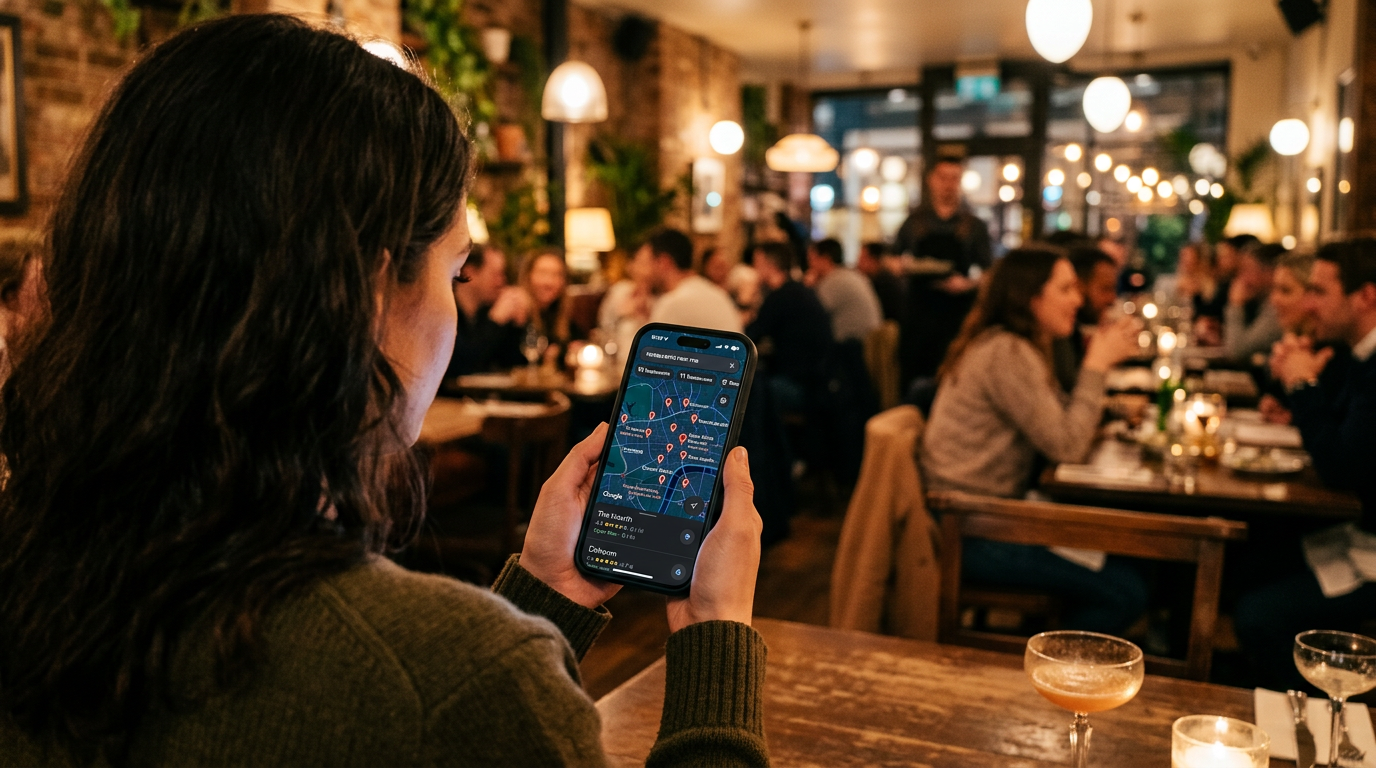
Let's get one thing straight. Nearly four out of five searches for restaurants have nothing to do with your brand name. That’s a staggering 79% of potential customers looking for “best tacos downtown” or “sushi open now,” not the name you spent a fortune branding. If you’re relying on your reputation alone to fill tables, you’re becoming invisible online. The battle for diners is won or lost on the search results page, long before anyone sees your host stand.
Most restaurant owners I talk to think they have local SEO covered. They made a Google Business Profile once, and they have a website. Job done, right? Wrong. That’s like saying you have a restaurant because you bought a stove. The game has changed. Winning in 2026 and beyond requires a completely different approach, one that’s active, dynamic, and way more strategic than just filling out a few fields online.
Beyond the Basics: Why Your Current Local SEO Fails
The digital main street for any restaurant is Google’s “Local 3-Pack.” You know it, you use it. It’s the map and three listings that pop up before any other organic results. This tiny piece of digital real estate is wildly important, capturing a massive 44% of all clicks in local restaurant searches. Standard blue-link organic results get a mere 29%. If you aren't in that top three, you're fighting for scraps.
So why aren’t you there? It usually boils down to a few common, yet critical, missteps. The most frequent is the “set it and forget it” mindset. You created your Google Business Profile (GBP) a year ago, uploaded a few photos, and haven’t touched it since. Google interprets this silence as a signal that your business might be less relevant, or worse, closed. Activity is a ranking factor. Stagnation is a penalty.
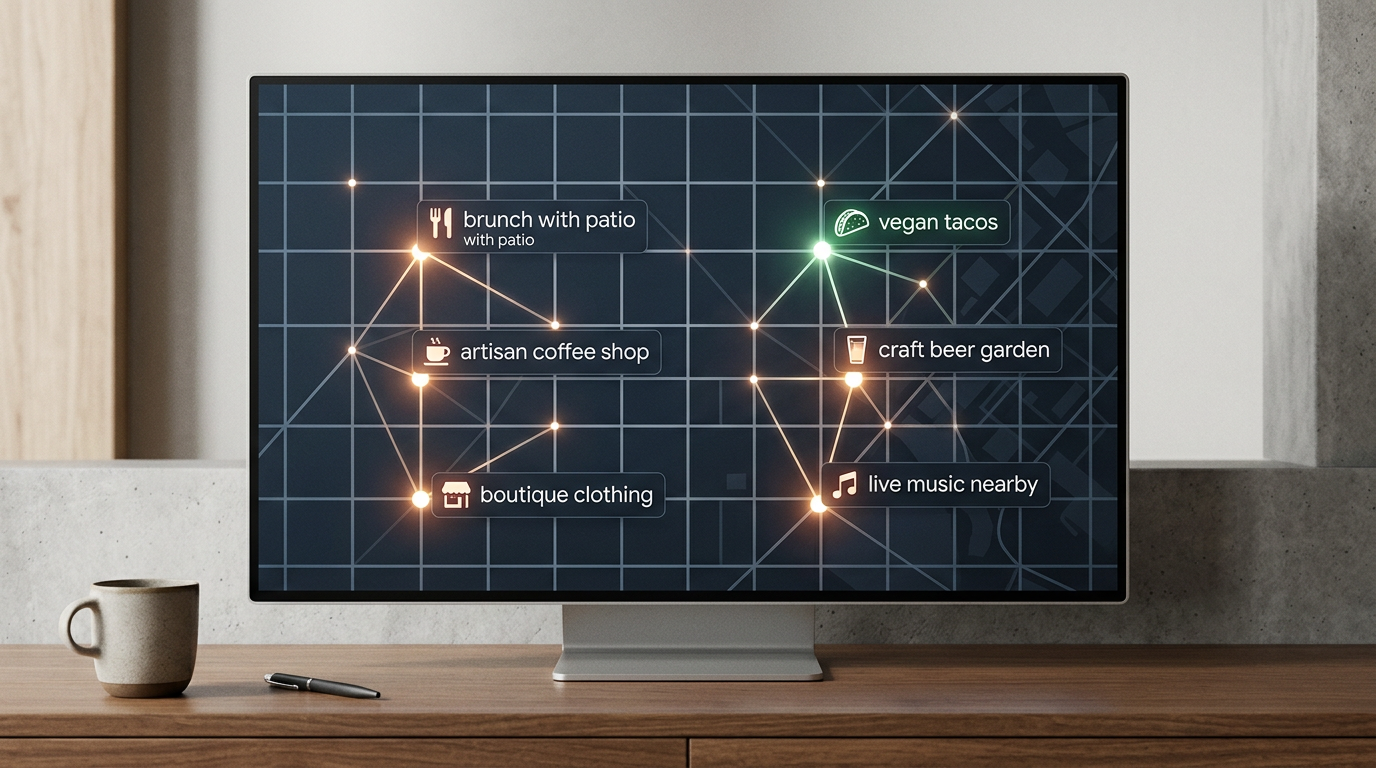
The other major failure is a generic keyword strategy. You think you’re targeting “Italian food,” but you’re ignoring the real-world queries customers use. People search with incredible specificity. They are looking for solutions, not just categories. This is where you connect with diners or lose them to a competitor who understands their immediate needs better than you do.
Mastering Your Google Business Profile: The 2026 Factors
Your Google Business Profile isn’t a digital business card. It’s a dynamic, living storefront that demands consistent attention. Getting it right is the single most important part of local SEO for restaurants. Let’s move past the outdated checklist and into what actually works now.
The Myth of a "Complete" Profile
Having a 100% complete profile is the starting line, not the finish. It's the bare minimum. What an incomplete profile does is actively hurt your rankings. But what the algorithm rewards in 2026 is recency and engagement. Your profile needs to be a hub of constant, fresh activity. Google wants to see that you are open, active, and engaged with your community. That means weekly photo updates are no longer optional. These don’t need to be professional shots. A great photo of a daily special, a smiling team member, or a packed dining room, all taken from your phone, sends powerful relevance signals.
Dominate with Dynamic Content: Photos and Reviews
Beyond photos, review velocity is a dominant ranking factor. This isn't just about getting more reviews. It's about the pace at which you get them. A steady stream of new reviews tells Google you’re popular right now. Encourage happy customers to leave a review while their positive experience is fresh. Equally important is your response rate. Replying to reviews, both good and bad, shows you are an attentive business owner and improves your local SEO visibility. Make it a daily habit.
Multi-Location Management Made Simple
For restaurant groups with multiple locations, this can sound like a nightmare. How do you keep a dozen or more profiles constantly updated? This is where specialized platforms come into play. A tool like MalouApp, for example, allows a marketing manager to push updates, photos, and menu changes across more than 60 different listing platforms, including Google, from a single dashboard. This is how you achieve consistency and activity at scale. Investing in proper seo services can help you integrate these tools and build a workflow that makes sense for your brand.
The Keyword Strategy That Gets Diners in Chairs
Keywords are the language of your customers. If you don't speak their language, they won't find you. As we've seen, most of them aren't using your brand name. They're using descriptive, intent-driven phrases, and a shocking 70% of web searches involve these long-tail keywords.
Moving Past "Italian Restaurant NYC"
Targeting broad terms like “Italian restaurant NYC” is a fool's errand. The competition is immense, and the user intent is vague. Do they want a cheap slice? A five-star tasting menu? A place for a large family? You don’t know. Long-tail keywords tell you exactly what the customer wants. Think about terms like:
- "best gluten-free pasta downtown"
- "family friendly restaurant with patio seating"
- "late night ramen bar near me"
- "quiet bistro for a business lunch"
- "dog-friendly brewery with food trucks"
These are the queries that lead to reservations. Each one reveals a specific problem a customer is trying to solve. You need to create content on your website and in your GBP Q&A that directly answers these questions. For more foundational knowledge on this topic, this is an authoritative source that covers local keyword research well.
Tools for Hyper-Local Targeting
How do you find these golden-nugget keywords? Start with the free Google Keyword Planner. It can give you baseline search volumes for your city, helping you understand the demand for terms like “brunch” versus “dinner.” But to get truly granular, you need a more advanced tool. I highly recommend Local Falcon for restaurant clients. It’s a hyper-local rank tracker that shows your visibility on a grid map, block by block. More importantly, it provides business potential metrics and intent labels, helping you prioritize which keywords will actually drive foot traffic, not just clicks.
The Future Is Here: AI-Friendly Menus and Voice Search
Here’s where we separate the amateurs from the pros. As Google Search evolves with AI Overviews and conversational search becomes more popular through assistants like Alexa and Siri, your old strategies will break down. The single biggest point of failure for restaurants? Your menu.
Why Your PDF Menu Is Killing Your SEO
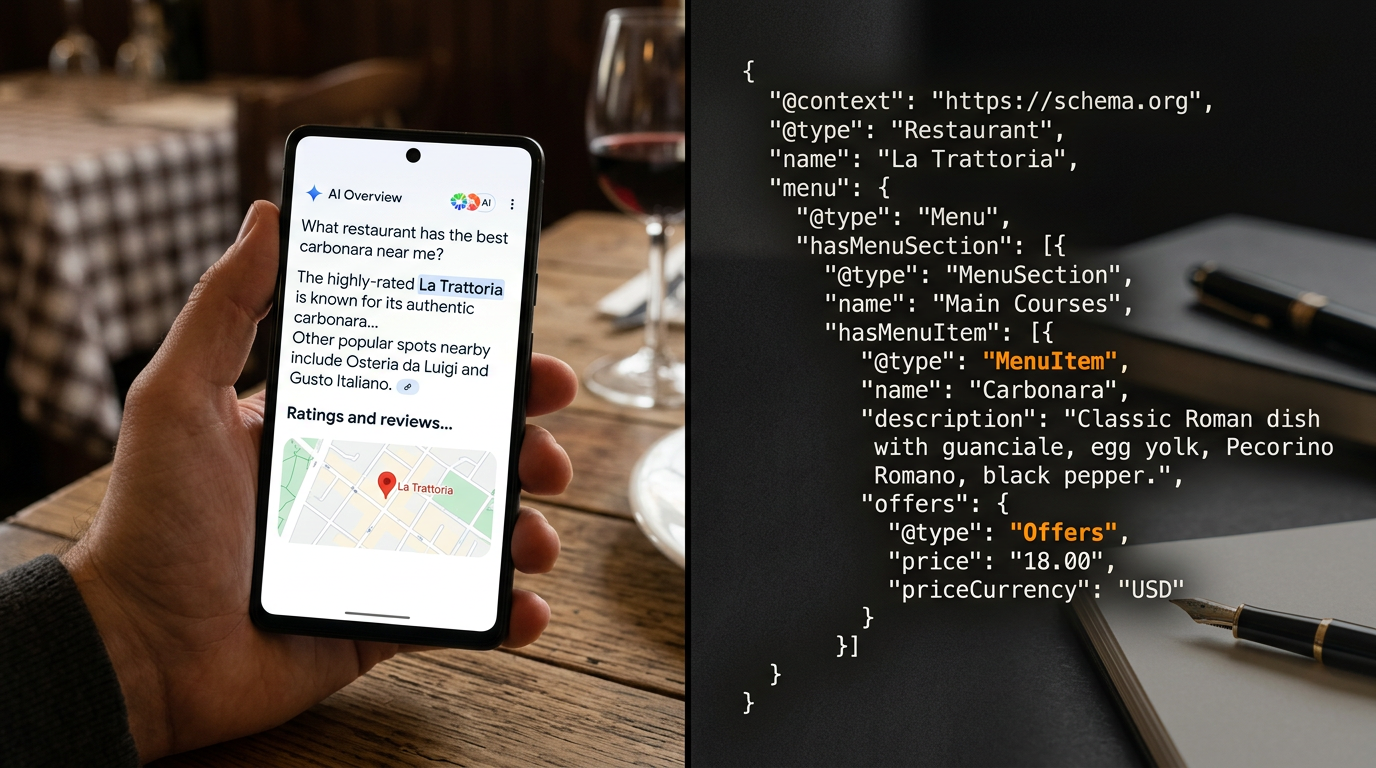
If your menu is a PDF download or a single, unreadable JPEG image, you are invisible to the next generation of search. AI cannot effectively parse that data. When a user asks, “Hey Google, find a restaurant near me that serves beef Wellington and is open now,” Google looks for structured data, not a picture of a menu. It needs clean, machine-readable information to answer that query confidently. A PDF is a black box.
Structuring for Success with Restaurant Schema
The solution is to build a proper HTML menu page and mark it up with Restaurant schema. Schema is a type of code that explicitly tells search engines what your content is about. You can label your menu, individual menu items, descriptions, prices, and even nutritional information. This structured data is a primary source for Google’s AI Overviews and a goldmine for an effective ai search optimization strategy.
By structuring your menu this way, you're not just optimizing for keywords. You're providing direct answers for complex, conversational queries. This is a technical task that often requires a modern, custom website to implement correctly, but the competitive advantage is enormous. You become the definitive, trusted source for what you serve. A recent Malou study showed clients who invested in this level of advanced local SEO saw an average organic traffic increase of 160% in just three months. The ROI is undeniable.
The days of passive local marketing are over. Your competitors are getting smarter, and Google is getting better at identifying the businesses that are truly active and provide the best, most direct answers. Winning requires a consistent, multi-faceted effort across your GMB profile, your keyword strategy, and the technical structure of your website. Don't let your restaurant become a digital ghost. If you're ready to build a system that consistently brings new diners through your door, contact our team. We can build a strategy that works.