saas geo: your funnel defense in the ai search era
is your saas brand invisible on chatgpt or gemini? geo is the new funnel defense, positioning your product as the definitive answer for high-intent ai queries.

Here’s a number that should get your attention. Nearly half of B2B buyers, 47% to be exact, no longer start their research on Google. They're firing up ChatGPT or Claude and asking direct questions to find, compare, and validate vendors.
This is a monumental shift in discovery. For years, SaaS marketing has been a game of winning keyword rankings and building backlinks. Now, it’s about becoming the trusted answer inside an AI's brain. If your brand isn’t cited in those AI-generated responses, you’re becoming invisible to your most motivated buyers.
This new battleground requires a new strategy: Generative Engine Optimization, or GEO. And for SaaS companies, it’s not just another marketing channel. It's your new funnel defense.
The End of Search as We Know It
The rise of AI search isn't a slow burn. It's an explosion. With growth hitting 17-24% month-over-month, the discovery landscape for SaaS is being redrawn in real time. The old playbook of climbing search engine results pages is rapidly becoming obsolete.
Instead of clicking through a list of blue links, buyers receive a synthesized summary, a direct recommendation, or a comparison table. The AI acts as a powerful, pre-qualifying assistant. The goal is no longer to be one of ten options. The goal is to be the option, cited directly by the generative engine.
This is the core of GEO. It's the practice of structuring your brand’s information and authority across the web in a way that large language models (LLMs) can easily understand, verify, and trust. You’re not optimizing for a keyword; you’re optimizing your entire brand entity.
Why Traditional SEO Isn't Enough
Your current seo services are vital, but they were designed for a different paradigm. Backlinks, keyword density, and meta tags are signals for search engine crawlers that rank documents. GEO, on the other hand, deals with concepts and entities.
An LLM wants to understand what your SaaS company is, who it’s for, what it costs, how it compares to competitors, and what trusted third parties say about it. It pieces together this understanding from your website, structured data, press mentions, review sites, and more. A scattered or inconsistent digital footprint confuses it, leading to exclusion from valuable AI-powered answers.
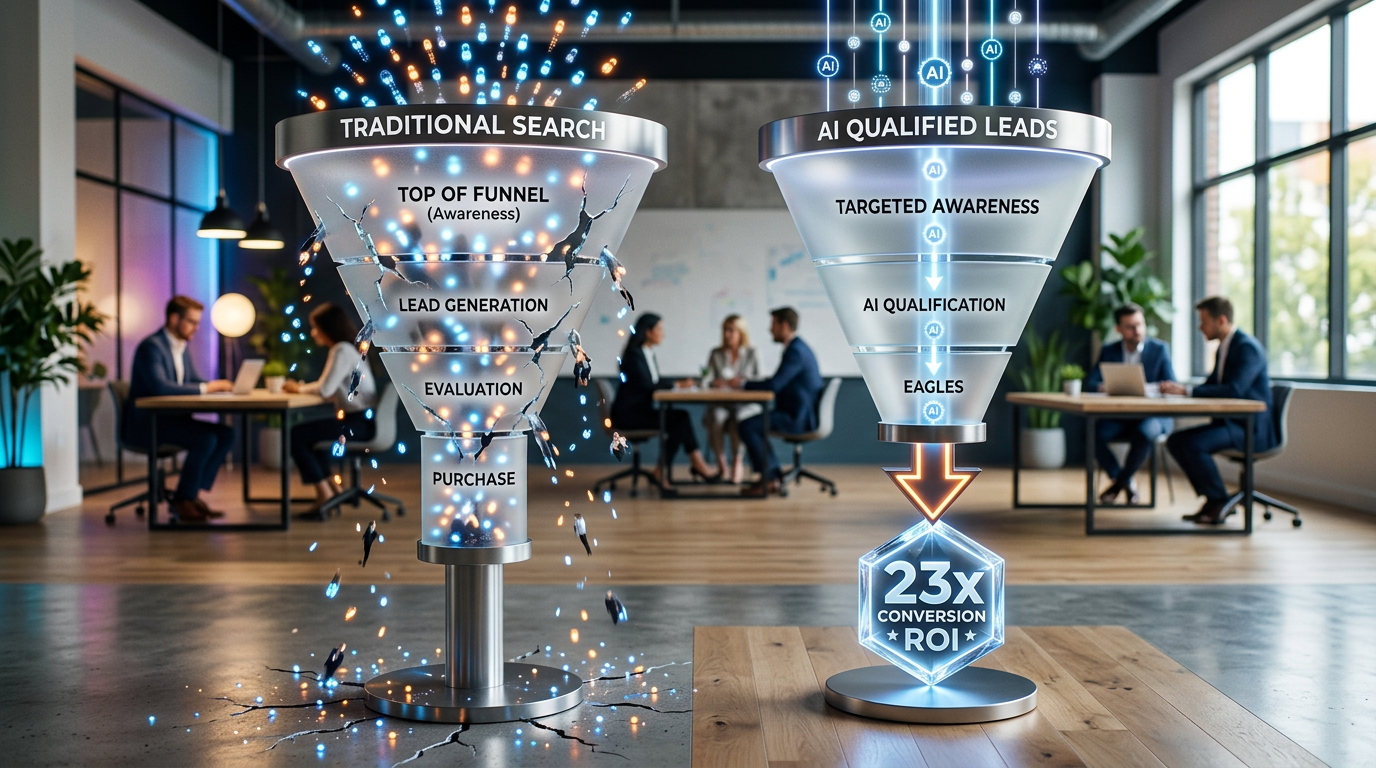
GEO as Funnel Defense: Capturing 23x Converting Traffic
Let's talk about the most compelling reason to invest in GEO: the traffic it generates is absurdly valuable. Data shows that AI-referred visitors can convert at a staggering 23 times the rate of traditional search traffic. Why the massive difference?
Because the AI does the heavy lifting for the buyer. By the time a user gets a recommendation from Gemini or Perplexity for a query like “best CRM for a small marketing agency under $200/month,” they are already deep in the consideration phase. They aren't just browsing; they are looking for a definitive solution. Being that solution is the ultimate funnel defense.
This strategy focuses your resources away from broad, top-of-funnel queries and onto the bottom-funnel questions that signal high purchase intent. You're not just attracting visitors, you're intercepting buyers at the exact moment of decision.
Winning the "Best X for Y" Queries
Every SaaS leader knows the value of being the top result for product comparisons and use-case-specific searches. GEO is the technical engine to achieve this within AI chat. When a prospect asks ChatGPT, “What are the top alternatives to Salesforce for a startup?” you want your product not only listed but framed as the superior choice.
This requires a deliberate effort to build entity trust. It’s achieved by creating a verifiable, consistent, and authoritative narrative about your product across multiple trusted sources. The LLM then synthesizes this information, effectively making the case for you. Your brand becomes the pre-qualified expert recommendation before the buyer even thinks to look at other options.
A Practical Breakdown of GEO for B2B SaaS
So how do you actually implement this? GEO isn't a single tactic but a multi-faceted discipline that combines technical SEO, content strategy, and digital PR. It's a core part of a modern digital marketing strategy.
1. Entity Audits and Knowledge Graph Optimization
First, you need to understand how AI sees you now. An entity audit involves mapping out your company’s digital footprint. This includes your brand name, products, key executives, features, and pricing across your site and the web.
Specialist firms like Veza Digital are pioneers in this space, focusing on identifying inconsistencies and gaps in a brand's knowledge graph. Is your pricing clear? Are your features described consistently everywhere? Does your CEO’s LinkedIn profile align with your company’s official bio? These details matter immensely to an LLM trying to verify who you are.
2. Proactive AI Citation Mapping
Where traditional SEO hunts for backlinks, GEO hunts for citations in sources that LLMs trust. This could be anything from a prominent industry blog, a software review platform, a well-regarded podcast, or even a Wikipedia article. The goal is to have trusted sources describe your product accurately and positively.
This process, called AI citation mapping, is essentially digital PR for a robotic audience. You identify the key sources an AI uses to learn about your market and then work to get your brand featured there. It’s a targeted approach to building authority where it counts most for AI visibility.
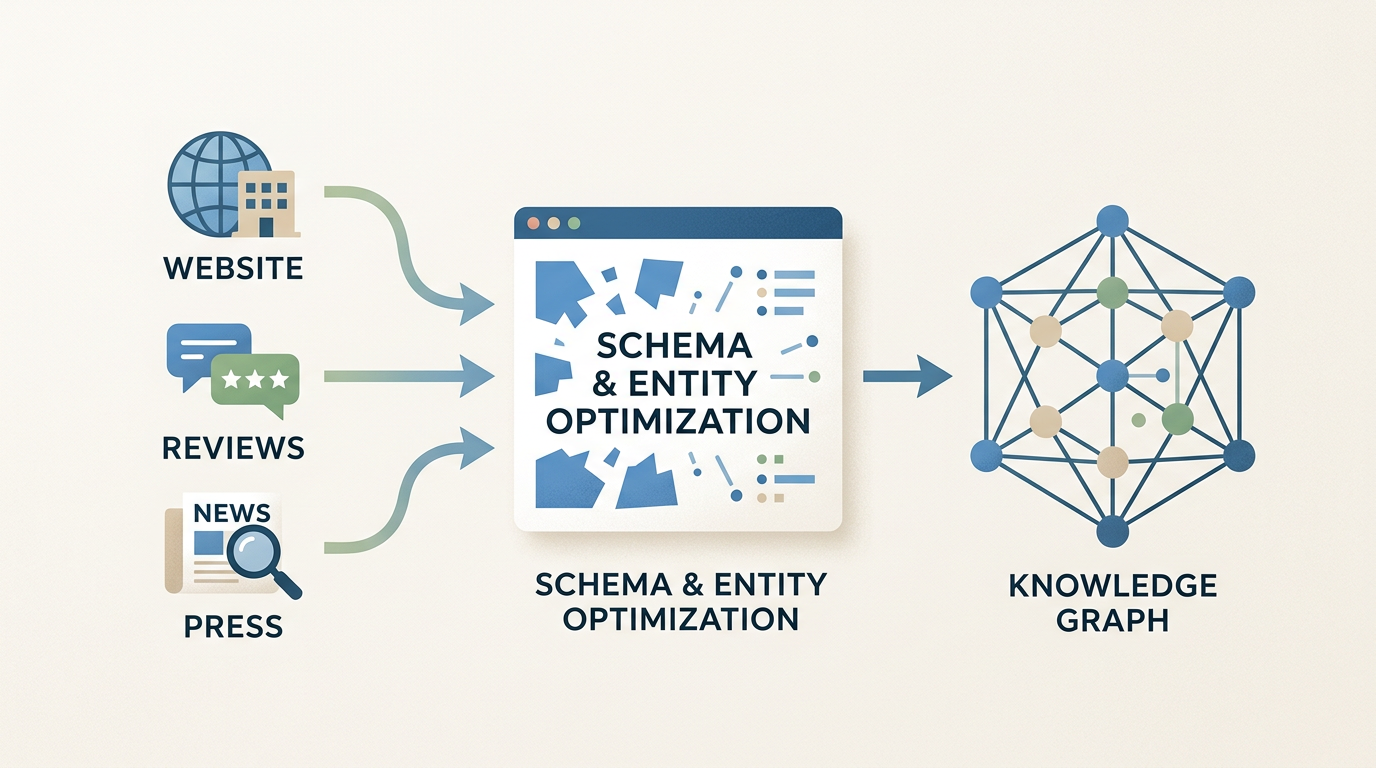
3. Technical Schema for Absolute Clarity
This is the foundational layer. Using detailed structured data (like JSON-LD schema) on your website is non-negotiable. It’s like adding a label maker to your website's content, telling the AI exactly what it’s looking at.
You can use schema to explicitly define your products, their specific features, pricing tiers, target audience, and customer reviews. This removes all ambiguity and makes it effortless for an LLM to digest your information and present it accurately in search results. Without clean schema, you’re forcing the AI to guess, and it will often guess wrong or simply ignore you.
Finding the Right Partner in the New AI Landscape
The market for AI-driven SEO services is exploding, projected to hit $4.5 billion by 2026. This rush has led to a lot of noise. Finding a true expert requires looking for agencies and platforms that have a proven methodology for this new discipline.
Firms like Rock The Rankings are integrating GEO directly into their SaaS SEO programs, focusing on how to influence LLM responses. Others, like SimpleTiger, offer comprehensive AI visibility audits to establish a baseline before building a complete GEO strategy. In fact, you can review their detailed GEO methodologies to see how deep this work goes.
Choosing a geo agency isn't just about hiring SEO experts. It's about partnering with strategists who understand the technical nuances of knowledge graphs, entity optimization, and the data sources that modern AIs rely upon. They should be able to show you a clear plan for making your brand the most logical and authoritative answer to your customers' most important questions.
The era of simply ranking for keywords is over. We’ve entered the era of becoming the answer. The SaaS companies that adapt will not only survive this transition; they will dominate it by capturing the most qualified, high-intent traffic the internet has ever produced.
If you're ready to build your funnel defense and secure your place in AI-driven discovery, it might be time to talk to our geo specialists. Your future customers are already asking the questions. Make sure you're the answer.