saas web development: idea to edge in 2026
the old model of saas development is broken. discover how ai, meta-frameworks like next.js, and edge computing create a single, continuous pipeline from idea to launch.

Is your web development process stuck in 2022? A recent survey found that a staggering 84% of developers now use or plan to use AI tools in their daily work. This isn't just about syntax autocomplete. This is a fundamental shift in how software is created.
The old SaaS playbook, the one that treated your marketing site and your application as separate projects with separate teams, is officially obsolete. Shipping a successful product in 2026 requires a new mental model. It demands you see your entire funnel, from the first ad click to deep in-app usage, as one continuous system.
This is a story about architecting that system. It's about a single, AI-augmented pipeline that runs from a Figma prototype all the way to a global edge network. Your site, app, and infrastructure are now one product.
Your Funnel is Your Product: A New Philosophy for SaaS
For years, a company’s digital presence was fractured. You’d hire an agency for the marketing website, a separate team for the web app, and yet another for the backend API. The result was a disjointed user experience filled with mismatched branding, clunky handoffs, and performance bottlenecks.
That approach creates invisible friction. A user might love your marketing site's speed and design, only to be thrown into a slow, ugly, and confusing sign-up flow built on a completely different technology stack. That friction kills conversion.
The modern philosophy is simple: unify the stack. Meta-frameworks like Next.js allow a single team to build the marketing pages, API endpoints, user dashboard, and onboarding flow within one cohesive codebase. The tech that renders your pricing page is the same tech that powers your core application logic. This creates a fluid journey for the user and dramatically increases development velocity for your team.
This isn't just theory. It's the new baseline for effective custom website development that converts curious visitors into paying customers.
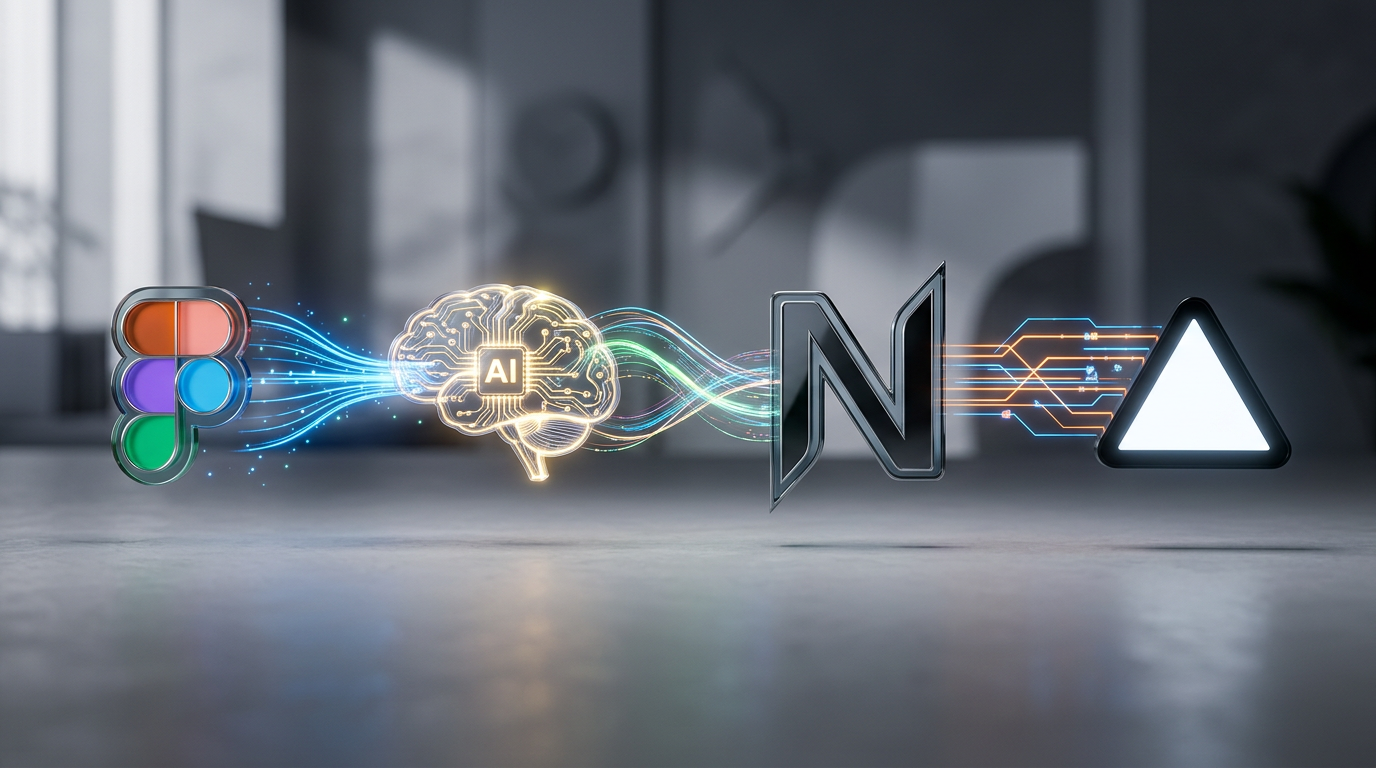
The Modern SaaS Stack: From Figma to the Edge
Building this unified funnel requires a specific set of modern tools and architectures. This isn't about chasing trends. It's about strategically choosing technologies that deliver speed, both in performance and in time to market. The pipeline begins long before a developer touches the code.
Step 1: Design for Trust and Velocity in Figma
Figma is no longer just a tool for drawing pretty rectangles. In 2026, it is the strategic starting point for the entire product funnel. It's where you explore product-led storytelling and bake trust signals directly into the user experience, even for a pre-launch MVP.
What does this look like in practice? It means designing pages with dedicated space for security badges like SOC 2 or GDPR, transparent pricing tables, and prominent social proof. Successful SaaS sites design interactive product demos directly in Figma, treating them as critical conversion features, not post-launch nice-to-haves. This UX work is a core part of the product strategy.
The handoff from design to development is also being transformed. We're moving away from static PDFs and into a world of continuous sync. Automated design-to-dev workflows, often with AI assistance, translate Figma components directly into production code, ensuring what you design is what you ship.
Step 2: Build with AI and Meta-Frameworks
Once the design blueprint is set, development begins, and here, two forces have taken over: AI and meta-frameworks. Reports now show meta-frameworks like Next.js and Nuxt are the standard entry points for nearly all professional web projects.
These frameworks provide a full-stack toolkit out of the box. They have built-in routing, optimized image handling, and the ability to mix static marketing content with dynamic, server-run application logic. This is the technical engine that makes the unified funnel possible.
AI's role has also matured significantly. With 68% of developers already using AI to generate code, it's now a functional partner in the build process. An engineer can point an AI agent at a Figma frame and have it scaffold the corresponding Next.js routes, React components, and even initial tests. This drastically reduces boilerplate work and shortens development cycles.
Step 3: Architect for Instant Performance with Server and Edge
How do you make a complex web application feel instantaneous? You move the heavy lifting off the user's device. The industry is seeing a major shift back to server-first architectures, where content is rendered on a powerful server and sent to the browser as near-complete HTML. This makes the initial load feel incredibly fast.
But where should that server live? The answer is at the edge. Edge computing has become the default deployment target for modern web apps. Instead of a single server in Virginia, your application code runs in data centers all over the world, physically closer to your users.
The impact is profound, reducing latency from hundreds of milliseconds to just a few dozen. With industry forecasts projecting over $261 billion in edge technology investment by 2025, this is no longer a niche technique. It’s the baseline expectation for performant software development services. Platforms like Vercel make edge deployment for Next.js applications a one-click process.
Validating Your Idea Faster with a Composable Backend
So you have a lightning-fast front end running on the edge. What about the database, user authentication, and file storage? Building a custom backend from scratch is a massive undertaking, often consuming months of engineering time before a founder can even validate their core idea.
This is where low-code and Backend-as-a-Service (BaaS) platforms enter the picture. This is the fastest-growing segment in application delivery, boasting a 37.7% compound annual growth rate. Why? Because 81% of companies now consider this rapid approach strategically important for getting to market faster.
Tools like Supabase offer a hosted, production-ready PostgreSQL database, authentication, and serverless functions with a simple API. A small startup team can wire their Next.js application to Supabase in a single afternoon. This allows them to defer the complexity of building and scaling custom infrastructure, letting them focus entirely on the core features that provide user value.
This composable approach is the key to shipping an MVP in weeks, not quarters. It's about finding the fastest path to the first real user and iterating from there. This same principle now applies to mobile app development, where similar BaaS tools accelerate launch timelines.
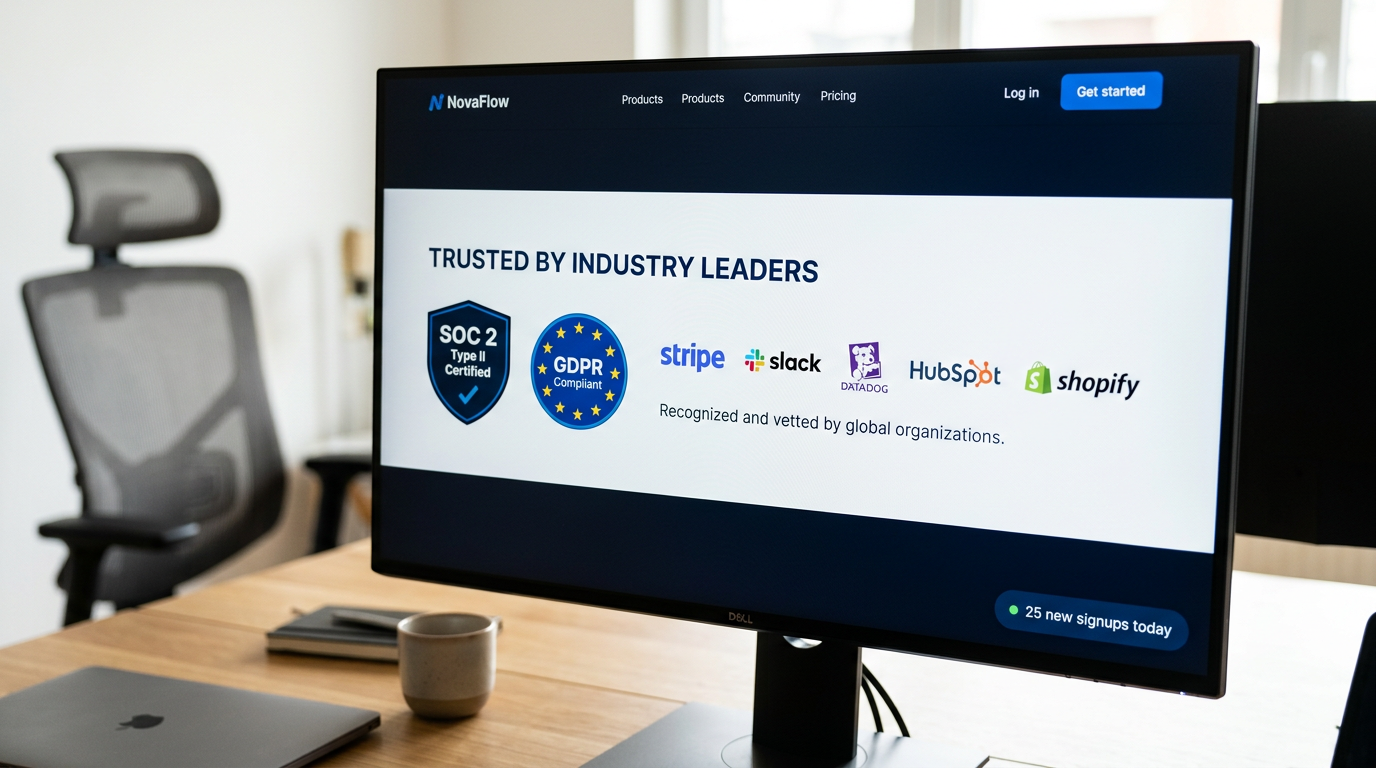
Trust as a Feature: Converting Users Before They Sign Up
In a unified funnel, your marketing website isn't just a brochure. It's the first stage of your product experience, and its most important job is to build trust. According to Figma's analysis of 2026 web development trends, trust-focused design is one of the single most important factors correlated with SaaS growth.
Gone are the days of vague promises. Today’s buyers expect explicit proof. This means prominently displaying security and compliance credentials like SOC 2, GDPR, and HIPAA. It means showing real customer logos and testimonials. Some of the most effective sites even use real-time social proof, like a small notification saying “5,000+ teams signed up this month.”
The most powerful trust signal, however, is the interactive product demo. By building a guided tour or a sandboxed version of your app directly into your marketing site, you let users experience the “aha!” moment before they ever have to enter a credit card or even an email. Because the site and app share a stack, this is no longer a hack. It’s an integrated feature that dramatically improves conversion and even benefits your brand's digital presence through top-tier seo services.
Treating trust as a core feature, rather than a marketing afterthought, is what separates fast-growing startups from the ones that never quite get off the ground. The investment in this area pays dividends across the entire user lifecycle.
The blueprint for launching a SaaS company has been redrawn. The siloed, phased approach to development is too slow and too disconnected for today's market. Winning means thinking in terms of a single, continuous system from the very beginning. Before you write a line of code or hire a single engineer, your first job is to map that entire journey as one cohesive product.