schema for ai search: the new rules for visibility
schema markup is no longer just for rich snippets. it's the language ai uses. here's how to use structured data to make your content essential for generative ai answers.

What if you could make your content 2.5 times more likely to be cited in an AI-generated answer? That isn't a hypothetical. Recent data shows that this lift is the direct result of proper schema markup, transforming structured data from a tedious SEO task into a primary lever for AI visibility.
For years, marketers treated schema as a way to get star ratings or fancy FAQ dropdowns in search results. That game is over. The new game is about feeding generative AI models the clean, unambiguous information they need to build answers, and schema is the official language for doing it.
The March 2025 Pivot: When Schema Became AI Infrastructure
For those of us tracking the space, March 2025 was the pivot point. It was the moment both Google and Microsoft publicly confirmed what many suspected: they are actively using Schema.org markup to inform and build their generative AI features, including AI Overviews and Copilot responses. This wasn't just another algorithm update. It was a fundamental reclassification of structured data.
Schema moved from being a hint system for rich snippets to becoming core infrastructure for artificial intelligence. It's the semantic scaffolding that AI systems use to understand the world. Without it, they are left to interpret your unstructured content, a process that is less efficient and prone to errors. With it, you are handing them a blueprint.
This shift makes structured data a mechanism for brand control. Your schema tells AI who you are, what you offer, and how you relate to other concepts. Owning this narrative through precise data is now central to building digital trust and maintaining accuracy in an AI-driven world. Your brand's knowledge graph is no longer just on your website; it's a portable asset that search engines ingest directly.
Why Generative AI Prefers Structured Data (It's Not Magic, It's Math)
The preference for structured data isn't a mystery. It's baked into how these models work. A February 2024 study in Nature Communications found that large language models (LLMs) extract information far more accurately when they receive structured prompts with defined fields, compared to vague, unstructured text.
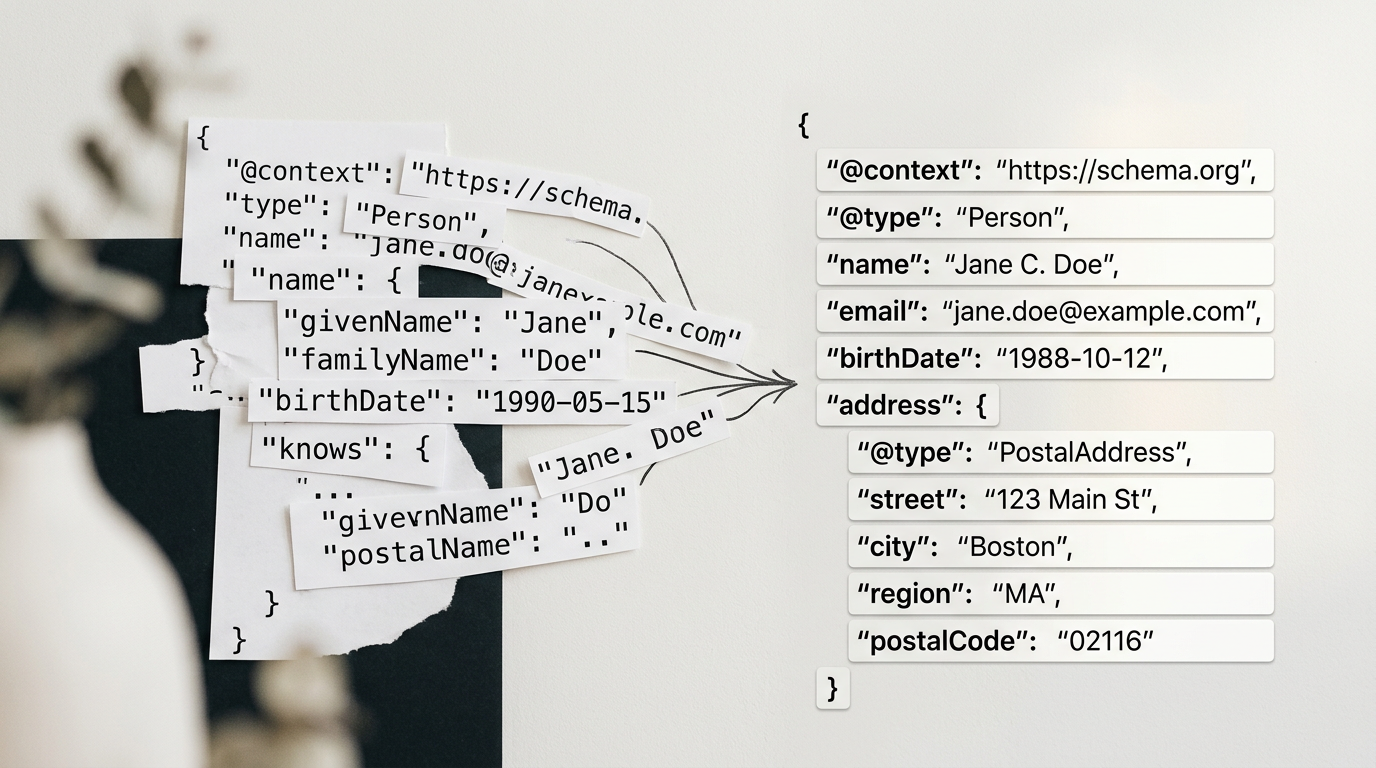
Schema markup, specifically in the JSON-LD format, is essentially a perfect, pre-made structured prompt for a search engine's AI. Instead of asking a model to read a messy paragraph and guess what the product price is, you're giving it a field explicitly labeled `"price": "99.99"`. This removes ambiguity and improves the model's processing efficiency and reliability.
This is a critical part of a modern search engine optimization process. While humans can easily distinguish an author's name from a block of text, an AI has to expend resources to make that same distinction. Well-implemented schema does the work for the machine, making your content a low-effort, high-reward source of information. This is why a strong digital marketing strategy must now account for your data layer, not just your visual layer.
The Quantifiable Impact: Beyond Rich Snippets
The benefits are no longer theoretical. We see them in the metrics. Sites that properly implement what we can call Tier 1 schema, like `Organization` and `Article`, see AI visibility improvements of up to 40%. The impact is real and measurable, though it certainly varies by industry and content quality.
The biggest prize is the increased probability of citation. Having your information appear in an AI overview or a chat-based answer is the new page-one ranking. With a 2.5x higher chance of appearing in these coveted spots, implementing structured data is one of the highest-return technical optimizations you can make right now. It is a direct path to getting your brand, your data, and your point of view integrated into the answers users receive.
From Isolated Tags to Connected Knowledge Graphs: The Entity-First Approach
Most of the web is still “doing schema” the old way. Marketers add an isolated `Article` tag here, a lonely `Organization` tag there. This approach is outdated because it fails to communicate the most important thing: relationships.
The 2025-2026 approach is about building a connected entity graph. An entity is a a specific thing: your company, your CEO, a product you sell, an author who writes for you. The goal is to stop providing disconnected tags and start showing the AI how these entities relate to one another. You do this using the `@id` and `@graph` properties in your markup.
For example, instead of just having an `Article` schema, you define the `author` of that article as a `Person` entity with its own unique `@id`. That `Person` entity can be linked to the `publisher` `Organization` entity, which also has a unique `@id`. This creates a machine-readable graph that says, “This specific author, who works for this specific company, wrote this specific article.” A specialized geo agency can expand this further, defining a `LocalBusiness` entity and connecting it to specific services and geographic locations.
This is how you build a reusable, internal knowledge graph. You are not just hinting at what a page is about. You are creating a durable, authoritative record of your brand's ecosystem that AI systems can trust and reference. It makes your brand's identity machine-readable and consistent, regardless of how you redesign your website's front end.

Priority Schema Types for AI Visibility
While hundreds of schema types exist, a few have emerged as foundational for generative AI. Focusing your efforts here provides the biggest initial impact.
- Organization: This is your digital business card. It establishes your official name, logo, social media profiles, and corporate identity. It's the anchor for your entire brand entity.
- Article: Essential for any content publisher. It clarifies the author, publication date, and publisher, feeding directly into signals of expertise and authority.
- Product: For any e-commerce or product-based business, this is non-negotiable. It provides the structured data for price, availability, reviews, and specifications that AIs use for shopping-related queries.
- FAQPage: Directly answers common user questions in a format that AI can easily parse and present as a quick answer.
- Person: Establishes the authority and identity of individuals, especially authors, executives, or experts. Linking `Person` to `Article` and `Organization` creates a powerful E-E-A-T signal.
Putting It Into Practice: Tools and Workflow for 2026
Getting started doesn't require reinventing the wheel. The tools and standards are well-established. Your first step is committing to a single format: JSON-LD. It is the universally preferred standard across Google, Bing, ChatGPT, and Perplexity for its flexibility and ease of implementation without cluttering your HTML body.
Your workflow should start with diagnosis, not blind implementation. Use Google's Rich Results Test to audit your most important pages. Don't just look for errors; look for opportunities. The tool will show you what schema types Google can already see and what you could add. This process can inform highly effective ai workflows where structured data generation is a part of your content creation cycle from the start.
Focus on connecting your schema. Use the `@graph` structure to bundle multiple schema types (like `Article`, `Person`, and `Organization`) onto a single page cleanly. This is how you build the entity graph we discussed, turning your website into a powerful, interconnected data source. For a deeper dive into how this shift became clear a few years ago, this analysis of schema's future in AI search provides excellent context and forecasting.
A Word of Caution: Schema Is Not a Silver Bullet
It's crucial to maintain perspective. Schema markup is a powerful optimization layer, but it is not a replacement for high-quality content, genuine expertise, and clear brand signals. All the structured data in the world won't make thin, unhelpful content rank or get cited.
Schema increases your probability of being understood and selected by an AI, but it does not guarantee it. The foundational pillars of SEO, particularly concepts related to E-E-A-T (Experience, Expertise, Authoritativeness, and Trustworthiness), are more important than ever. Schema helps you prove your E-E-A-T to a machine, but you have to have it in the first place.
Stop thinking about schema as code you add to a page. Start thinking of it as your brand's official resume for artificial intelligence. Your next step is clear: audit your five most valuable landing pages using the Rich Results Test. See what story your structured data is, or isn't, telling the machines that now write the world's answers.