shopify abandoned carts: hire an ai operator, don't just automate
that 70% cart abandonment rate on your shopify store? it’s not a leak to patch, it’s a revenue stream waiting for an operator. here’s how ai agents are rewriting the rules of cart recovery.

Take a hard look at your mobile analytics. You'll likely see something painful. Around 85% of your potential customers add items to their cart and then simply vanish. Across all devices, that figure hovers at a staggering 70-78%, translating to roughly $18 billion in lost e-commerce revenue every year in the US alone.
For decades, we’ve treated this problem like a leaky bucket, trying to patch it with a generic three-email sequence sent at one, 24, and 48 hours. That approach is officially obsolete. It’s time to stop patching and start hiring.
It's time to install an AI revenue operator inside your Shopify store. This is not just another app; it's a system that doesn't just send reminders but actively works, negotiates, and thinks to recover sales you thought were gone for good.
The Old Rules of Cart Recovery Are Dead
Remember the classic playbook? Send an email an hour after abandonment. Follow up at 24 hours with a flat 10% discount code. Maybe send a final “last chance” email at the 72-hour mark. This fixed, one-size-fits-all drip sequence was better than doing nothing, but it’s a blunt instrument in a world of sophisticated digital shoppers.
Consider its fundamental flaws. It treats a $500 cart exactly the same as a $50 cart. It floods a customer's inbox with emails when they actually live on SMS. It offers a discount to someone who just got distracted by a phone call, needlessly chipping away at your margins. This is precisely why traditional email-only flows typically recover a meager 3-5% of abandoned carts. It’s a broadcast, not a conversation.
In 2026, your competition isn’t just using automation. They are deploying intelligence. Your static template is competing against a dynamic system that analyzes, adapts, and converses. You're bringing a checklist to a chess match you can't win.

Meet Your New Top Performer: The AI Revenue Operator
Stop thinking about abandoned cart flows as a simple “automation.” Instead, frame this as hiring a dedicated, profit-driven operator working 24/7 inside your Shopify instance. Its sole function is to analyze abandoned checkouts and make intelligent decisions to reclaim that revenue as efficiently as possible.
It doesn't follow a rigid script. It operates on a continuous decision loop, weighing multiple factors to determine the perfect message, on the perfect channel, at the perfect time. This is the new standard for e-commerce, and it’s more accessible than you think, with many tools available directly within the Shopify ecosystem.
Dynamic Channel Selection
Why default to email when over half your traffic is on a phone? An AI operator assesses the context. Was the cart abandoned on a mobile device? Is there a phone number on file? Based on the data, it decides the optimal channel. This is critical, as AI-driven SMS recovery now converts between 10-15% of abandoned carts, blowing email’s single-digit performance out of the water.
And it's not just about SMS versus email anymore. Newer tools can integrate WhatsApp and browser push notifications, meeting the customer on the app they use most. The AI picks the channel with the highest probability of engagement, rather than just yelling into the crowded void of a promotions tab.
Intelligent Incentive Management
Your blanket 10% off coupon is a margin killer. An AI operator is a much smarter negotiator. For a high-value cart from a repeat customer, it might hold back on offering any discount in the first message, testing if a simple reminder is enough to close the sale.
If that customer doesn't bite, it can escalate the offer on the second or third touchpoint. For a new visitor with a low-value cart, it might offer a small incentive like free shipping immediately to secure the quick win and start the customer relationship. This dynamic approach stops you from giving money away to people who were going to buy anyway.
Real-Time Conversational Recovery
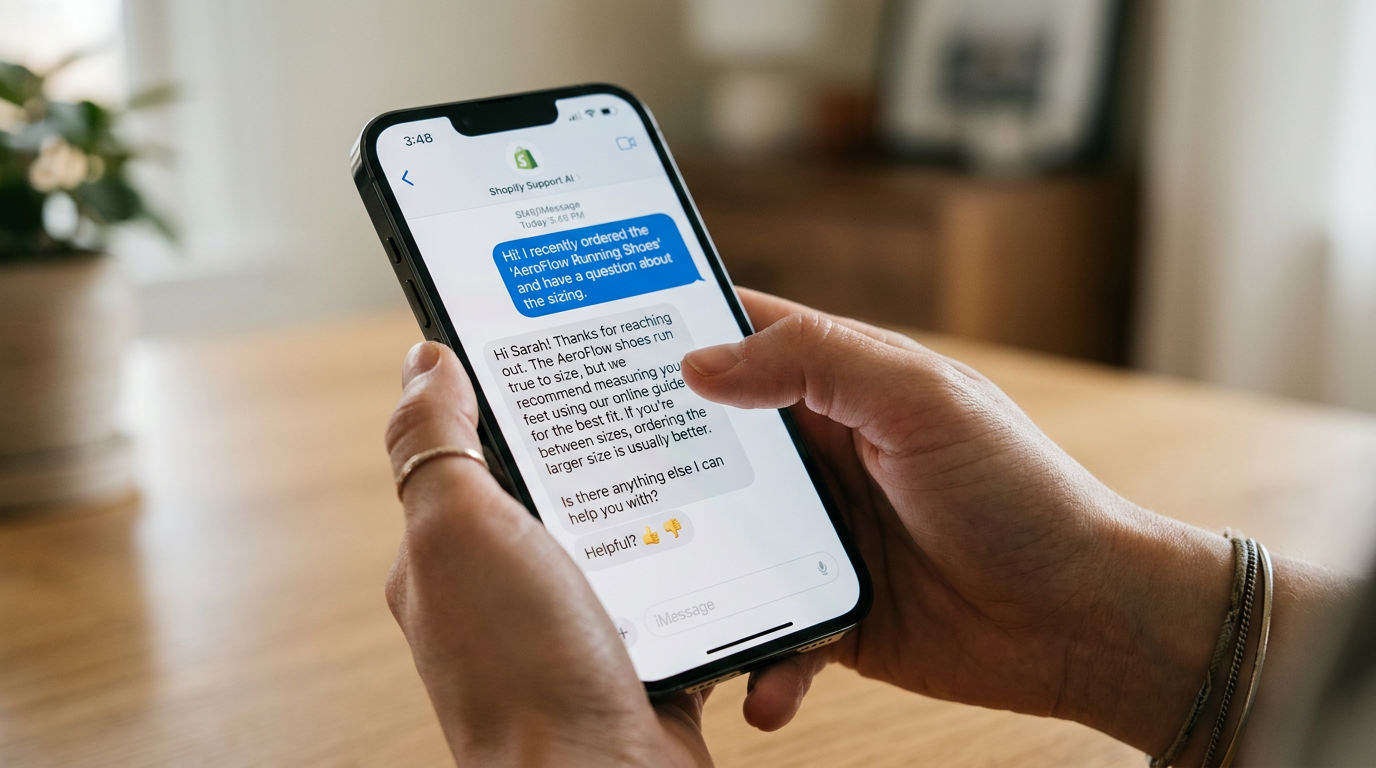
This is where the AI operator truly separates itself from basic automation. Reminders are passive. Resolving blockers is active selling. What if a customer bolted because they had a question about sizing, shipping times, or your return policy? A static email is useless here.
Modern tools like TxtCart use conversational AI agents to engage customers via SMS within 30-60 minutes of abandonment. They can answer natural language questions, clarify your store's policies, and even provide social proof. It's like having a live sales associate jump in to handle objections and guide the customer back to checkout. This single capability fundamentally changes cart recovery from a passive reminder to an active sales conversation.
The Data Inputs: What Fuels an AI Revenue Operator?
An AI agent's intelligence isn't magic. It's the result of processing multiple data points in real time to make a calculated decision. While a basic automation only knows that a cart was abandoned, a true revenue operator acts like a detective, piecing together clues to build the most compelling case for a customer to return.
These are the critical data inputs that transform a simple reminder into a strategic recovery attempt:
- Cart Value & Composition: Is it a $1,000 cart with high-margin items or a $30 cart with a single, low-margin product? The AI prioritizes and tailors its incentive strategy accordingly.
- Customer History: The system knows if this is a first-time browser or a VIP customer with ten past purchases. A loyalist might just need a nudge, while a newcomer may need a more persuasive offer.
- Device & Source: Knowing a cart was abandoned on mobile makes SMS the logical first channel. This is key, since mobile abandonment rates can be as high as 85%.
- Item-Specific Details: The AI can reference the exact product in the cart. For a complex electronic, it might offer a link to a video demo. For a fashion item, it can proactively address sizing concerns.
- User Behavior: Did the user hesitate on the shipping page? The AI can infer the objection was cost and offer free shipping as a targeted solution, rather than a blind discount.
By synthesizing this information, the AI agent moves from broadcasting to narrowcasting. It doesn't just send a message. It crafts a specific solution for a specific person's specific problem, which is why merchants are seeing such a dramatic increase in recovery rates.
Tools of the Trade: Building Your AI Recovery Engine
This isn't a futuristic concept. The tools to build this AI operator are readily available, with many living right in the official Shopify App Store's abandoned cart category. The platform itself is promoting this shift, highlighting that AI-driven recovery is now a core part of the modern e-commerce stack. Getting this technical marketing right is a core tenet of our ai automation services.
One of the standout players is TxtCart. It’s built entirely around the conversational SMS model. Instead of just firing off a link, it deploys an AI agent to start a human-like text conversation. This AI can understand queries, provide helpful answers, and gently guide the user to complete their purchase, turning a cold lead warm again through genuine interaction.
For stores with more complex needs or in-house development resources, low-code platforms offer even greater control. A workflow built in a tool like n8n, for instance, can create a “Smart Shopify agent.” This system watches for abandoned checkouts, waits an intelligent amount of time based on cart value, then uses an AI model to generate a completely personalized recovery email on the fly. It can reference the specific items in the cart and tailor the tone to the customer segment.
The results speak for themselves. While basic automation might claw back 5-15% of abandoned carts, Shopify merchants using these multi-channel, AI-driven systems are reporting recovery of 20% to 40% of otherwise lost sales. This creates a powerful flywheel that improves customer experience, which can positively impact brand perception and your long-term seo services efforts.
Beyond Recovery: The Strategic Impact of an AI Operator
Implementing an AI revenue operator isn't just about plugging a leak. It's about building a new, scalable revenue stream for your business from traffic you already have. Every percentage point you reclaim from that 70% abandonment rate drops directly to your bottom line, making it one of the highest-impact automations you can deploy.
This fundamentally shifts your team's focus. Instead of manually managing tedious follow-up sequences, your marketers can analyze the AI's results and refine high-level strategy. The AI handles the tactical execution, learning and improving with every interaction. This is a common theme we see across channels, whether in cart recovery or when we build campaigns for ai influencer marketing.
The question is no longer whether you should automate your cart recovery. The real question is whether you are content with a simple reminder service, or if you are ready to deploy an intelligent agent dedicated to fighting for every single sale.
If you're ready to stop leaving money on the table and install a true revenue operator in your store, it might be time to automate your workflow. Let’s discover what AI can recover for you.