the ai ugc operating system for shopify brands
user-generated content is now a primary performance channel for shopify. it's time to graduate from chasing one-off posts to building a predictable, ai-powered ugc factory.

User-generated content is no longer a “nice to have” for Shopify merchants. It’s a full-blown performance channel. StoreCensus data confirms that integrating UGC can boost conversions by a staggering 144%, fundamentally changing a store's financial trajectory.
For years, brands treated UGC as a lucky accident, nabbing a great customer post here and a positive comment there. That era is definitively over. It's time to stop chasing content and start building a predictable, scalable creative engine. Welcome to the UGC Operating System.
From Random Assets to a Conversion Engine
The entire center of gravity in social commerce has shifted. Short-form video and live shopping now power an incredible 70% of all social commerce revenue. The engine behind this shift isn't polished brand creative, it's authentic, user-driven content.
The performance data is impossible to ignore. UGC-driven conversions on Shopify saw a massive 57% quarter-over-quarter jump between late 2025 and early 2026. This isn't about just having social proof anymore. It’s about feeding the algorithms on Meta, TikTok, and even your own website with a continuous stream of content that actually sells.
Consumers are telling you exactly what they want to see before they buy. An operating system for UGC lets you listen, interpret, and respond to those signals at scale, turning audience feedback into your most valuable asset.
Why the Old UGC Playbook Is Officially Broken
The creator economy has completely exploded. A 2025 report from Collabstr, cited by Shopify, highlighted a 93% year-over-year growth in UGC creators. With 15% of all influencer collaborations now structured as UGC-only deals, the supply of potential partners is immense. But this creates a new problem: chaos.
Manually finding creators, negotiating rates, writing briefs, tracking deliverables, and measuring results is an operational nightmare. It simply doesn't scale. Most brands end up with a messy Dropbox folder of mismatched assets, inconsistent messaging, and no clear line of sight into what’s actually driving revenue.
This manual, reactive approach is precisely why most brand UGC strategies fail to produce consistent ROI. You spend more time managing logistics than you do analyzing creative performance. The result is burnout and a channel that feels more like a cost center than a profit driver.
Installing Your AI-First UGC OS: A Weekly Sprint Model
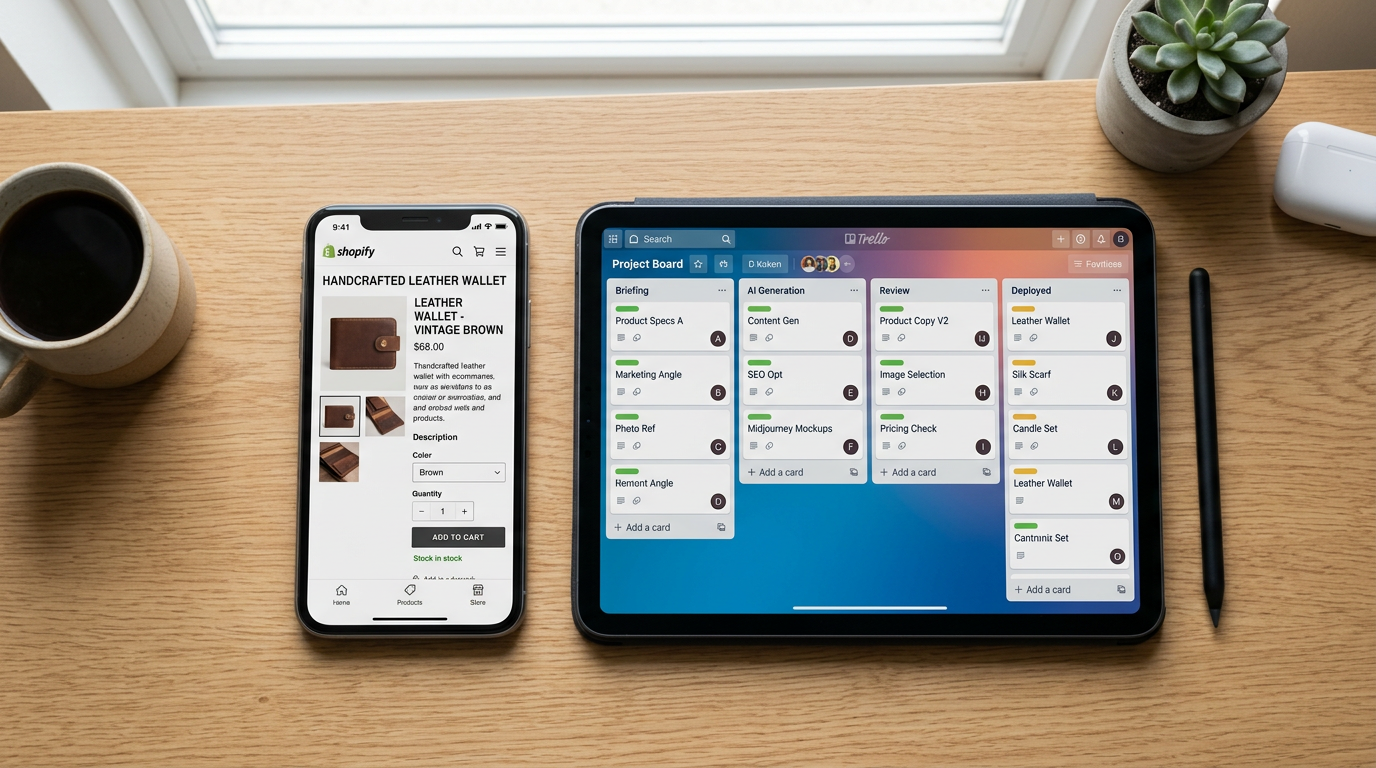
The modern solution requires thinking like an operator, not just a marketer. Building an AI-first UGC Operating System, or OS, transforms unpredictable creativity into a structured, weekly production sprint. This isn't about replacing humans. It's about building a factory that outputs high-performing creative mapped directly to your Shopify business goals.
Step 1: The Intake & Briefing Engine
Every sprint starts with clear priorities pulled directly from your business data. What SKUs need a lift? Which audience segments are you targeting this week? Which channels are you prioritizing for ad spend? An AI co-pilot ingests these priorities to generate incredibly specific creator briefs.
Shopify’s own guide on generative AI flags this as a primary use case. AI can scan your top product reviews to find recurring praise and then draft talking points for creators to hit. It can analyze competitor ads to suggest unique angles, ensuring every piece of content starts with a strategically sound foundation.
Step 2: Placement-Aware Creative Generation
An AI co-pilot doesn't just create content; it creates content engineered for a specific job. A hook that works for a TikTok prospecting ad will fail on a PDP, where trust is more important than shock value. A true UGC OS generates dozens of variations tailored for each placement.
We're seeing an explosion of AI tools that are making this process incredibly efficient. You can now observe how AI generates UGC-style video ads from a URL, turning a product link and a simple brief into testable ad creative in minutes. Your OS should be able to create variants for every part of the funnel:
- Top-Funnel (TikTok/Reels): Fast hooks, problem-aware formats, and trend-based audio to grab cold audiences.
- Mid-Funnel (Meta Retargeting): Overcoming common objections, showcasing diverse use cases, and building social proof.
- Bottom-Funnel (Shopify PDP): Authentic unboxings, fit guides, and testimonials that build final conversion confidence.
- Retention (Email/SMS): Customer success stories, community shout-outs, and new ways to use a purchased product.
Step 3: The Quality Gate: Human Insight & Authenticity
AI provides the scale, but humans must guard the soul of the brand. The review stage in a UGC sprint is a crucial quality gate. It’s not about checking for typos; it's a rapid, two-part check.
First is the commercial review: does this asset clearly communicate the value proposition? Does it address the core job of the brief? Second is the brand review: does this feel real? Does it sound like our actual customers? This human feedback loop is critical for training the AI on what authentic content truly looks and sounds like for your audience.
Step 4: Deploy, Score, & Compound
Once approved, your OS deploys assets across your Shopify ecosystem. This means feeding shoppable galleries with apps like Foursixty, populating your product pages with fresh video reviews, and pushing ad variations to your paid social campaigns. Every single asset is tagged with its SKU, target audience, and placement.
As performance data like CTR, CVR, and ROAS flows back, you begin building a “winner library.” This is where the magic happens. You’re not just making content; you're building a dataset. Your AI can then analyze what works and automatically inform the next sprint, compounding your learnings and creating a cycle of continuous improvement.

Beyond Tools: The Mindset Shift Your Brand Needs
Implementing a UGC OS is more than a technology decision. It's a strategic shift in how your marketing team operates. It moves you away from the high-risk, high-cost world of big-bang campaigns and toward a more agile, data-driven program of continuous testing and iteration.
This approach de-risks your creative budget. Instead of spending thousands on a single hero video that might flop, you're investing in a portfolio of dozens of lower-cost UGC assets. You let the market, not your internal team, decide what a winning creative looks like, and then you double down on what works.
Making this shift can be challenging, which is why many brands partner with an ai influencer marketing agency. An expert partner provides the strategic framework, manages the weekly sprints, and ensures the technology serves the overarching business goals, connecting your high-level digital marketing strategy to on-the-ground execution.
Building Your AI UGC Tech Stack on Shopify
This operating system isn't just a concept; it’s a stack of connected tools that creates a powerful flywheel. At its core is Shopify Collabs. Built right into the Shopify admin, it acts as a central hub for discovering creators, managing gifting and commissions, and tracking revenue to see which partnerships truly perform.
From there, apps like Loox, Okendo, and Yotpo automate the collection and display of photo and video reviews. Their AI-assisted request systems ensure you're asking for content at the moment of highest customer satisfaction. This is a perfect example of how focused ai automation has a direct and measurable impact on your PDP conversion rate, which can increase by up to 161% when featuring UGC.
Finally, platforms like Foursixty or EmbedSocial bridge the critical gap between social media discovery and on-site conversion. They transform your tagged Instagram or TikTok posts into compelling, shoppable galleries right in your theme. The entire system works together to capture, create, and convert.
The game has changed. Winning with UGC in 2026 isn't about hoping for a viral moment. It's about building an intelligent machine that reliably produces content that converts, week after week. If you're ready to move beyond random acts of content and build your own UGC engine, it's time to launch your ai influencer and take control of your creative performance.