the marketing os: building a system that runs without you
ditch the campaign mindset. learn to build a marketing operating system with ai agents and compound loops that generates leads and revenue almost without you.

What if I told you that businesses using marketing automation see 451% more qualified leads than those that don't? That number feels almost unbelievable. Yet, it points to a fundamental truth about modern marketing: the game has shifted from manual effort to intelligent systems.
The old model of endless, disconnected campaigns is officially broken. We used to burn out teams launching a promotion, analyzing its isolated results, and then starting all over again. The future isn't about working harder on the next campaign. It’s about building a marketing operating system.
This is a system of interconnected, self-improving loops where AI agents own the workflows, and your job is to own the rules. It’s a machine designed for compounding returns. And it's the only way your marketing will run, and scale, without you at the center of every single decision.
The End of "Campaigns" as We Know Them
For years, marketing automation was a nice-to-have. A differentiator. Today? Not so much. With 76% of all businesses already using automation, it's simply the cost of entry. The conversation is no longer if you should automate, but how deeply you can integrate it into a cohesive system.
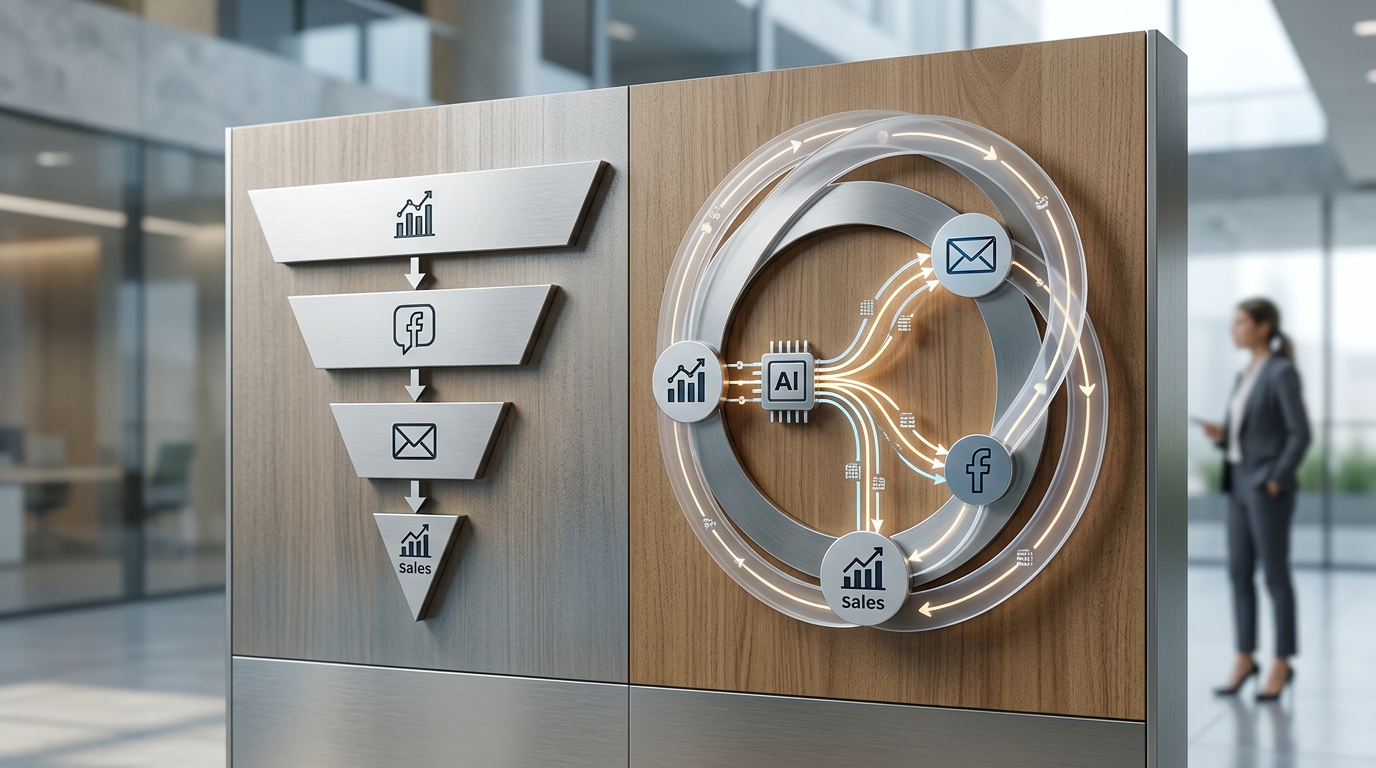
The biggest strategic mistake marketers still make is applying this new technology to an old process. They automate a linear funnel. They build a slightly more efficient version of the same isolated, start-and-stop campaigns they ran five years ago.
A true marketing OS abandons the linear funnel for what some strategists, including those at HubSpot, call Loop Marketing. It’s a continuous, data-fed cycle of engagement. Data gets captured, AI interprets it, automations adjust the messaging in real time, and the performance results automatically update the rules for the next interaction. It’s a closed loop, not a leaky bucket.
This isn't just theory. The results are dramatic. Nurture workflows with smart triggers and scoring are already lifting MQL-to-SQL conversion by 30-50% for teams that get it right. It’s a fundamental shift from one-off sprints to an always-on engine that improves with every interaction.
Building the Foundation: Your Data and AI Core
Building this system isn't about buying a single piece of software. It's about architecting a stack where data and intelligence can flow freely. It starts with a solid foundation built on three key layers.
Step 1: Unify Your Customer Data
Your system is only as smart as the data it runs on. Disjointed data from your email platform, your website analytics, and your sales CRM creates a blind, fragmented customer view. The entire concept of an autonomous system fails right here if you don't fix it.
This is where a unified customer profile becomes non-negotiable. Platforms like HubSpot Marketing Hub are built around a central CRM, ensuring every interaction informs the next. Purpose-built Customer Data Platforms (CDPs) can also achieve this, but the goal is the same: one source of truth for every contact.
Step 2: Choose Your Automation Engine
With clean data, you need an engine to act on it. Your choice depends on your business model. For many B2B and service-based businesses, an all-in-one like HubSpot is the logical hub for automating email, lead scoring, and journey mapping.
For e-commerce, a platform like Klaviyo is dominant for a reason. It excels at the lifecycle flows that drive revenue, from abandoned carts to predictive segmentation for post-purchase offers. For more complex, enterprise-level needs, cross-channel platforms like MoEngage orchestrate actions across email, push notifications, and in-app messages, all powered by unified data and AI.
Step 3: Activate the Intelligence Layer
This is where the magic happens. AI is no longer a bolt-on feature; it’s the core intelligence of the system. In 2026, 45% of marketing teams are already using agentic AI systems that don't just suggest actions but actually execute tasks. The result? A 27% faster campaign build time and a 19% lower cost per qualified lead.
This AI layer handles dynamic content, where 77% of marketers are already using it to personalize messaging at scale. It manages predictive audience targeting and even optimizes send times. This is the part of the system that truly learns and adapts without your constant intervention.
Designing the "Compound Loops" of Your OS
Once the foundation is set, you can stop thinking in campaigns and start designing loops. These are automated, self-sustaining cycles that handle specific stages of the customer relationship. Each loop feeds the next, creating a powerful compounding effect.
The Acquisition Loop
This loop focuses on attracting and qualifying new leads. It connects your top-of-funnel efforts, like content and paid ads, to your automation engine. For example, a lead from a targeted ad is immediately enrolled in a nurture sequence tailored to the ad's topic.
Your system can automatically score this lead based on their engagement, such as which emails they open or pages they visit. This is where a great seo agency can drive the qualified organic traffic that fuels your loops. High-scoring leads are routed to sales, while others receive further automated nurturing. This process alone can increase qualified leads by a staggering 451%.
The Nurture & Conversion Loop
This is the heart of the machine. It’s where you convert interest into revenue through behavior-driven automation. Think of the classic abandoned cart email, but smarter. The system might send a reminder, then a small discount, then a notification about low stock, all based on the user's specific actions (or inaction).
This extends far beyond e-commerce. Did someone download a whitepaper? A loop can send them a related case study three days later, followed by an invitation to a webinar. According to current data on marketing automation adoption, 58% of marketers are automating email and 49% are automating social media. The best teams connect these channels into a single, seamless journey. The top 10% of these workflows generate a massive $16.96 in revenue per recipient, compared to the $1.94 average. That's the power of a well-designed loop.
The Expansion & Advocacy Loop
Your system shouldn't stop at the first sale. This loop is designed to increase customer lifetime value and turn buyers into promoters. It can automate post-purchase education, trigger upsell offers based on user behavior, and request reviews at the perfect moment.
You can even integrate more innovative strategies like ai influencer marketing by automatically identifying your most engaged customers and inviting them to an exclusive brand ambassador program. This loop closes the circle, generating social proof and referrals that feed right back into your Acquisition Loop. It’s the key to making the entire system self-perpetuating.

Your New Job: From Operator to Architect
So if the system runs itself, what are you supposed to do? Your role doesn’t disappear. It elevates. You graduate from being an operator, pulling levers and pushing buttons, to being an architect who designs the machine and sets its rules.
Your work becomes more strategic. You’re no longer building one-off email campaigns. Instead, you're analyzing the performance of your Nurture Loop and refining the scoring model. You're not manually posting on social media; you're designing the logic for how your system shares user-generated content from your Advocacy Loop.
The financial justification is clear and compelling. Companies see an average of $5.44 in return for every dollar spent on marketing automation. The top quartile of programs? They see that return jump to over $8.70. With numbers like these, it's no surprise that 68% of marketing leaders plan to increase their automation budgets. It's a clear investment in efficiency and growth.
This approach requires a higher level of thinking and a partner who understands system design, not just basic campaign execution. It combines deep expertise across a range of marketing services to connect the dots between channels, data, and technology.
Building a marketing operating system is a journey from complexity to clarity. It's about designing a smarter business that serves customers better and frees you to focus on what's next. If you're ready to move from operator to architect, we should talk. Let's book a strategy call and map out what your marketing OS could look like.