the multi-location seo playbook: beyond the basics
standard seo fails for multi-location brands. we'll show you why continuous, ai-driven execution across all your locations is the only strategy that works in 2026.

It’s a brutal truth: your strong national brand means very little when a potential customer is searching for “pizza near me.” And if you’re a multi-location business, this isn't one battlefront. It's hundreds. The complexity is exactly why 74% of enterprises now outsource their multi-location SEO. They know the old playbook is broken.
For years, the focus was on 'setup and syndication'. You’d push out your Name, Address, and Phone number (NAP) data and hope for the best. That strategy is now obsolete. Winning in local search today, and certainly in 2026, requires continuous, automated execution. Anything less is just managed decline.
Why Your Current Local SEO Strategy Is Leaking Revenue
Let's start with a simple fact. Nearly half, a full 46%, of all searches on Google have local intent. This is not a niche market. It's the default way modern customers find and interact with businesses in the real world.
When you operate 10, 50, or 500 locations, consistency becomes a mathematical nightmare. A single discrepancy in store hours, a handful of unanswered negative reviews at one branch, or an outdated photo on a Google Business Profile might seem small. But these inconsistencies compound, eroding trust with both customers and search algorithms. The result is a quiet but significant loss of demand, despite your brand's strength.
Think of it as a death by a thousand paper cuts. Each small error, each missed opportunity to engage, signals to Google that you aren't the most reliable answer for a local user. This is where even a solid corporate marketing team can fail. They lack the tools and focus for granular, high-frequency local management. The problem isn't brand, it's execution at scale.
Your team could be spending its time pushing for perfect NAP consistency using a tool like Moz Local, and that's important foundation work. But it’s just the starting line. True geo optimization is an active, ongoing process that goes far beyond basic data accuracy. It's about winning the moment of intent, location by location.
The New Mandate: Agentic Execution at 100% Coverage
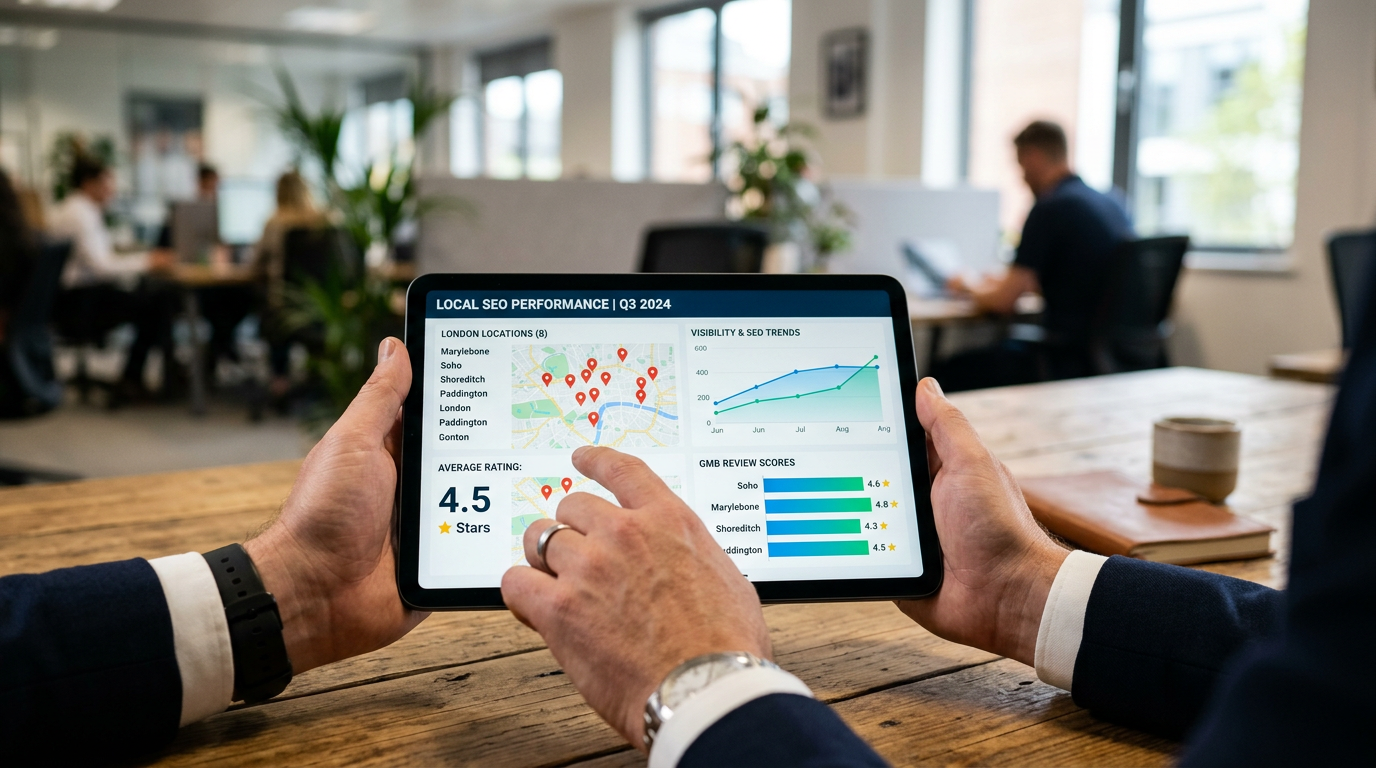
The conversation among senior strategists has shifted dramatically. We're moving away from talking about one-time syndication and into a new era: agentic execution. This isn't just about scheduling social media posts. This is about using AI agents to perform thousands of optimization tasks continuously across your entire footprint.
What does this mean in practice? It means an AI system, operating within your brand guardrails, is constantly monitoring and acting. It's updating holiday hours across 300 Google Business Profiles, responding to common review questions with approved answers, and analyzing performance data to suggest hyper-local content for an underperforming store's landing page.
The goal is 100% execution coverage. Research shows that for multi-location brands, even 90% consistency isn't enough. The 10% of locations with errors or missed updates will actively lose demand and drag down the authority of the entire brand portfolio. You have to be perfect, everywhere, all the time. Humans can't do this. But AI agents can.
Platforms like SOCi, which G2 has ranked as a leader in this space, are built for this reality. They offer AI-powered agents to manage search, social, and reviews at a scale that was previously unimaginable. This is the new benchmark for any serious digital marketing agency working with enterprise clients.
The Pillars of a Modern Multi-Location Strategy
To achieve that 100% coverage, your strategy needs to be built on a few core pillars. These aren't revolutionary ideas on their own, but executing them at scale is what separates the winners from the losers.
Pillar 1: Hyper-Localized Presence
A generic page with a list of addresses is a relic. Every single location needs its own digital storefront, centered around a rich, mobile-optimized landing page. This page must feature unique local content, photos of the actual staff and store, area-specific testimonials, and clear calls to action.
Remember that a staggering 60% of mobile users contact a business directly from the search results. Your local pages must be designed for this behavior. That means prominent click-to-call buttons and easy access to directions. Building out this infrastructure might require a custom website architecture designed for local content modules.
Pillar 2: Centralized Reputation Management
Reviews are one of the most powerful local ranking factors. Answering them isn't optional, and doing it quickly is critical. For a brand with hundreds of locations, managing reviews via individual Google logins is a recipe for disaster.
You need a unified platform that pulls in reviews from all major sites for every location. Tools like BrightLocal and SOCi excel here. They allow a central team or an agency partner to monitor sentiment, flag urgent issues, and deploy approved responses efficiently. This turns reputation management from a reactive chore into a proactive brand-building activity.
Pillar 3: Google Business Profile (GBP) Mastery
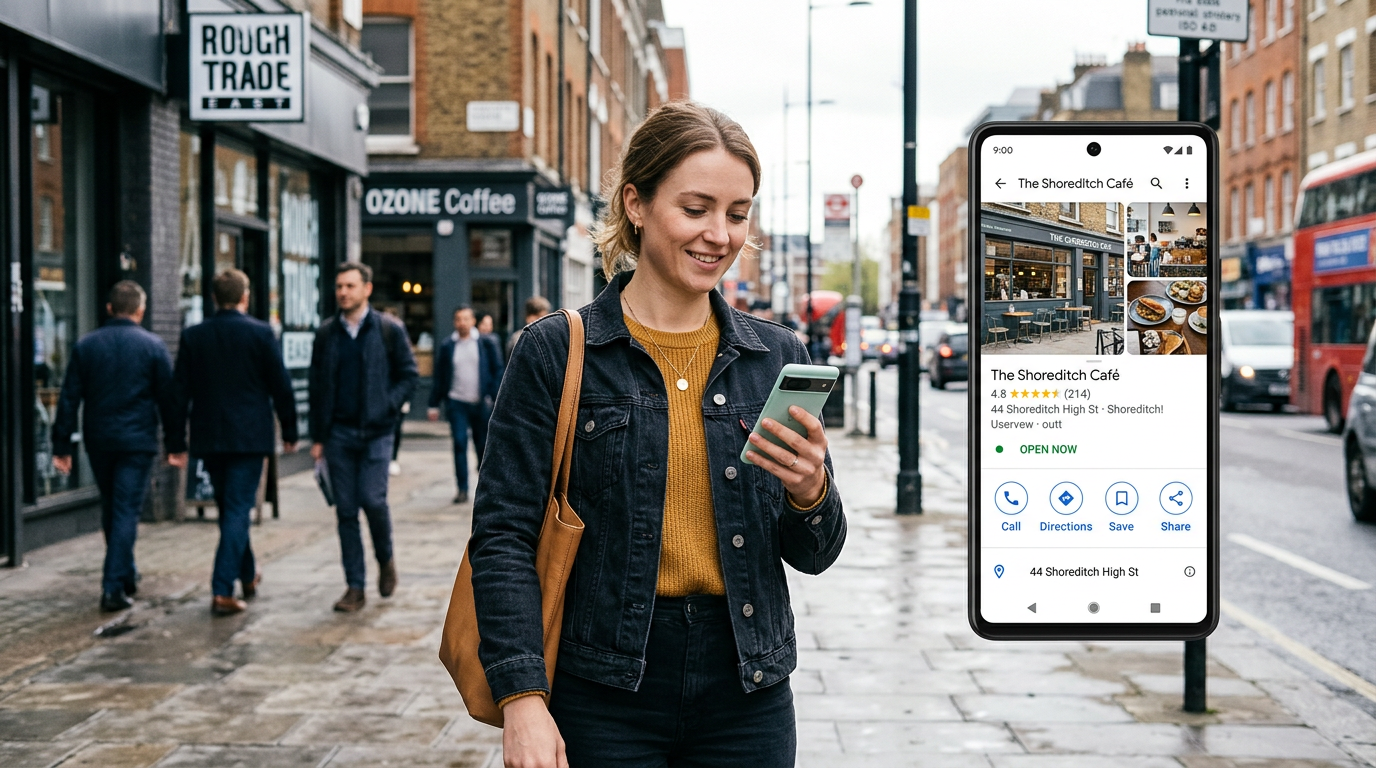
Your Google Business Profile is your new local homepage. It is often the first and only impression a customer will have of your local branch. Simply claiming the listing and adding your address is not enough. Not even close.
Winning on GBP means constant activity. It means using Google Posts to announce local promotions, uploading fresh photos weekly, and actively answering questions in the Q&A section. Every attribute, from “wheelchair accessible” to “outdoor seating,” needs to be accurate for every single location. This high-frequency activity signals relevance to Google and provides a better user experience.
Choosing Your Platform and Partner for Scale
The complexity of executing this strategy is immense, which brings us back to why 74% of large businesses choose to outsource. The decision isn't just about manpower. It's about having access to the specialized technology required to manage thousands of data points in real time.
When evaluating options, you're essentially choosing a technology stack and an execution model. Some platforms, like Moz Local, are great for the foundational task of cleaning up citations and ensuring NAP accuracy. It's a critical first step for any business.
Other platforms, like BrightLocal, offer a more comprehensive suite of tools often favored by franchise models, bundling reputation management and rank tracking with listing syndication. But for a true enterprise with dozens or hundreds of locations, the focus must be on automated, AI-driven execution.
This is where partnering with a top seo agency that utilizes an enterprise-grade platform like SOCi becomes a strategic advantage. It's not just about managing listings. It's about deploying a system that ensures 100% coverage and continuous optimization. You can learn more by reading a detailed guide to the best multi-location SEO platforms that breaks down which tools are built for this new reality.
The right partner doesn't just run a checklist. They implement a system that makes failure at the local level nearly impossible. They use technology to solve the problem of scale, freeing up your marketing team to focus on broader strategy.
The game has changed. Success in multi-location local SEO is no longer defined by a one-time setup project. It's defined by the quality and completeness of your ongoing execution. Take a hard look at your current approach and ask: is it built to syndicate data once, or is it built to win every day, in every neighborhood you serve?