the signal-dense funnel: your 2026 cold traffic playbook
your old lead generation funnel is broken. in 2026, success with cold traffic means building a signal-dense machine that captures intent and acts in real time. here's how.

Your marketing funnel is leaking. Badly. New analysis shows the median conversion from a marketing-qualified lead (MQL) to a sales-qualified one (SQL) has plummeted to just 9.8%, a staggering 24% drop since 2024. That classic model you’ve been relying on is failing right in the middle.
For years, we’ve pictured the funnel as a neat, linear journey. Awareness, consideration, decision. Simple. Predictable. And now, profoundly wrong.
The reality is that converting cold traffic in 2026 isn't about guiding prospects down a path. It's about building a machine that captures and interprets buying signals faster than your competitors. It's time to ditch the old map and build a Signal-Dense Funnel.
Why Your Old Funnel Is Bleeding Money
Let's be brutally honest about the numbers. Converting cold traffic has always been tough, but the economics are now becoming unsustainable for any business using an outdated playbook. The game has changed, and the score is not in your favor.
Across the board, overall lead-to-customer conversion rates hover between a dismal 0.94% and 3.2%. While the top performers using AI-assisted workflows can stretch that to over 7%, most companies are burning cash on leads that go nowhere. This isn't a small leak; it's a firehose of wasted ad spend.
The problem is compounded by cost. The median cost-per-lead in B2B hit $213 in early 2026. If you're paying that much for a lead that has a 1% chance of becoming a customer, your customer acquisition cost is a staggering $21,300. That math just doesn't work unless you have a truly massive customer lifetime value.
The old funnel model treats all traffic as more or less equal, hoping to qualify it over time. This is a fatal flaw. You are mixing high-intent prospects with curious browsers and leaving money on the table.
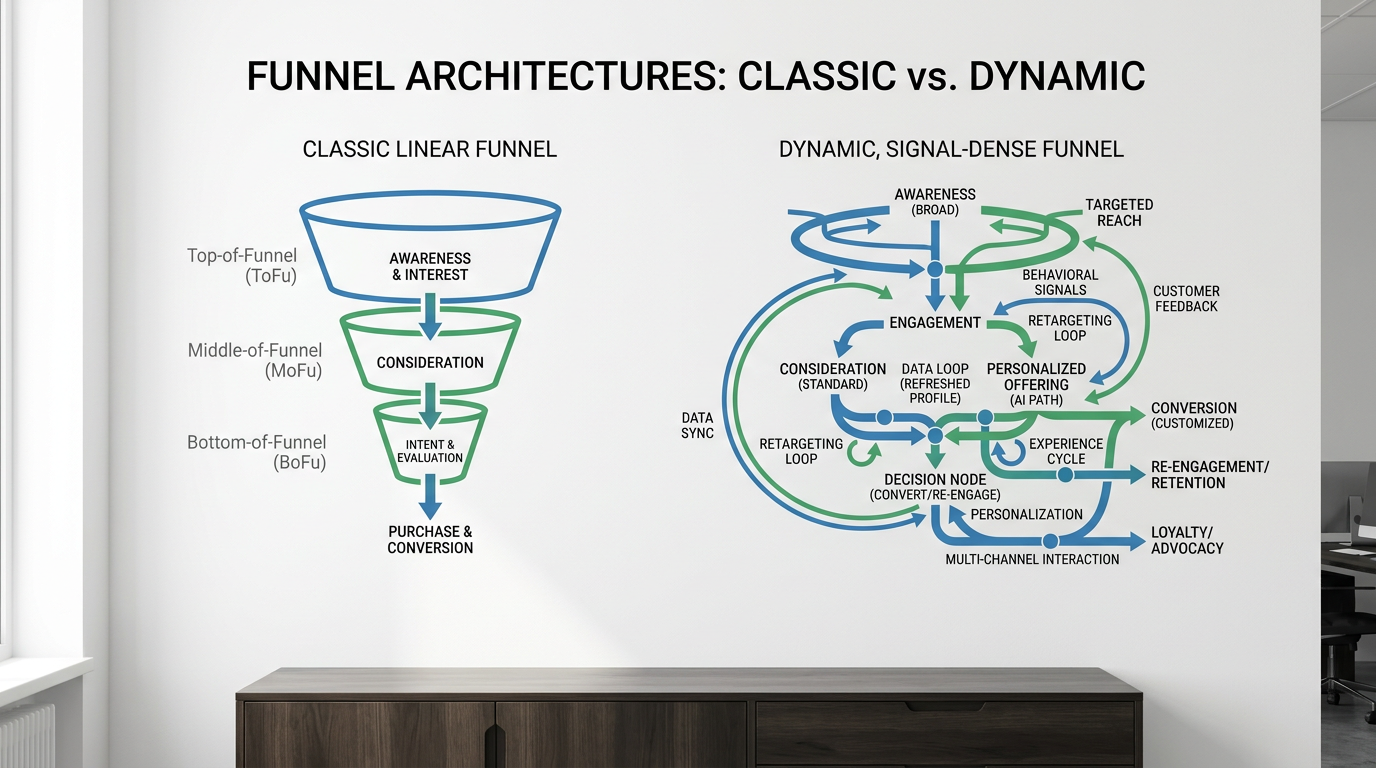
The Signal-Dense Funnel: A New Architecture for Conversion
A Signal-Dense Funnel flips the script. It is not a passive journey. It’s a dynamic system designed to do three things exceptionally well.
First, it works to compress the time it takes to identify true buying intent. Second, it re-scores and re-routes leads based on every single interaction, not just a form fill. And third, it has a built-in process to recycle the vast majority of leads who aren't ready to buy today into profitable future segments.
This architecture is built on three foundational laws. Think of them as the design principles for a modern, high-performance conversion engine.
Law #1: Every Touch Must Create or Capture a Signal
In a Signal-Dense Funnel, every interaction is a data point. The goal of your top-of-funnel content isn't just to get an email address. It's to understand intent. Your ads, landing pages, and lead magnets must be engineered to make prospects reveal their motivations.
Forget the simple “Download our Guide” PDF. Instead, use a multi-step quiz that asks about their biggest challenge or company size. That’s not a lead. That’s a segmented lead with self-reported pain points. The right website development partner can build these interactive elements directly into your core web properties.
This is where intent data becomes so powerful. Platforms like 6sense have shown that leads sourced from demonstrated intent signals convert at 18.7%, a 3.4x lift compared to leads that simply match your ideal customer profile. Your funnel’s first job is to find or create that signal.
Even simple behaviors matter. Tracking video watch percentage, content topics browsed, or scroll depth on key pages tells a story. Someone who watches 90% of a case study video is sending a much stronger signal than someone who bounces after 10 seconds. Your funnel must be smart enough to notice.
Law #2: Routing and Messaging Must Change in Real Time
Once you capture a signal, you must act on it. Instantly. A static, one-size-fits-all nurture sequence is the enemy of conversion. Dynamic routing is where a Signal-Dense Funnel leaves the old model in the dust.
Consider this scenario. A prospect visits your pricing page, spends 75 seconds there, then clicks on a specific feature breakdown. In an old funnel, they get the same “Welcome” email as everyone else. In a Signal-Dense Funnel, this behavior triggers an immediate, automated action. They might be added to a hyper-specific sequence that handles common pricing objections or receive a personal outreach email from an SDR within the hour. This is the power of behavior-triggered workflows in tools like HubSpot Marketing Hub.
This is where AI becomes a true force multiplier. Platforms like Salesforce Einstein can dynamically adjust the very next piece of content a lead sees based on their real-time behavior. Instead of a rigid path, the AI creates a personalized journey on the fly, dramatically increasing relevance. This is a core reason why firms using AI report up to 50% more sales-ready leads. It's a key tactic in sophisticated ai influencer marketing campaigns, matching the right content to the right person at the right time.
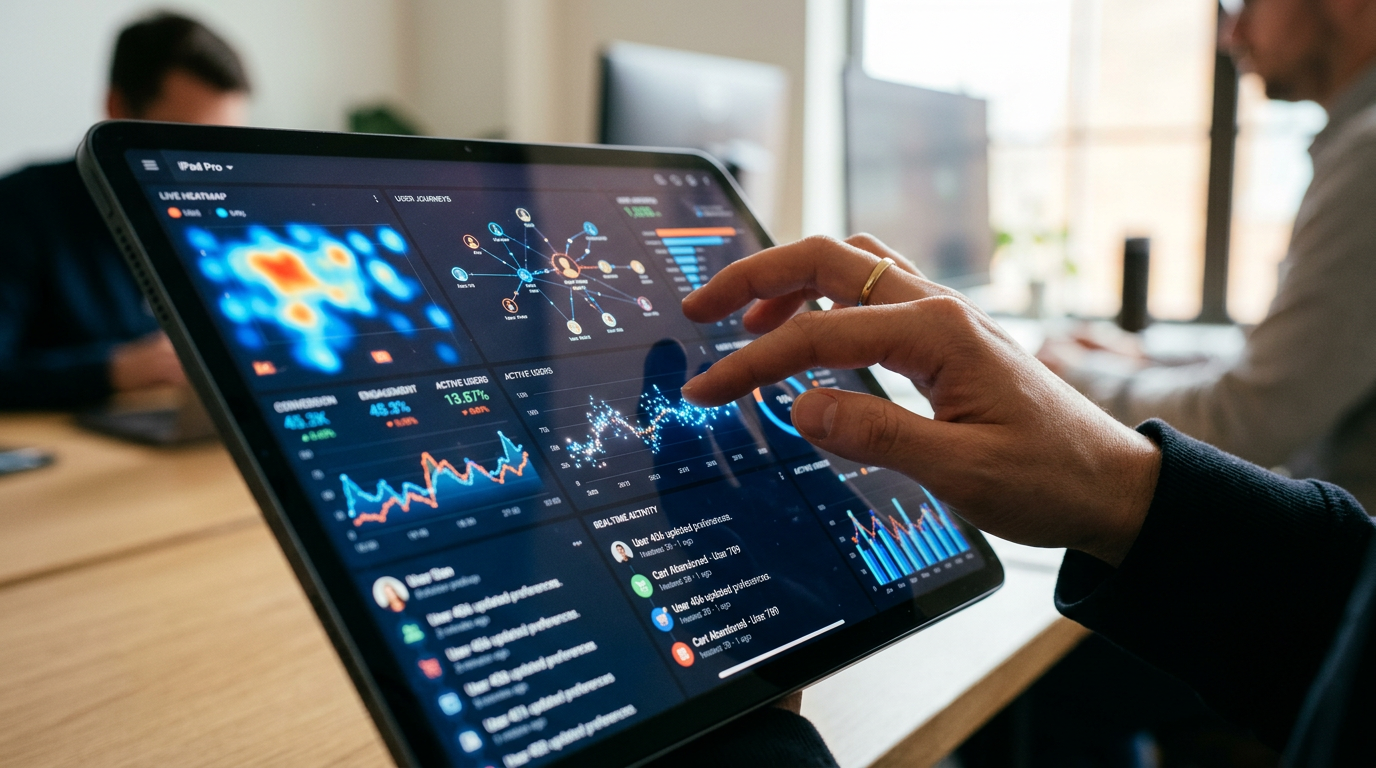
Law #3: The Funnel Optimizes for LTV, Not Front-End ROAS
Here is the most critical mindset shift. Given the high costs and low initial conversion rates, a funnel focused only on immediate return on ad spend (ROAS) is destined to fail. The vast majority of leads, over 90%, will not buy from you on the first pass. What do you do with them?
A Signal-Dense Funnel is built for the long game. It optimizes for Lifetime Value (LTV). The 90% of leads who don't convert aren't discarded. They are recycled, segmented, and nurtured intelligently over a 6, 12, or even 18-month timeframe.
This means your funnel needs a back-end. You might nurture cold B2B leads into a low-cost paid workshop, segment email subscribers for future product launches, or use their behavioral data to run highly targeted reactivation campaigns months later. The goal is to extract value from the entire traffic pool, not just the tiny fraction who buy now. A skilled digital marketing agency doesn't just build the top of the funnel; they engineer the entire customer lifecycle for maximum profitability.
This long-term approach requires a solid data foundation. Without clean tracking and a well-managed CRM, you're flying blind. This is why a great seo agency is obsessed with more than just rankings; they ensure your analytics are configured to capture the signals you need for this long-term strategy to work.
Your Toolkit for a Signal-Rich Future
Building this kind of funnel isn't theoretical. It's happening right now, powered by a new generation of marketing technology. The teams achieving those 7-8% conversion rates are not guessing; they are armed with the right tools.
Your stack should include three core components:
- A CRM & Automation Hub: A platform like HubSpot is the central nervous system, managing your contacts, tracking behavior, and executing the automated workflows that make real-time routing possible.
- An Intent Data Platform: Tools like 6sense are your radar, identifying accounts that are actively researching solutions like yours *before* they ever visit your website, feeding your funnel with the highest quality prospects.
- An AI Engine: Integrated AI, like Salesforce Einstein, acts as the brain, powering predictive lead scoring, personalizing content, and helping your sales team prioritize the opportunities most likely to close.
Together, these tools allow you to build an intelligent, responsive system that actively qualifies and converts, rather than a passive, leaky bucket.
Stop building static journeys and hoping for the best. The path to converting cold traffic in 2026 is through a funnel that listens, learns, and acts on signals in real time. The first step is to audit your current process and identify all the places where you are currently flying blind.