your new maître d’ works nights. it’s an ai.
it's time to stop thinking of an ai voice agent as software. it's your new, best employee, a night-shift maître d’ who never misses a call or a reservation.
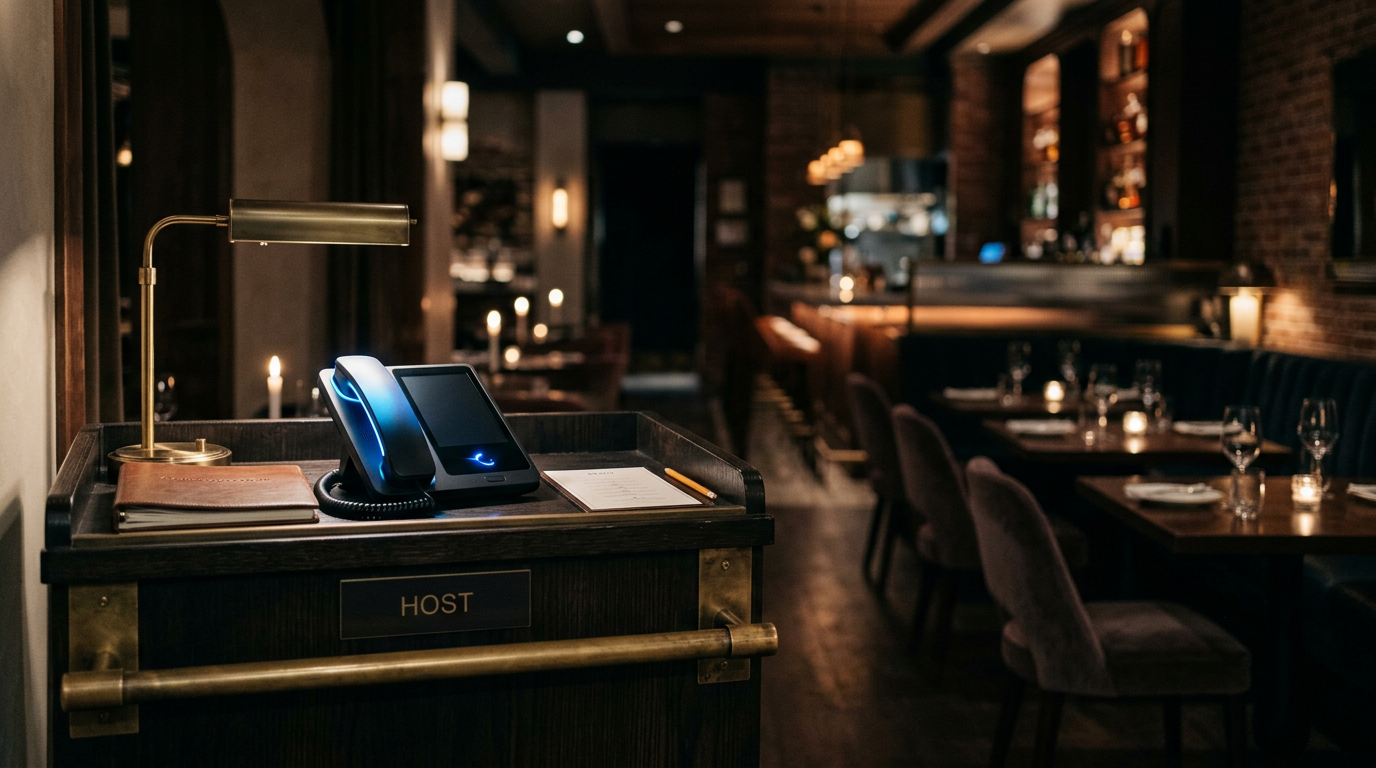
It’s 11 PM on a Tuesday. A corporate planner, a tourist, or a future regular decides they need to book a table for Friday. They call your restaurant. It rings. And rings. Then, voicemail.
You just lost a customer. Possibly a big party. You didn't just miss a call; you delivered a poor customer experience and actively left revenue on the table. This exact scenario plays out thousands of times a night across the industry.
But what if someone was there to answer? Someone polite, efficient, and perfectly on-brand, even hours after your staff went home. That someone is an AI voice agent, and it's time to stop thinking of it as software. It is your new, most valuable employee.
The Phone is Ringing, So Why Isn't Revenue Climbing?
For most restaurants, the telephone is both a lifeline and a liability. During a busy service, it’s a constant distraction for the host. After hours, it’s a black hole of missed opportunity. The numbers behind this missed opportunity are staggering.
Restaurants implementing modern AI phone agents are seeing an incredible 85% reduction in missed calls. This isn't just about improved service metrics. It translates directly into a 20-26% lift in phone-driven revenue, much of it from late-night and overflow calls that human staff were physically unable to answer.
This is no longer a futuristic concept reserved for massive chains. With the cost of a high-quality voice AI interaction dropping below $0.10 per call in 2025, deploying 24/7 coverage has become economically sound for independent restaurants and small groups. You get first-ring pickup and, critically, unlimited simultaneous calls. No customer ever hears a busy signal during the Friday night rush again.
The technology itself is mature and road-tested. Platforms like Loman AI and Famulor are built specifically for the chaotic, high-pressure environment of hospitality. They don't just answer phones; they convert calls into booked tables and captured revenue.
Designing Your Invisible Night-Shift Host: An Operational Playbook
Here is where you must shift your mindset. Do not buy an “AI phone tool.” Instead, hire an “AI night host.” Your first task is to write its job description. Think of it as a new operational role with a dedicated shift, from the moment your human host leaves until they return the next morning.
You need a clear playbook for this AI. Its duties between 10 PM and 10 AM are precise, valuable, and fully automated. This is not just a feature list; it's a strategic staffing decision.
Taking All Standard Reservations 24/7
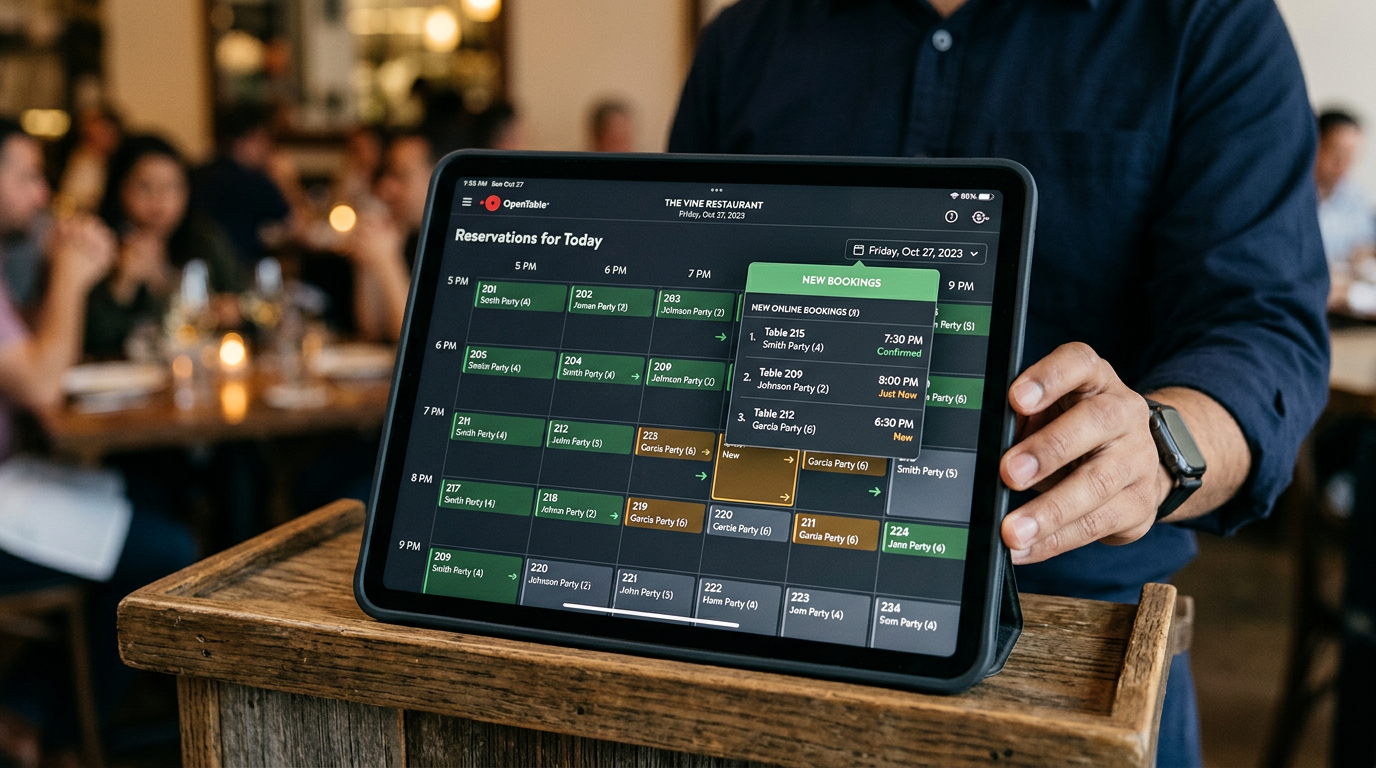
The primary duty is simple: book standard tables. The AI should have real-time, two-way sync with your reservation system, whether that's OpenTable, Resy, or another platform. A caller requests a table for four at 7 PM next Friday, and the agent books it instantly. No friction, no waiting for a callback.
Triaging High-Value and Large-Party Inquiries
When the agent detects a request for 12 people, it knows not to book a standard table. Instead, it shifts into a lead-capture role for your events manager. It intelligently collects the caller's name, contact information, desired date, and party size, then sends an immediate, detailed email alert. The lead is captured while the intent is hot, not 12 hours later.
Supporting a Global and Multilingual Clientele
Your city has tourists and multilingual locals. Top-tier AI agents from providers like Famulor offer support in over 40 languages. A traveler from Paris can call at 2 AM and book a table in French. You’ve just become the most accessible restaurant on the block, removing a major barrier to entry for international visitors.
From Script Follower to Problem Solver: Handling Real Guest Needs
The true test of any staff member isn't just following a script; it's knowing how to react when a customer goes off-script. The same is true for your AI host. The best voice agents available now are no longer brittle chatbots. They are dynamic problem solvers trained for hospitality's unique challenges.
Imagine it's Valentine's Day and you've been fully booked for weeks. A hopeful caller tries to make a reservation. An old system would just say, “Sorry, no tables available.” A modern AI host follows its playbook. It checks your reservation system, confirms you are full, and then offers to add the caller to the official digital waitlist. It captures their details and party size, and now your system can automatically notify them if a table opens up. You just saved a potential future regular from calling your direct competitor.
This same logic applies to complex questions. “Do you have a gluten-free option for the pasta, and can your patio accommodate a wheelchair?” A first-generation bot would fail. A sophisticated AI, however, is trained on your documents: your menu, your allergy information, and your facility details. It can accurately confirm the gluten-free options and that the patio is accessible. If it encounters a truly unique question it hasn't been trained on, its playbook dictates it gracefully captures the query and caller's details, promising a prompt callback from a manager. This prevents frustration and still captures the customer.
The Bottom Line: De-Risking Labor and Uncovering Hidden Profits
Let's talk numbers, because the ROI here is not subtle. Hospitality AI deployments are averaging over 150% ROI in the first year. Certain restaurant models focused on phone orders have reported an astronomical 760% annual ROI simply by capturing every call during peak hours and cross-selling effectively.
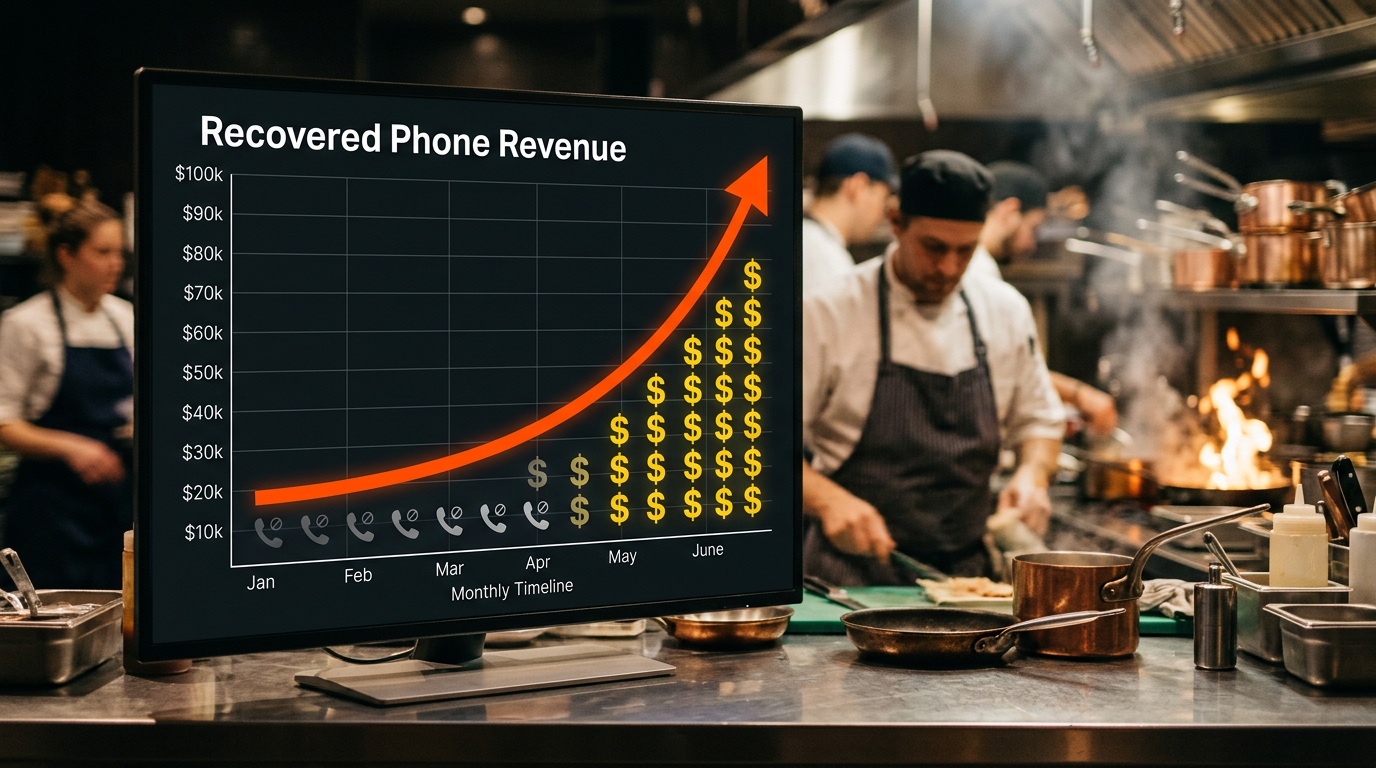
The labor savings are a major part of the equation, with platforms like Loman AI citing around $47,000 per year, per location in reduced host phone time. But the real story is the new, recovered revenue. The same analysis points to 22% more revenue just from overflow and late-night calls that were previously disappearing into voicemail. For many establishments, that's an extra $3,000 to $18,000 in monthly revenue per location.
This is why the market is accelerating. The restaurant voice AI space is projected to surge from $10 billion to nearly $49 billion by 2029. As detailed restaurant tech trend reports show, early adopters are already treating voice AI as critical infrastructure, not a novelty. It's becoming the new front door.
Beyond Reservations: Building a More Resilient Operation
A 24/7 reservationist is a powerful asset, but the operational benefits go much deeper. The best platforms function as a central intelligence hub for your front-of-house communication, creating efficiency everywhere.
Consider order accuracy. Human error during a loud dinner rush is inevitable. An AI agent, however, can achieve 95% or greater order accuracy by methodically confirming each item. VOICEplug, another key platform, reports up to 30% fewer order errors for its clients. That means less food waste, fewer comps, and happier customers.
The secret is integration. These AI systems must sync directly with your core operational software: Toast, Square, Clover, and your reservation platforms. Getting these intricate systems to communicate flawlessly is a known challenge, often requiring a degree of custom software development to bridge gaps between APIs. But the result is a perfect, automated flow of information, from first call to final check.
This firehose of clean data also creates new strategic opportunities. You can spot trends in booking times or identify callers who book large parties frequently, perhaps informing a highly targeted ai influencer marketing campaign. Ultimately, a better, more reliable booking experience sends strong positive signals and generates the happy reviews that are fundamental to all successful local seo services strategies.
Stop thinking about software demos. Start by architecting the job description for your perfect, invisible host. Define its rules of engagement, its schedule, and its primary goals. Once you know exactly what you need your AI to do, you can find the right partner to automate your workflow and fill that role perfectly.